




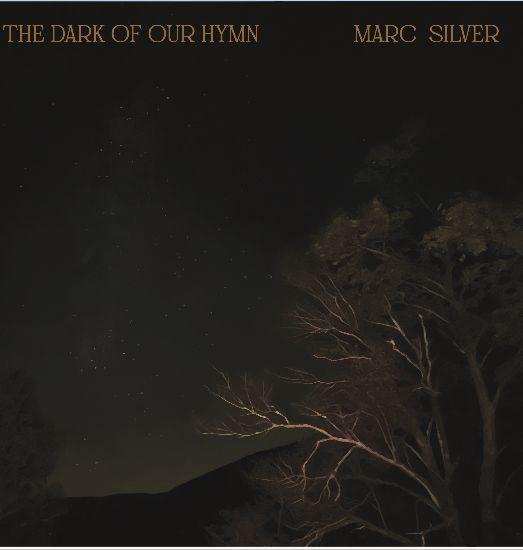
Marc Silver The Dark of Our Hymn
Sometimes the quietest records have the most to say. On The Dark of Our Hymn, Philadelphia songwriter Marc Silver takes his time, letting ten songs about love, memory, loss and the things we carry unfold at their own pace. What struck me first was the restraint. The musicians never seem anxious to fill every available space. There’s a peaceful beauty to this record, even when something eerie or sad is moving just beneath the surface. Silver has spent years moving between folk, Americana, bluegrass, blues and jazz, and that experience shows here. Produced by Andrew Lipke and Jaron Olevsky, recorded at Gradwell House, engineered by Matt Weber, mixed by Tucker Martine and mastered by Josh Bonati, the album has an intimate but carefully layered sound. Piano, guitar, bass, strings and percussion come and go without crowding Silver’s voice. It takes confidence to leave that much breathing room in a recording, and this group knows exactly when to do it.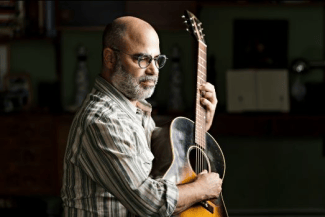
The opener, “Ancestral,” is an odd and haunting way into the album, and I mean that as a compliment. A slow, almost trance-like melody, a deliberate beat and a droning sound that suggests a distant organ or pipes create the feeling of a solemn procession. The music seems to carry you somewhere between this world and the next. Silver has described the song as a meditation on the space between life and death, and the arrangement makes that idea something you can almost feel.“Halos” enters with a lovely slide-like guitar sound and the natural sway of a country-folk waltz. There’s a little Bob Dylan in the way Silver lets the story lead, though the recording is cleaner and more spacious.Then “Lily White” brings a welcome lift. Its bright acoustic guitar and easy rhythm reminded me of Tom Rush meeting John Mayer, with the kind of melody that makes you smile and remember better days. Inspired by Silver’s childhood memories, the song has a freshness that keeps the album’s sadness from becoming its only mood. Christian Sedelmyer’s strings, Jaron Olevsky’s piano and Bobby Baxmeyer’s guitar touches help give it that glow.
“Swinging Branches” initially sounds as gentle as a James Taylor ballad. The instrumentation is light, the singing peaceful, and Silver’s descriptions of nature put you right inside the setting. Yet the lyrics are far darker than the surface suggests. Silver has explained that the song imagines two men finding tenderness together before violence tears through their world, with imagery shaped in part by historical photographs of lynching. That contrast is powerful. The music never pushes for a reaction; the story does the work.
A deep, rounded bass sound gives “Sullivan Ballou” an almost late-night jazz feel. Jeremy McDonald’s double-bass melody is especially satisfying, with Clay Sears’ carefully placed guitar lines and soft piano filling the spaces around Silver’s steady vocal. It’s an easy song to hum along with, which makes its subject all the more affecting: a soldier’s love letter inspired by the real Civil War-era Sullivan Ballou and the family he feared leaving behind. Once again, the players give the words room rather than trying to dress them up.
My ears really perked up on “Pleasuring.” A distorted electric guitar opens the song with a bit of country-rock grit, and the slide-flavored touches give it a modern, almost radio-ready edge. This is one of my favorite guitar moments on the record. Silver lets the sound stretch out a little while still keeping everything under control. He has said the song was inspired in part by the creative connection between Adrianne Lenker and Buck Meek, imagining two artists who find love and freedom through making things together. The freer electric-guitar feel suits that story beautifully.
“Veiled” slows things down again. There is a Gordon Lightfoot or Tom Rush kind of reflection in its folk delivery, with a simple melody that at first feels like a tender love song. But the subject is grief and the challenge of finding light after losing someone. Acoustic guitar and piano eventually open into a fuller, jazz-tinged arrangement. It’s a gentle piece, perhaps one of the album’s more straightforward melodies, but there is something comforting in that simplicity.
“I Knew I’d Make You Mine” brings the tempo up just enough, with sweet fiddle, a light rhythmic snap from the percussion and a conversational quality to Silver’s singing. He almost seems to be talking directly to the person on the other end of the story. What began as a friend’s memory of love at first sight became Silver’s own celebration of the life he built with his husband, James Rose. It’s a pretty, affectionate song, and a welcome bit of sunshine on a record that often looks toward the shadows.
“Skeleton Wings” starts with resonant acoustic guitar, an echoing vocal and a slow drumbeat used sparingly. The open space is part of its appeal. As the song progresses, the instruments gradually fill the room, rising to a restrained but satisfying crescendo. The story imagines a mother hoping to reconnect with a daughter who has run away, despite the hurt, anger and fear between them. That small build at the end feels earned, as though the music is allowing a little room for trust to return.
The closing “When That Time Is Here and Now” might be the album’s loveliest surprise. Sarah Long joins Silver in a duet that sounds as if it belongs in an elegant, old-school supper club. Her voice has a light, almost curious sweetness, and their harmonies blend beautifully. There’s jazz in the phrasing, a slow and easy pulse, and plenty of room for the organ and guitar to breathe. Silver drew on his love of Billie Holiday while writing about aging parents and the moment we realize our generation is now carrying the torch. It’s a graceful ending, full of acceptance rather than despair.
Ten songs in, what stays with me is not a flashy solo or a grand production trick. It’s how carefully everything has been put together, and how well Silver tells stories that can be both comforting and unsettling in the same breath. There are a lot of slow tempos here, and listeners looking for a hard-driving record may wish for more of the electric bite heard on “Pleasuring.” But that unhurried pace is also the point. The Dark of Our Hymn asks you to listen closely, to the instruments, to the words and to the lives inside them. There’s real beauty in that kind of patience.
LISTEN https://marcsilver.hearnow.com/the-dark-of-our-hymn