



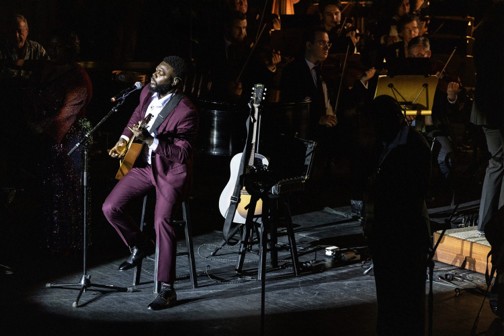
From the King Biscuit Blues Festival in Helena to the juke joints and working musicians of Mississippi, the blues remains more than a musical tradition. Through conversations with Bobby Rush, DuWayne Burnside, Super Chikan, Roger Stolle and others, a deeper story emerges about the people keeping the music alive—and the next generation preparing to carry it forward.
Big George Brock had a mule named Ida.
When I spoke with Roger Stolle, the owner of Cat Head Delta Blues & Folk Art in Clarksdale, Mississippi, he told me a story that has stayed with me.
Brock, a Mississippi bluesman who grew up working in the fields, had hands so large that picking cotton became difficult. The sharp cotton bolls cut his fingers, so he was eventually put to work behind a mule.
That mule was Ida.
According to Stolle, Brock discovered that singing the blues seemed to make Ida work harder. But when lunchtime arrived, the mule knew it was time to stop.
And lunch meant something else.
It meant turning on the radio to hear Sonny Boy Williamson II on King Biscuit Time, broadcasting out of Helena, Arkansas.
Think about that for a moment.
Before the blues became a tourist attraction, a festival destination or an internationally celebrated art form, it was part of the ordinary working day. A man behind a mule, music carrying across the fields, and a radio signal offering a few minutes of relief from exhausting labor.
That radio program began in 1941.
More than eight decades later, the King Biscuit Blues Festival continues bringing musicians and audiences back to Helena, a city along the Mississippi River whose relationship with the blues is as much about people and place as it is about music.
The 2026 festival, held October 8 through 10, offered another celebration of that history.
But over the past several months, my conversations with musicians, historians, descendants and people working throughout the Delta have led me toward a more important question.
What happens to the blues when the festival ends?
The Radio Signal That Never Went Away
On November 21, 1941, King Biscuit Time began broadcasting from radio station KFFA in Helena.
Sonny Boy Williamson II and Robert Lockwood Jr. helped introduce audiences to a sound that was already alive in Delta communities but had rarely been given such a public platform.
The program became part of everyday life.
People listened while working, during lunch breaks and wherever a radio signal could reach them. Musicians heard songs, learned ideas and discovered performers they might otherwise never have encountered.
It was entertainment, certainly, but it was also a connection between communities separated by miles of rural roads and fields.
The importance of that history was evident again at this year’s King Biscuit Blues Festival.
On Friday, October 9, the Delta Cultural Center presented longtime festival favorite Reba Russell with the 2026 Sonny Payne Award for Blues Excellence.
Named in honor of the beloved broadcaster who spent decades hosting King Biscuit Time, the award recognizes musicians whose contributions have helped sustain the blues tradition.
Russell’s recognition was particularly fitting. She has been part of the Memphis and Mid-South music scene for decades, building a career as a singer, songwriter, producer and performer.
Here was a working musician being honored in the same place where a radio program had helped give the music a wider audience.
And the connection between radio and live performance remains remarkably direct.
Blues harmonica player Bob Corritore’s published schedule included a Friday appearance on King Biscuit Time with Jimi “Primetime” Smith and Carla Denise. On Saturday, his festival showcase brought together musicians including Willie Buck, Bob Stroger, Smith, Denise and Anson Funderburgh.
The names have changed over the decades, but the relationship between radio, working musicians and live audiences remains familiar.
The music that once traveled through a crackling radio signal still has somewhere to go.
Before It Was History
When I interviewed DuWayne Burnside in September, I wanted to understand what it was like growing up surrounded by musicians who later became legendary.
His father, R.L. Burnside, helped define the hypnotic, driving sound of North Mississippi hill country blues. Junior Kimbrough became another towering figure in the region’s musical history.
But for DuWayne, these were not names in books.
They were people.
He remembered Friday and Saturday nights when the Burnside home filled with visitors. There was music, conversation, drinking and food. His mother sold beer and fish while musicians played and people gathered.
Sunday brought its own routines, including time around Junior Kimbrough.
There was nothing unusual about it to a young boy growing up in that environment.
The music was simply there.
DuWayne described it to me as being “in my blood” and “a gift God given.”
He learned by being around musicians, hearing their conversations, watching their hands and absorbing the rhythms of a world that existed long before anyone thought to preserve it.
That distinction matters.
Today we speak about R.L. Burnside and Junior Kimbrough as historical figures. Their recordings are studied, their influence celebrated and their stories repeated around the world.
But their music began in ordinary human circumstances.
James “Super Chikan” Johnson understands that distinction as well.
In our conversation, he described childhood experiences shaped by farm work, machinery and the sounds surrounding him in Mississippi. He cared for chickens at an early age and later worked in cotton and other agricultural labor.
Music grew out of that environment.
He remembered creating instruments from materials available around the house, including a diddley bow. His mother played music, and his grandfather, Ellis Johnson, played fiddle, guitar and mandolin.
Later, Super Chikan became known for constructing his remarkable gas-can guitars, which he calls Chikantars.
They are now recognized as distinctive examples of Delta musical creativity.
But the impulse behind them is older and simpler: if you want to make music, you find a way.
Super Chikan also carries a family connection to one of the most mythologized names in blues history. His grandfather Ellis was a first cousin of Robert Johnson.
That relationship becomes especially meaningful when speaking with Johnson’s living descendants.
Steven Johnson, Robert Johnson’s grandson, described the family stories that survived alongside the legend.
His account points toward Robert’s time learning from Ike Zimmerman, including the often-repeated practice sessions in a cemetery.
The familiar crossroads legend suggests a supernatural explanation for extraordinary musical ability.
The family’s story brings the explanation back toward mentorship, practice and human determination.
That is one of the challenges facing anyone writing about the blues.
The mythology is fascinating.
But the people underneath it are even more interesting.
Saturday Night and Sunday Morning
Another theme emerged repeatedly during my interviews: the relationship between blues and the church.
It is often presented as a conflict between sacred and secular music, as though the two traditions existed in entirely separate worlds.
The musicians I spoke with described something considerably more complicated.
Rev. Robert B. Jones Sr., a Detroit-based blues and roots musician and Baptist pastor, believes audiences frequently enjoy the music without fully understanding the lives that created it.
“We just kind of enjoy the product, but we don’t really appreciate the process,” he told me.
That process includes faith, family, migration, poverty, work and the communities where musical expression developed.
Jones explained that blues and gospel were not necessarily competing languages. Both emerged from people attempting to express the full range of human experience.
A person might sing about suffering and hope in church, then use a different song to express heartbreak, disappointment or frustration outside it.
Keith Johnson, the Mississippi guitarist known as the Prince of the Delta Blues, understands that relationship personally.
He grew up surrounded by church music. His grandmother had a gospel radio program and quartet, and a Baptist preacher helped him learn guitar.
But blues, soul and funk also became part of his musical education.
Johnson remembered practicing one day in church when he slipped into a secular guitar lick.
The preacher immediately recognized it.
“Uh-uh. No.”
Johnson understood the message.
When we spoke, he described the separation between the two musical worlds as “a thin line, a very thin line.”
That line still exists, but the economics of being a musician complicate it.
A guitarist who performs in a club on Friday or Saturday might also be needed for Sunday services. Musicians have families, bills and responsibilities. Their talent is a calling, perhaps, but it is also their work.
Bobby Rush offered another perspective when I interviewed him.
His father pastored two churches, yet blues music was never forbidden in their home.
“He never told me to sing the blues, but he never told me not to sing the blues,” Rush said. “So that gave me a green light in my house.”
Those experiences are reminders that the blues was never simply entertainment separated from ordinary life.
It was part of that life.
And in communities throughout the Delta, the relationship between Saturday night and Sunday morning continues.
Two Stages, One Tradition
This year’s King Biscuit schedule offered a particularly interesting contrast.
On Saturday, October 10, Bobby Rush was listed for a 7 p.m. performance on the festival’s main stage.
Just nine days earlier, Rush had appeared alongside Buddy Guy at Radio City Music Hall in New York, helping celebrate Guy’s 90th birthday.
Now the road had brought him back toward the Delta.
Meanwhile, the Delta Cultural Center’s free Front Porch Blues Bash offered another important part of the story.
Held at the Miller Annex on Cherry Street, the event provided a smaller, more accessible musical setting alongside the larger festival.
Saturday’s schedule included DuWayne Burnside, Keith Johnson & The Big Money Band, Robert Finley, Edna Nicole and Nicky Parrish.
The Front Porch also featured an open jam earlier in the festival, hosted by Brotha Ric Patton, giving musicians from the audience an opportunity to participate.
That detail deserves attention.
A healthy musical tradition cannot depend entirely on a handful of famous performers.
It also needs local players, informal opportunities, accessible venues and people willing to give developing musicians a chance.
The main stage demonstrates how far a performer can travel.
The front porch helps explain where that journey might begin.
For DuWayne Burnside, continuing that tradition is not always easy.
He told me there were times when playing music alone could not provide everything his family needed. Other work became necessary.
But quitting was never the answer.
“I love it,” he said. “It’s in my blood. I got to keep on going.”
As members of the generation he grew up around have passed away, he feels the responsibility to carry their music and memory more strongly.
“More than ever now.”
Yet Burnside does not believe that carrying on a family tradition means forcing the next generation to follow the same path.
His son plays drums, but DuWayne wants him to receive an education and have choices.
That is a meaningful distinction.
Preservation should not require a young person to surrender the freedom to become something different.
It should ensure that the music remains available if they choose to embrace it.
Keeping the Room Alive
Festivals are important. They introduce audiences to musicians, generate attention and bring people into communities whose cultural contributions deserve recognition.
But a festival lasts only a few days.
A working musical culture has to survive the rest of the year.
That is where people like Tameal Edwards become essential.
Edwards works with Ground Zero Blues Club in Clarksdale, Mississippi, helping bring musicians and audiences together in a community internationally recognized for its blues heritage.
When we spoke in September, she described visitors arriving from England, France, Australia and elsewhere, looking for an experience connected to the music’s history.
Many come with a genuine appreciation for the tradition.
Others arrive carrying an image of what they think the Delta is supposed to look like.
There is a danger in that expectation.
The blues can become something visitors want preserved exactly as they imagine it existed decades ago.
But musicians living and working in Clarksdale today are not historical reenactors.
They are artists trying to earn a living, develop their own sounds and connect with audiences.
Edwards sees preservation as something practical.
Support the clubs.
Pay the cover charge.
Give musicians opportunities to work.
Introduce young people to the music.
And perhaps most importantly, pay attention when somebody is playing.
She told me that Ground Zero does not provide public Wi-Fi for customers.
“We actually want our people to talk and enjoy themselves,” she explained.
It is a small decision, but it says something about what the club is trying to protect.
The experience is supposed to happen between the musicians and the people in the room.
Not through a screen.
Edwards also described Clarksdale’s broader live-music community as a place where audiences can find performances throughout the week.
That may be a better measure of the blues’ future than any anniversary celebration.
A festival can fill a town for a weekend.
A culture needs somewhere to go on Tuesday.
The Road North—and Back Again
Robert Terrell has witnessed another important part of that story.
Growing up in Hollandale, Mississippi, Terrell was surrounded by live music. His father operated a juke joint, and musicians who later became household names passed through the local circuit.
He remembered seeing performers including B.B. King and Howlin’ Wolf during years when they were working musicians rather than distant historical figures.
In 1977, Terrell left Mississippi for Chicago.
He spent approximately 32 years there, eventually operating a recording studio and gaining firsthand experience with the business of helping artists record and distribute music.
Then he returned South.
His later work connected him with the B.B. King Museum and historic Club Ebony in Indianola.
Club Ebony is an important example of the choices facing historically significant music venues.
A building can be preserved because famous musicians once performed there.
But preservation becomes more meaningful when the building also provides a place for another generation to make music.
Terrell’s journey reflects a larger movement in the history of the blues.
Musicians traveled north seeking opportunities and brought their culture with them.
Now performers, historians and cultural organizations are helping reconnect those northern audiences with the communities where much of the music developed.
The route has never been entirely one-way.
The Voice of a Culture
Roger Stolle has spent more than two decades listening to musicians and community members throughout the Mississippi Delta.
His Cat Head store in Clarksdale has become a gathering point for people interested in the region’s musical history.
But what struck me during our conversation was not simply his knowledge of recordings or famous performers.
It was his understanding of the everyday experiences that produced the music.
When I asked what living in the Delta had taught him that records and books could not, he offered an answer that went straight to the heart of the subject.
“It really comes from a place first off, but bigger than that, it’s the voice of a culture,” he said.
That is what makes his story about Big George Brock and the mule Ida so valuable.
The music was not separated from labor, community or survival.
It was woven into those experiences.
Stolle described the Saturday-night juke joint as something that offered relief from exhausting work.
“It was a pressure valve,” he said.
After days spent working from “can’t see to can’t see” during the most difficult stretches of cotton season, music provided an opportunity to release some of that accumulated pressure.
People gathered.
They danced.
They talked.
They found relief in the company of others who understood their circumstances.
And on Sunday morning, the church could serve its own related purpose.
Stolle also spoke about the disappearance of people who could describe that world from personal experience.
The generation that remembers plantation labor, mule driving, cotton picking and the juke joints of an earlier Delta is rapidly disappearing.
Those witnesses did not learn the history from documentaries.
They lived it.
Their passing creates a challenge for cultural preservation.
Recordings can preserve sound.
Photographs can preserve faces.
Museums can preserve instruments.
But the stories that connect those objects to lived experience require people willing to listen while those voices are still here.
Stolle has spent much of his time doing exactly that.
And he sees another encouraging development in the younger musicians carrying the tradition forward.
Who Gets the Music Next?
One of the strongest examples is Anthony “Big A” Sherrod.
A Clarksdale musician, singer, multi-instrumentalist and bandleader, Sherrod represents a direct connection between the older Delta blues community and the musicians learning today.
He began playing bass as a young child under the guidance of Johnnie Billington, a respected musician whose informal teaching eventually became an important foundation for the Delta Blues Museum’s Arts and Education program.
What began with young people gathering around Billington to learn music grew into an organized opportunity for children to study the blues.
Sherrod was one of those students.
So was Christone “Kingfish” Ingram, whose international career has helped introduce a younger audience to the tradition.
Sherrod eventually became a mentor himself.
At the 2025 National Folk Festival, he performed alongside Delta Blues Museum students, a particularly fitting picture of how musical knowledge passes between generations.
A former student was standing beside the next students.
That is what preservation looks like when it becomes something more than nostalgia.
And there are younger musicians coming behind them.
Abee Hudson, the young Mississippi guitarist known as the “Delta Blues Princess,” offers another example.
Hudson has studied with Keith Johnson and developed her skills through music education in the Delta. Her opportunities to perform alongside working musicians demonstrate what can happen when young players are encouraged rather than merely told about the past.
Consider that connection.
Keith Johnson grew up learning music in church and at home, discovering the complicated relationship between gospel and blues.
Years later, he is helping teach a young guitarist who is developing her own musical identity.
The knowledge has moved from one generation to another, not through a recording alone, but through lessons, performances and personal encouragement.
It is a reminder that the future of the blues does not depend entirely on discovering the next legendary guitarist.
It depends on children being given instruments.
On teachers having places to teach.
On clubs allowing young musicians to share a stage.
On audiences turning up to listen.
And on working musicians being able to earn enough to keep doing what they love.
The people I spoke with approached the problem from different directions.
DuWayne Burnside wants his son to have choices.
Keith Johnson understands how difficult it can be to sustain a musical life.
Tameal Edwards wants audiences to support the people performing in front of them.
Roger Stolle wants the human stories behind the music to survive.
And musicians like Big A Sherrod demonstrate that teaching a child can eventually produce another teacher.
The future is not guaranteed.
But neither is it absent.
The Blues Is Still Here
The easiest blues story to tell is one that ends with the dead.
A grave.
A historical marker.
An abandoned building.
An old photograph.
A famous musician whose life has become larger than the community that produced him.
Those things matter. They are evidence of an extraordinary American musical tradition.
But they are not the whole story.
The blues also survived because people kept doing things.
Super Chikan built instruments from whatever materials he could find.
DuWayne Burnside absorbed music from the people around him and continues carrying his family’s musical heritage.
Bobby Rush kept performing, adapting and finding new audiences.
Keith Johnson learned the language of church and blues and now helps younger musicians discover it.
Robert Terrell traveled north and eventually returned to help preserve the places where the music had lived.
Tameal Edwards works to keep musicians performing in front of audiences.
Roger Stolle listens carefully enough to remember the people behind the legends.
Big A Sherrod learned from Johnnie Billington and became a teacher himself.
And young musicians like Abee Hudson are finding their own voices.
The 2026 King Biscuit Blues Festival offered another opportunity to celebrate that continuing story.
Helena’s stages brought musicians and audiences together. The Delta Cultural Center honored Reba Russell. King Biscuit Time continued its remarkable broadcasting history. The Front Porch Blues Bash provided space for working musicians, while the festival’s youth presentations pointed toward the generations still learning.
But the most important evidence of the blues’ survival may come after the stages have been dismantled and the visitors have returned home.
Somewhere in Mississippi, a musician will carry an amplifier through a club door.
Somebody will play a Friday-night show and return to church on Sunday.
A teacher will show a child how to bend a guitar string until the note begins to sound like something personal.
An audience will pay a cover charge because the band deserves to earn a living.
And a young musician will stand close enough to the stage to remember what it felt like when somebody older handed the music forward.
Nobody in that room has to call it preservation.
For now, it is still life.
And the blues is still here.
http://www.kingbiscuitfestival.com/lineup/