



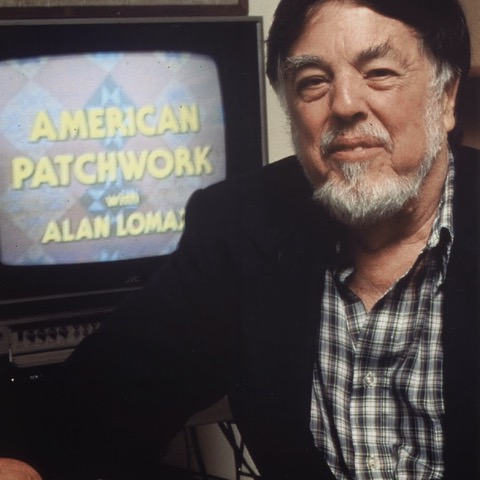
Anna Lomax Wood and Chandra Williams Discuss The Significance of The Digital Release Of Alan Lomax’s American Patchwork Recordings In Seven New Albums
This September, the digital platform Qobuz released 77 previously unreleased recordings from the ethnomusicologist Alan Lomax and his PBS American Patchwork field recordings made in the late 1970s and early 1980s. They were divided into seven albums that were sourced from Lomax’s unaired original footage of the PBS series, spanning genres such as Delta Blues, Appalachian Folk, New Orleans brass bands, Mardi Gras Indian traditions, and more. Some of the recordings were made in home environments, some in small gatherings, and some capture live events at storied local venues that are longer with us. Some of the reasons that Qobuz was chosen for this slate of releases were the platform’s support of independent artists, their focus on high-quality sound and music preservation, and also their mission to deliver fair artist royalties.
The albums were produced by Alan Lomax’s daughter, Anna Lomax Wood, and producer/A&R executive David Katznelson. Grammy-nominated engineer Jessica Thompson restored the archival source material, bringing remarkable clarity to the audience experience of the recordings. On these albums featuring New Orleans’ Dirty Dozen Brass Band, North Carolina mountain Folk musician Frank Proffitt Jr., beloved Delta Blues guitarist Sam Chatmon, and more, we are also hearing some of the earliest recordings of musical traditions that play a key part in reconnecting African American music back to the continental African oral traditions from which they have developed over time.
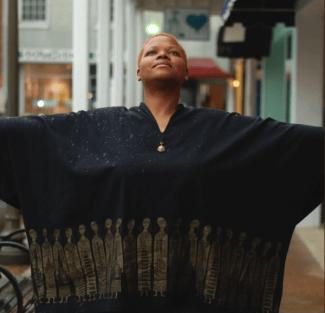
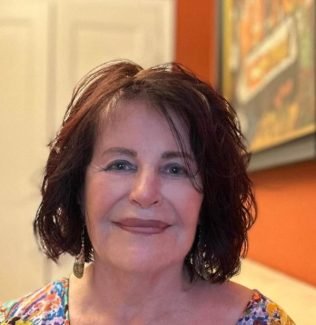
I spoke with Anna Lomax Wood, and with Chandra Williams, Executive Director of the Crossroads Cultural Arts Center in Clarksdale, Mississippi, about the cultural significance of these recordings, and the potential impact of their release, as well as about future plans for the recordings which will be made in collaboration with the families and communities where they originated.
Americana Highways: This must be a big milestone for you, Anna, since no doubt this archive has been part of your life for many years.
Anna Lomax Wood: There was a time when I had to take charge of my father’s archive when he suddenly became ill, but aside from that, I’ve known his archive for my entire life. He had it on reel-to-reel, 7-inch tape, and the Library of Congress had some of it on acetate disk. So, I was always aware of his work, and we had a lot of musicians that came through our house. Some stayed with us. I went with him, sometimes, into the so-called “field,” to record people. I knew a lot of this material, but excavating it to make albums out of it, as we have for Qobuz, meant discovering a lot of things that even I didn’t know. There were new voices, and new songs, and new hotspots for music that I didn’t know about.
AH: How did you and Chandra come to work together on the context for this music and its future release?
ALW: I was lucky enough to meet Chandra Williams about five years ago, and we met over Zoom when someone introduced us. I was looking for a place in Mississippi that would be oriented towards the Black community there, and not towards tourists, primarily. Chandra was the Director of Crossroads Cultural Arts in Clarksdale, and they deal with culture and music all the time. So we are, together, trying to take this whole body of material, the artists, and their descendants, in a new direction.
This is happening on the Lomax Archive Label, which is new, having started about a year-and-a-half ago. Qobuz came to us with an offer to put together 7 albums of material that Alan and his colleagues had shot all over the United States that had never been released commercially. We grabbed the sound from these to make the albums.
AH: How did you sort through all the music? There must have been hundreds to choose from.
ALW: David Katznelson was the person who basically went through a huge amount of material. He’s a brilliant guy who’s been in the record business for years and years, has excellent taste, and loves this music. He basically put these albums together, selecting the songs. I helped him sequence them, and made some comments, but it’s basically his work. I’ll say a few words also about Qobuz, because I’ve been extremely impressed by them. They are really a different kind of streaming service, and it’s a beautiful thing that they are trying to do with music of great quality. I think it’s special that they’ve shone a spotlight on this. It’s so different, in every way, than the kind of music that is mostly heard today. They are not just a regular streaming service, but they really look at what they are doing, and their audience. It’s been a very interesting experience.
Speaking more broadly, I think Chandra could better explain what our purpose is with these releases, and with our label, in general. She is a huge asset to this project because she knows these families, and she knows these artists.
AH: I’ve seen that the whole ethos of Qobuz does seem a bit different, and their set up. You don’t necessarily think of streaming when you think of archival releases, but that can be limiting, because streaming can reach people all over the world. I would also love to hear about the process of being in touch with the artists, and their families. I assume most of the artists are no longer with us at this time, but I’m hoping there’s continuity in their communities and this music can be put in their hands.
Chandra Williams: We’re also looking forward to learning more about how people feel as they learn that these recordings are coming back. Even though we’ve been talking about this and working on it for about five years, this might be the most public conversation that Anna and I have had together about it.
I would say that this all is a hopeful, joyful, and delicate process. It’s very delicate. That’s how I feel. Which is probably why it’s been five years. I know at one point, Anna was probably wondering why I was taking so long! It’s honor to be in conversation with Anna, and we’ve developed a great friendship. Her musical knowledge and cultural understanding is something that I really appreciate, and I think she understands where I’m coming from in my own work, and the work of Crossroads Cultural Arts Center.
AH: Chandra, how do you feel this connects with all your work in the past and your goals at Crossroads?
CW: Just for some context, I’m here because as the Director of a Cultural Arts Center, I’m concerned with the functions and the role of cultural art practices in community, and in society. We live in a society where often music is regarded simply as “entertainment.” In my work, I understand that art is much more than entertainment, and has very deep functions. With the art we’re talking about, and these genres of music such as gospel, blues, and the folk traditions of the Southern African American people, but in particular these recordings, they represent oral history.
Even within that, very specifically, they address a very important issue that I feel still that we’re just beginning to try to address, and that is the concept or belief that African American history before slavery is lost or inaccessible. These particular recordings are the earliest recordings that we’re aware of in America of the earliest blues and gospel music. These are unique in so many ways, but bringing in the African perspective, a lot of this music on the continent of Africa, these pentatonic melodies and songs, and the oral history, was not allowed to be recorded. That was part of the principle of presenting this oral history by the people who sang oral history to the pentatonic scale. So, when we were brought to America, and miraculously, these traditions survived, despite a tremendous effort to erase anything cultural that we brought with us, such as our languages and our names.
So it was here that these traditions encountered recording. These recordings are an early evidence and connector to the previous tens of thousands of years of historical recording on the pentatonic scale. For me, at Crossroads Cultural Center, it’s about connecting to our history, back before we came here, and moving forward by recognizing the technology that maintains and transmits our history. For that reason, I’m deeply committed to this project. And I’ve partnered with some African American scholars who really bring knowledge about tens of thousands of years of oral history, what we would call blues. For this music to be released through Qobuz brings the next chapter, after all these years.
AH: It must be a really powerful and rewarding thing to know you’re bringing all these connections forward for people to learn about.
CW: Our work today in Clarksdale is also to work with the contemporary artists, and the young people, and it’s important for them to have this different understanding and concept of what function music serves. We need to move forward with the understanding that blues is oral history and blues singers are oral historians. Just like throughout the continent of Africa, there were many sub-genres, the same thing has happened in America, and the recordings we have are representative of some of these sub-genres of music. You have the Hill Country Blues, the Delta Blues, the Bentonia Blues. You have the blues in Arkansas, Georgia, and all these places that reflect the specificity of the community that they come from. That’s a prerequisite for any vessel of oral history, that is has to be honed into a specific place and time.
These recordings hone in on a specific place and time for our people, and they fill a gap. What I want to do is help to mend this history. When it comes to the families of these artists, they may not see it the way I see it. They know about it because they’ve been carrying on these traditions for many generations, and there are still living descendants of a number of these artists, and some of them are active artists themselves. In all cases, there are communities that these artists come from, and their art reflects that region. When I reach out to families, it’s always an unknown.
So far, the families that I’ve spoken to are actually families that I’ve actually known for years before I got into this work. They may know me, but a lot of them didn’t know that I knew Anna and was having conversations with her. But thankfully, each conversation I’ve had so far has been positive. Some of the people paused when I brought up the Lomax Collection, wondering, “What is she going to say? Why is she bringing this up?” But I was saying, “I want to talk to you about your family’s recordings.” And as we got into the conversations, they softened. And I shared that I have been talking with Anna about returning these recordings, in the different ways that that may mean. We are still in the process of understanding what that means, so that the families can lead the way with what happens to the recordings of their ancestors, or the community of origin. They tend to like that idea.
We know there are controversies about the recordings of folk artists, and in particular Black artists, but what I get a sense of is that maybe they have felt unacknowledged in some way, just by the atmosphere of the scholarly industry. But they have said, “I want to be involved.” And they are proud of what their family members have done, and are passionate about being involved. Maybe these are recordings of their family members that they didn’t know existed. But it’s not a fast process, so a lot is still unfolding.
AH: The outcomes are still unfolding, I can see that.
ALW: One thing I will add is that the Qobuz albums happened pretty quickly, actually, so we were not able to engage all these people in the process of putting them together. But what we will do, when we start making physical records with our record label, is that they will be involved as much as they would like to be. Whether that’s as producers, or in writing the liner notes, or in helping to select the material, and just being credited properly. We also have to establish how finances will work, and we have a policy of having the best deal that we can possible offer, and also of giving the families and communities copies of all of the video of their ancestors’ performance.
That’s kind of a basic, fundamental, thing, but we want to go beyond that. So far, it’s mostly been people who are far removed from those communities, mainly white experts, who have presented this music. As far as I can see, people would like to have a say so in this music, and so we start off by asking for peoples’ blessing to do this, and asking, “Can we work with you on this?”
I think that process will also make it more meaningful for them, as Chandra has pointed out. Sometimes that means that things take a little longer, but that’s okay. We already have one person who’s going to be engaged in writing the notes, and a leader producer on this grandfather’s album, for instance. I’m learning, from doing this, and from Chandra, that these families have a tremendous sense of where they came from. If they had a singer like the ones we’ve recorded in their background, they already have a huge respect and veneration for them, and their kids, grandkids, and great-grandkids have drawn inspiration from them, to be creative.
What we also hope to do, eventually, is present some of their music. It’s all very idealistic, but we’re going to do it, in one way or another. We are going to see our way through, because there’s a world there that we don’t want to intrude upon, but we want to be seen as people who can assist in some way.
I should add that ACE [The Association for Cultural Equity] is in the process of repatriating all of the Mississippi Delta and Hill country music to Crossroads, Cultural Arts. Chandra can then use it as a tool for education and cultural renewal and connections as she sees fit. She will also act as a hub of repatriation within Mississippi and the Delta and find ways of taking it to the people and communities from which it came. It’s a really big collection, including audio video and photographs from 1933 to 1978.
AH: That’s outstanding. Presumably, that can help really shape how current generations and young people view their own heritage, to have such direct access.
CW: The division or dichotomy between culture and tourism / “scholarship” gives an idea of blues that is not attractive to young generations. They often see it as sad, struggle, slavery music etc. I hope we can present a broader, more true vision of the genre which they can relate to and be proud to engage with–African oral traditions which speak of trials and triumphs too, and history and genealogy.
Thanks very much for chatting with us, Anna Lomax Wood and Chandra Williams, about the American Patchwork recordings.
Find more out the American Patchwork recordings here. Lomax Archive: https://www.culturalequity.org/
Crossroads Cultural Center: https://www.clarksdalescrossroads.com/
Enjoy some of our previous coverage here: REVIEW: ‘Night Music’ Reframes John and Alan Lomax’s Quest For Prison Field Recordings