




Mary Bragg photo by Alex Berger
Mary Bragg on The Creative Surprises of Making Secrets To Strangers at FAME Studios
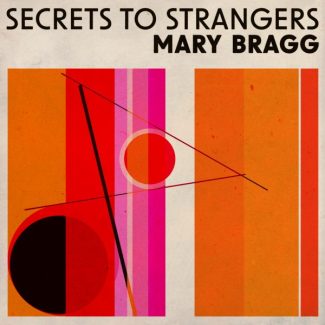
Singer/songwriter and producer Mary Bragg released her new album on October 16th, 2026, titled Secrets To Strangers, via Single Lock Records. It was produced by Grammy-winner John Paul White (The Civil Wars) along with producer/musician Ben Tanner (The Alabama Shakes) and recorded at FAME Studios in Muscle Shoals with along with drummer Chad Gamble (Jason Isbell’s 400 Unit), bassist Zac Cockrell (Alabama Shakes) and guitarist/keyboardist Jay Gonzalez (Drive-By Truckers).
For Mary Bragg, this was a “next chapter” as she tried several new things in moving forward from her previous self-titled album in 2022. A trained producer, Bragg took the opportunity to vacate the producer seat in favor or White and Tanner, and focused on the development of the songs. Going to FAME Studios for the first time to record was also a leap of faith for Bragg. What she encountered there was an album that discovered its own direction at the hands of patience, curiosity, and the pursuit of a natural development. The album itself has a lot to do with communication, and uncovering the problems that we all carry, but that we don’t necessarily know how to solve. Secrets To Strangers delivers those confessions gracefully, exploring a wide range of sound traditions, but with an unmistakable joy to be found in the music itself. I spoke with Mary Bragg about her journey in making the record.
Americana Highways: This album is so incisive in its lyrics and so emotionally powerful in its vocals. I can see how they might take a lot to deliver, emotionally, for you. How much have you performed these songs so far in a live setting?
Mary Bragg: The hard ones? Not that much. In fact, a couple weeks ago, I was playing “The Game” for the first time, and I’ve already had to access some new emotional portals outside of myself to get through it. I want to not get in the way of the delivery of the song. I think when I think too much about the reality of those circumstances, it inhibits my connection with listeners, so I try not to do that. But it’s hard, it’s very hard.
AH: Everyone needs their own headspace formulas for being the performer and not just the writer. It’s quite different from recording the song in the studio.
MB: That’s right, it’s very different.
AH: I previously spoke with you about your self-titled album, and the production work that you were doing at that time. So I was interested and surprised to see that you did something different this time, and went to work with some great people, in a great studio, in a very exciting place, rather than handling production yourself. It’s like the next chapter, and new developments.
MB: I knew that I wanted to get outside myself, to get back to the meat of collaboration, which of course includes multiple musicians, on the cutting room floor, simultaneously thinking and tinkering. And considering what might be next. I just fell in love with some of the records that Ben and John have made, both Ben by himself, and and Ben and John together. A friend of mine, actually, Jason Isbell’s manager Traci Thomas, said, “You should go to The Shoals and make a record!” I thought, “That’s not a bad idea.” It opened up the opportunity of thought, even. You don’t usually think of something so far from your idea of yourself and your work, until someone else makes a suggestion. I came up with the gumption to ask Ben and John if they would consider listening to the songs, and if they would consider making a record with me.
It just was the most organic “Yes,” from them. It continues to be a decision that has been underscored and reinforced. It’s actually been two years since we first had these conversations, before we went into the studio. Their commitment to songs, and their commitment to making great records has been so incredibly refreshing to me. It was finding people who are cut from the same cloth, and could also push me to new creative places. Then it was seeing what happened when I pushed that wheel, and let go of the hierarchies of being a producer. It was letting that go, and being the artist again.
They, and I, wanted to see what would happen if I did that, and man! It was a joy. To have found the permission necessary to just swim in it again, the creativity of shepherding a feeling into a lyric, into a voice, into a microphone. It is a series of moments that, to me, are all imperative to the listeners’ experience of the work. Thinking about just those things as my priorities was awesome, instead of thinking about all the other things that go into making a record, which is a multitude of other things.
AH: I don’t mean to contrast this album with your previous work, but it sounds like you feel the songs were able to reach a further development point by giving them your full attention than they might have otherwise. Since there was no other energy of yours going elsewhere.
MB: Absolutely. That’s right. I definitely feel that. I know that these songs, and this piece of work, as a record, became something else much larger because John and Ben were driving the bus. It’s funny, I think they’d say that they weren’t driving the bus, the songs were! That we were all just listening closely for what the songs were asking for.
AH: I’ve heard both of those guys spoken about as being awesome from other artists. And the studio, of course, too! A lot of what I hear is that the atmosphere is so conducive there, that the album has come about in a way that the arist could not foresee until they got there.
MB: That’s right! It is an historic playground that you’re invited to. You can either cower in nervousness about whether you belong there, or you could say, “You know what? Yeah, I’m going to get out there, and get my hands in the sandbox, and see what we can build.” Because it’s an exciting place to even enter. The first time I was at FAME, I went as a tourist, and you’re speechless walking through there, and seeing the iso-booths where Aretha Franklin stood.
It’s just an absolutely wild piece of the history of American music, and music in general. Then, to be there as an artist is TRIPPY. It is trippy, and inviting, because we’re all just human. Aretha Franklin was just a human being, with the voice of a god, and the heart to tell the stories behind it. So, I tried when I was in there to remember that, that we’re all just humans trying to tell stories.
AH: I’ve been seeing photos and news lately about studios that have been torn down lately, unfortunately, so anytime I think of an historic studio that has survived and is still in use, I’m so reassured. It makes me feel like we’re keeping our heritage alive. I think if studios could choose, they’d like to be kept in use, and have new music.
MB: The spirit of a place really does contribute as its own character in those moments when you’re working, because the place, the floors, the ceiling, the hallways, the light or lack of light, the breeze-blocks on the hallways as you go in, they are all tangible components of the character of the place, as a whole. They are pieces that together comprise a character that simply cannot be ignored, because of its history, because of its observation of the records that have been made there before.
I feel like FAME takes on this undeniable presence that is to be revered. Again, it’s an incredible invitation to pause and remember, and believe that you matter. I said, “I’m in this place, and I’m a human being. But as anyone who ever belonged in this room, I belong in this room, right now.” You can either let that statement trip you up, or propel you forward. I felt like that presence of that space held the small of my back and pushed me forward!
AH: It was saying, “Here’s your moment, here’s your opportunity.” The appropriate response is, “Yes!”
MB: Which is, “Yeah, okay!”
AH: Do you think this place impacted what you were willing to try on your songs, or was it more the guys bringing in ideas to consider?
MB: I think the space did suggest that there was more to be uncovered in me, in my voice in particular. Yes, it was also there in the sonic landscape that Ben, and John, and the players built, and I played on it, too. But for clarity, I did not co-produce this record! [Laughs] They laugh about it, too, because John said, “It’s really nice to produce a producer because she knows what she wants!” There are many times they go to the artist, and ask what they want, and the artist says, “Anything is fine, I’m here for it.” They’ll be kind of passively affirmative.
But I have these instincts that, for better or worse, mean that I can’t keep my mouth shut when I do or don’t like things. They like the fact that I have an answer for them. I think, if nothing else, it allowed us to move a little more quickly. Even so, the pace of recording was also a character of its own. It was different than the pace I’m used to in Nashville, which is very much “throw and go” or “create, create, create, go to dinner.” It’s not nine to five, but it’s in that mentality. I also think there’s an obsession in other cities of recording to “the grid,” to a click [track], an in a digital workstation, the grid is essentially your time-keeper.
It makes equal all of the imperfections of a performance, for example. It doesn’t typically allow for the occasionally imperfect ebb and flow of a BPM [beat-per-minute]. There’s a song on this record called “Champion Sleeper,” that essentially exists in two different tempos. The verse wanted to be a certain tempo, and then the chorus wanted to take off. You can write that in, and manipulate things, so the grid is here for one section, and over here for a different section, but it’s kind of annoying from an engineering perspective.
Also, it’s just so much easier if you’re just playing music! You’re not asking, “Are we off the grid? Are the takes going to match each other?” We didn’t record to a click at all on this record! Which was the first time I’ve ever done it like that, in my whole career. I was scared at first. I was doing that thing that humans try to do, which is try to control things. Thankfully, I wasn’t in charge, which was a gift of letting go, seeing what would happen if we didn’t record to a click. That’s really trusting your drummer or your bass player to hold that pocket down, or responding to a crescendo that really wants to speed up just a hair, and dropping a half-measure in a place where it doesn’t make sense, but maybe you wouldn’t have done that on the grid. There’s a lot to it that really allows music to be made.
As a result of that, the pace also dictated the experience. These guys in Muscle Shoals are patient. They are professional, but they are patient, and they will wait for the magic until it arrives!
AH: That’s really cool to hear. Were there surprising moments for you making this album, as a performer?
MB: None of us really knew what this album was going to become, but then we hard-stop fell in love with it. In those first couple of days, we said, “Whoa!” It was just this glorious little slice of creative joy that I still get chills thinking about, and remembering that feeling. That feeling of how it really started talking to us. I was talking to someone the other day about how the record really became its own voice. Somebody said, “Oh, that was the voice of Aretha Franklin!” [Laughs]
AH: My impression is that there are commonalities on the album, not just in sound, but in ideas. For me, a lot of it comes together under the idea of communicating, and whether the communication reaches another person, or not, or whether it bypasses them in some way. Like with your final song on the album, “Speaking different languages.” I think you’ve said elsewhere that this album acknowledges having problems.
MB: And not having the answers! That’s right. Just saying, “Here’s something I need to say out loud, and I don’t know what happens next, but I have to say it! I don’t know what will happen next.”
AH: I think that affirms a human need, to speak up. Even though there are some sorrowful aspects to the songs in places, there’s a feeling of “At least I said it. At least I tried.” That has an empowering feeling.
MB: Good, I was hoping some of that would be converted from confession to triumph.
AH: Are there any songs that you’re particularly looking forward to performing?
MB: I actually had rehearsals with the band last night for the album release shows that are happening. And at those shows, we’ll be playing for the first time “Champion Sleeper.” There’s one moment there, right before the bridge, that I remember the moment of being totally free, singing. It’s one of those things that happens, when you’re singing, that if you just let go, and don’t plan what you’re going to sing next, the voice kind of grabs you, and says, “Here come this way.”
That’s what happened in that song, so I’m really excited to just rock on that one, and also try to replicate those feelings of letting go, so there can be new iterations of those vocal moments that can surprise me. Because that’s where the fun exists, in the element of creative surprise, when you find something that moves you so deeply, whether from a musical or a lyrical perspective. That’s the lion’s share of enjoyment, the surprise that can come over you, when it occurs.
AH: It’s like the song is coming alive again in a different form.
MB: That’s right! That’s where the fun exists, but I guess it hadn’t even occurred to me in that exact way before.
Thanks very much for chatting with us, Mary Bragg! Find more details here on her website: https://www.marybragg.com/
Enjoy some of our previous coverage here: Interview: Mary Bragg Levels Up as Songwriter and Producer for Her Self-Titled Album