



It’s a safe bet that many rock fans—even those with a penchant for sixties music—know of the Zombies only via their three Top 5 hits: “She’s Not There” (1964), “Tell Her No” (1965), and “Time of the Season” (1969). But as a recently launched reissue series makes clear, this British Invasion group had much more to offer than those tunes. Zombies founder and keyboardist Rod Argent and bassist Chris White were gifted composers who drew on R&B and jazz and displayed a strong sense of melody, and Colin Blunstone, a sublime, breathy lead singer who sounded like no one else, added immeasurably to the mix.
While previous compilations and reissues have tapped digital transfers made in the 1990s, the new ones all employ audio that has been remastered from the original tapes. All of them feature the original mono versions and all come with incisive new liner notes by Rolling Stone’s David Fricke.
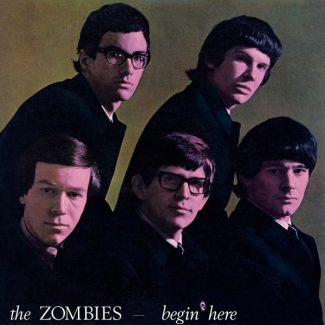
The first of these CDs, the 17-track Begin Here, offers the UK version of the group’s 1965 debut album, which includes Argent’s “She’s Not There.” Also on the program are three tracks that appeared only on the American LP, among them his “Tell Her No,” which he says was influenced by Burt Bacharach’s jazz chords. Both those songs are terrific, and they’re not the only standouts in the set, which the Zombies recorded in just three days. Blunstone’s largely a cappella reading of Argent’s “The Way I Feel Inside” shows off his vocal prowess, as does “I Remember When I Loved Her,” an exquisite ballad, also by Argent, whose organ work shines on his upbeat “What More Can I Do.”
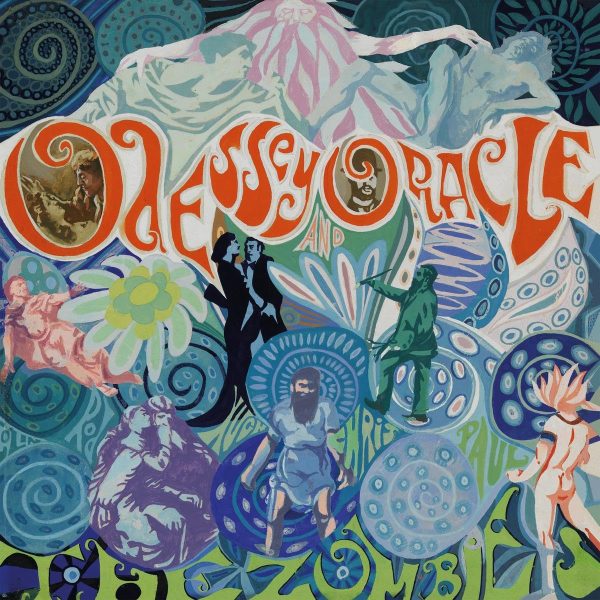
Still, this is an embryonic effort. With more than half a dozen covers, including likable readings of R&B, soul, and Motown classics such as Smokey Robinson’s “You’ve Really Got a Hold on Me” and Sam Cooke’s “Bring It on Home to Me,” it doesn’t fully showcase the band’s songwriting potential. Nor does it even hint at the musical innovation and level of sophistication that would burst forth on the group’s second official album, Odessey and Oracle. (The man who painted the cover art misspelled Odyssey,” and the band opted not to fix his mistake.)
That self-produced 1968 album also figures in the current reissue series. The record, for which Argent and White wrote all the material, is the one where the Zombies stopped looking for hits and simply followed their own artistic impulses—reportedly because they’d become disillusioned with the business and had already decided to call it quits. Ironically, Odessey and Oracle nevertheless wound up producing their biggest hit, Argent’s great “Time of the Season.” But that number took a long time to score, and the LP barely dented the charts at the time of its release. Now, however, it is widely and justifiably recognized as masterpiece of psychedelia-influenced baroque rock.
The album’s quirky lyrics cover wide turf. One offers a letter to a jailed girlfriend (“Care of Cell 44”), one describes a romantic attraction (“I Want Her She Wants Me”), one concerns the First World War (“Butcher’s Tale (Western Front 1914)” ), and one appears to describe a hippie be-in (“Hung Up on a Dream”).
The album manages to showcase a major artistic leap while retaining abundant evidence of the group’s early R&B and Motown influences. (Speaking of Motown, incidentally, Fricke reports in his liner notes that a misheard line in the Miracles’ “Tracks of My Tears” inspired the title lyric for “Time of the Season.”)
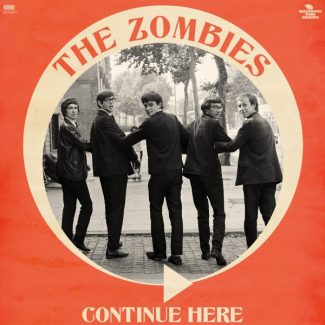
The name of another album in the reissue series, the just-released Continue Here, plays off that of the debut LP because it collects material that the group’s members believe could have constituted a sophomore LP. Most, if not all, of these 19 tracks—which include singles, B-sides, songs for a movie score, and numbers omitted from Begin Here—have popped up over the years in compilations, but Continue Here is being touted as the first time they have been featured together as “the album that should have been.” According to a publicist, the set is “meant to tell the story of how the Zombies developed from an R&B cover band to creating a psych-pop masterpiece [Odessey and Oracle].”
It does that, and with consistently rhythmic, catchy material. White’s “You Make Me Feel Good” (the flip side of “She’s Not There”) and Argent’s Beatlesque ballad, “I Must Move,” are just two of the many criminally overlooked gems on this album.
One disappointment: with playing times ranging from only about 35 to 47 minutes, all three CDs could have fit in a wealth of bonus tracks. Alternate takes and demos of several of the songs on Begin Here and Odessey and Oracle could have been added to those albums, for example. Moreover, the latter disc could have been augmented with the notably different genuine stereo versions that exist for all but one of that album’s tracks. True, the Zombies originally mixed the LP in mono and Blunstone reportedly expressed dissatisfaction with the hurriedly prepared stereo edition. Still, it would have made a nice bonus for those who want to hear the instruments and vocals dispersed across two channels.
But these are quibbles. All three of these reissues are well worth owning. The Zombies never got the appreciation they deserved, and these albums prove it.
Also Noteworthy
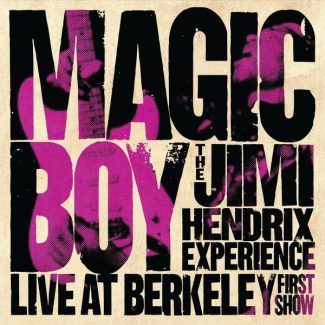
The Jimi Hendrix Experience, Magic Boy: The Jimi Hendrix Experience Live at Berkeley (First Show). Back in 1982, this writer marveled at the emergence of previously unheard material from Jimi Hendrix “a full dozen years after the death of the sixties’ most imaginative and influential rock guitarist.” Well, here we are, more than 40 years later, and recordings continue to trickle out. Just how many versions of songs such as “Purple Haze” and “Fire” does one fan need? (Yours truly owns 16 of the former and 11 of the latter.)
That said, this May 30, 1970, concert—recorded with drummer Mitch Mitchell and bassist Billy Cox less than four months before Hendrix’s death—is first-rate. Performing for a capacity audience of 3,300 in the Berkeley [Calif.] Community Theatre, Hendrix and his bandmates delivered an explosive 78-minute set that included early classics as well as new songs. Among the former group are “Purple Haze” and “Fire” (originally featured on Are You Experienced?) and “Voodoo Chile (Slight Return)” (from Electric Ladyland). Also here are “Machine Gun” and “Message of Love,” both from the then newly released Band of Gypsies, as well as “Freedom,” “Red House,” “Hear My Train A Comin’,” Ezy Rider,” Chuck Berry’s “Johnny B. Goode,” and Hendrix’s famous reinvention of “The Star Spangled Banner.”
At least some of these performances have previously surfaced, but this is the first time the entire concert has been presented on one disc. Moreover, the recordings have been remixed and remastered, resulting in improved sound separation and stellar audio throughout.
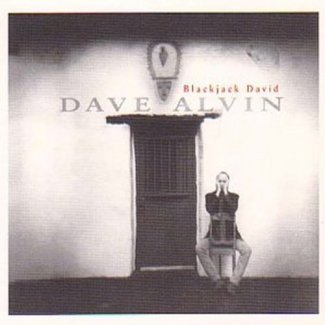
Dave Alvin, Blackjack David (Deluxe Edition). Dave Alvin is as versatile as he is talented—just listen, for example, to his high-energy work with the Blasters and the punk-styled X, his sublime, mellow cover of the Beach Boys’ “Surfer Girl” on the solo West of the West, and his recent venture into 1960s psychedelia with The Third Mind. And then there’s the folk-rock storytelling found on Blackjack David, an album that first appeared in 1998 and is being reissued with remastered audio and two bonus tracks.
The powerful set, which incorporates elements of folk, rock, and country, features some of Alvin’s strongest character studies, all beautifully delivered in a resonant voice that might remind you of Tom Rush. In the evocative “California Snow,” which Alvin wrote with the great Tom Russell, he offers the first-person tale of a divorced man who’s struggling and declares that “in the winter you can freeze to death in the California snow.” In the tuneful “Abilene,” meanwhile, he describes a woman who’s been “dancing on tables to pay rent…just get by and maybe stay clean.”
______________________
Jeff Burger’s website, byjeffburger.com, contains more than four decades’ worth of music reviews and commentary. His books include Dylan on Dylan: Interviews and Encounters, Lennon on Lennon: Conversations with John Lennon, Leonard Cohen on Leonard Cohen: Interviews and Encounters, and Springsteen on Springsteen: Interviews, Speeches, and Encounters.