



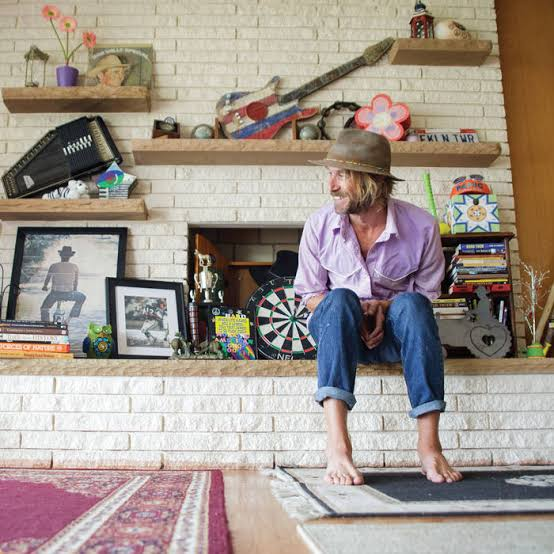
Just like his life, Todd Snider’s posthumous album, My Second Rodeo, is unfinished.
Snider died last November, at 59, amid a bewildering and troubling series of events, while working on an album he believed would break new musical ground. He had recorded his vocals and guitar, leaving longtime collaborators Joe Bisirri and Robbie Crowell to complete the record, guided by his emails, voice memos and conversations. It was a labor of love, but also an extraordinary musical assignment: finish an album conceived by one of the most unpredictable artists in Americana without being able to ask him what he wanted.
And Snider had some pretty big ideas about what he wanted.
He described My Second Rodeo as “the sound of country music ten years from now.” That’s a pretty audacious claim from a guy who had spent decades happily ignoring Nashville’s rules. But Snider’s ambition went beyond looking for a new sound for himself. He imagined what country music might become, and tried to create a record that would point the way. He even insisted on recording his vocals and guitar before bringing in the other musicians, without a band or a click track. Rather than fitting his performance into an arrangement, he wanted the arrangement to grow around his performance.
And what grew around those performances is something special.
My Second Rodeo is swampy, growly, playful and consistently interesting. The New Orleans-style horns are particularly wonderful, sometimes jumping to the front of the mix, sometimes providing the musical backbone. The arrangements are loose and funky, taking the songs in directions that are surprising without feeling forced. There’s a real sense of adventure here, of musicians having fun exploring new territory.
Robbie Crowell deserves particular credit for that sound. In addition to playing drums, bass, saxophone, guitar and percussion, he arranged the horns, which feature Emmanuel Echem on trumpet and Roy Agee on trombone. Along with Bisirri, Crowell has helped create something that feels both rooted in Snider’s musical personality and unlike anything else in his catalog.
Is this really the sound of country music ten years from now? I have no idea. But, personally, I’d love to hear more horns coming out of Nashville, and more country music that doesn’t take itself so seriously.
Snider’s characteristic mumbling and talking-blues delivery are all over My Second Rodeo. At his best, there’s a mischievousness to a Todd Snider performance, a sense that he’s enjoying the joke as much as you are, that he’s letting you in on something. Even when he’s barely singing, there’s a spark that makes you lean in. That spark is sometimes missing here, and I found myself wishing for a little more of the energy and personality that made his best recordings so irresistible.
Although the performances and vocals are uneven, there are moments when everything comes together powerfully.
“Solid Country Gold” is a terrific send-up of Nashville’s formula for producing hits, complete with a celebration of a “good old fashioned title stop and smash hit chart top” country song. It’s funny, musically infectious and delivered with plenty of the familiar Snider spark. The joke works particularly well surrounded by arrangements that sound nothing like the formula he’s mocking.
“Sunday Go to Meeting Looking” is another highlight. Snider opens with “Filthy rich, dirt poor / Hardly anybody in between us anymore,” before taking aim at the way religion can divide people who ought to have more in common. At his imaginary First Church of Oldest Tricks, the congregants are “praying for protection from each other.” It’s pointed social criticism delivered with enough humor to make you laugh before you realize how much it stings.
That humor runs through other songs, too. The title track is a recursive joke about a cowboy in a pickup truck listening to a country song about a cowboy in a pickup truck. It’s a wonderfully silly idea, even if he doesn’t take it very far. “Can Your Monkey Do the Splits?” is another bit of inspired absurdity. Neither is a major addition to the Snider songbook, but both contribute to the album’s playful spirit.
Not everything is played for laughs. On the opening “Freewheelin’ (Every Day at a Time),” Snider describes having fought his way from “just another likely story / To a cautionary tale.” It’s a line that carries unintended weight now, but there’s also something wonderfully defiant about a man still freewheeling, still chasing the next musical idea.
That combination of ambition and incompleteness must have made finishing the album especially challenging. Bisirri has said that Snider heard the record reach roughly 70 percent completion. Finishing the remaining 30 percent took much longer, as he and Crowell worked to follow the roadmap their friend had left behind. Their achievement is considerable. The arrangements feel purposeful and alive, and they give us a chance to hear a musical direction Snider was genuinely excited about pursuing.
Still, I can’t help wondering what the record might have become. Would Snider have revisited some of the vocals? Developed a few of the songs further? Or would he have been delighted with exactly what his collaborators created?
We’ll never know. But there’s no reason to let those questions obscure what’s here: an inventive, entertaining album with a distinctive sound, some very good songs, and plenty of the wit and musical curiosity that made Todd Snider such a singular artist.
I’m glad his friends finished it. I’m glad we get to hear where he was headed.
And I love that, after all those years, Todd Snider was still inventing the future of country music.
Find more information here: https://toddsnider.net
Enjoy some of our previous coverage here: Todd Snider: One of One
Mark Pelavin, a failed retiree, is a writer, consultant and music critic in St. Michaels, MD. His newsletter, A Feather in the Wind, is at https://markpelavin.substack.com/.