Bentley’s Bandstand: October 2024
By Bill Bentley
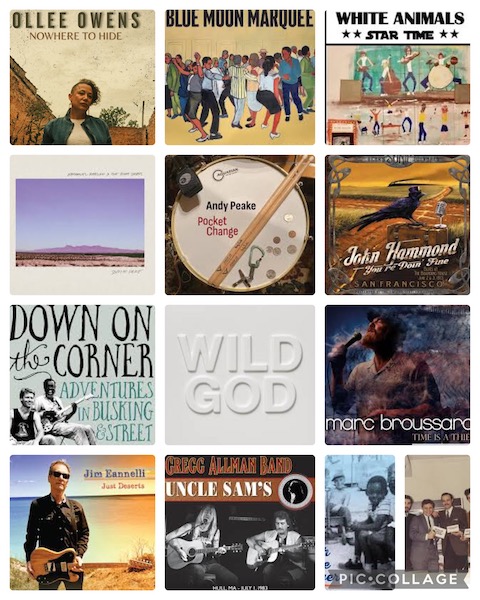
Gregg Allman Band, UNCLE SAM’S. It doesn’t take long for Gregg Allman’s well-tested road band to hit the monkey nerve and go for the gusto. There is something so pleasingly swinging about this octet that once the first song, “Midnight Rider” kicks in, it’s all over but the shouting. Maybe that’s because as a charter member of the original Allman Brothers, there is no way to walk away from that aggregation and not have the boogie tattooed all over the soul. And Gregg Allman absolutely has that. Even better, he was perfectly capable of penning original all-time songs like “Midnight Rider,” “Dreams,” “Queen of Hearts” and several co-writes that more than flown through the ethos for several decades. This Allman Brother might not have been the guitar monster his brother was, but he could sing, write and play the piss out of a Hammond organ like nobody’s business. This burning set in Massachusetts is over 40 years old now, but sounds like it was recorded yesterday with all the principles swinging at full tilt. The Gregg Allman Band was an aggregation for the ages and there was no way of standing down when the Allman Brothers dissipated in the 1970s. Gregg Allman was simply too good not to keep the heat level at sizzle until the end of his life. Even with his Cher detour, nothing slowed down. The man had the boogie in him, and it had to come out. Burn baby burn.
Blue Moon Marquee, NEW ORLEANS SESSIONS. A.W. Cardinal and Jasmine Colette aren’t exactly from the Crescent City, but they may as well be. The way the pair of Canadians zero in on the music birthed in the City that Care Forgot is a stone cold joy. All the songs shimmy and shake, take it to the river and then make sure the songs boogie and woogie just right is a stone cold lesson in musical love. It’s all there. Cardinal puts the groove in his guitar, while Colette bangs the upright bass just right. And both pitch in on vocals that are enough to think that Royal Street is right outside the window, calling all the righteous sonic creatures home. There is something about New Orleans music that offers full-on freedom in the rhythm and notes, with no questions asked and no expectations missed. The whole affair is a study in how the human spirit can conquer all when soul and sweetness combine for a stroll in the heavenly grounds of a sound sent from above. It’s been that way for hundreds of years, as we do the second line toward the middle of this century there can be no doubt that these 10 songs, whether they’re newly written or come from the innards of Memphis Minnie, Leadbelly, Bo Carter, Lonnie Johnson, Charlie Patton or other distinctive heroes along with Blue Moon Marquee themselves, is all mos’ scious. It’s in how they’re delivered that really matters. And in this album’s case, it’s righteous right down the middle and groovin’ right to the top. The fun and funk is in the house, and don’t forget to show ’em what your mama gave you. It’s time to find the levee and burn it down. Yeah you right.
Marc Broussard, TIME IS A THIEF. Down in Louisiana where the bayous rule, this singer-songwriter-bandleader has few peers. He’s been tearing up bandstands for long enough to know exactly what brings an audience to new levels of excitement, and has recorded different styles of albums to show he knows his way around a recording studio. On his new releases, TIME IS A THIEF, though, it’s like the musician has hit a bright new level. Produced by Eric Krasno and several other hands, these ten songs reach a whole new level of souldom by Broussard and his red-hot accomplices. This is Southern soul music knocked up a few new notches, and could very well break down different doors for Broussard. There is an appealing modernity to songs like “Mood,” “Cold Blooded,” “You Deserve More” and “Carry My Name.” The Pelican State funk is still fully there, but there are also several levels of instrumentation and vocals that make Broussard’s individualized sound even more original. It’s like all the musicians have an infusion of what’s possible when inspirations get stretched out, and new approaches are achieved. A song like “You Deserve More” is the subtle sound of a 2024 tip of the hat to the Impressions or other 1960s soul kings, but now done with a contemporary clout. It’s not an easy ride to bring some music into the present, but it’s clear that Marc Broussard is going for it now. There are no stylistic influences holding TIME IS A THIEF back, because the singer has set himself free from the past and is full-tilt pushing into the future. Go with him.
Nick Cave, WILD GOD. One of the most breathtaking events in modern music is when an artist is so individual, so committed, so majestic that they create their own genre. It doesn’t happen often, maybe because as time moves forward almost everything has been done. But no one can become another Nick Cave. That’s not going to happen, because this man creates in a time of his own. And WILD GOD is something so individual there is no chance of being compared to anything else. These are 10 songs that are ones that feel like a new category has been created for them. It’s one that is given to the most heartfelt experiences of life, that place where it almost can’t be imagined what it’s like to live there. After losing his son to an accidental death, Nick Cave had to stay alive minus the most precious event in life. How does one live? The ten songs of WILD GOD give others a glimpse through the deepest experiences of pain and loss, into an inkling of what might be ahead. “Swim to the hymn and swim to the prayer / And bring your spirit down / I’m a wild god baby, I’m a wild god / Here we go! Yeah here we go!…” What else is left to say, except that there are nine more of the most evocative songs ever written by a person who went under the volcano and managed to come back up. One can only hope that an album as devastating as WILD GOD never needs to be written again. Once is enough.
Jim Eannelli, JUST DESERTS. Every city famous for its music usually has a person who is known to everyone there, even if it’s not nationwide. It often feels like they should. Man of many musical guns, Jim Eannelli is that person in Milwaukee. He’s played with most of the people already known across the country, and is often the first person called when someone needs a session guitarist to add fire to a session. Eannelli’s new album, JUST DESERTS, is a stunner. That’s the only word that works to describe this collection of a dozen songs. He’s the kind of guitarist who can take the loneliest sound on the planet on any given day, and turn it into a red-hot blaze of emotion. Listening to JUST DESERTS is to remember why guitar solos can still get inside the soul and turn a small smolder into a fire without making World War III out of it. Instead, it’s just the subtlety of sound which brings the feeling to a hot burn. And then Jim Eannelli can turn around and make something like “Christine” into the kind of ballad that makes the possibility of a new romance about as likely as Taylor Swift joining KISS. Said another way, Jim Eannelli sounds like he’s wonderfully capable of doing everything. It’s enough to try and figure out why his isn’t a name revered in record stores everywhere. Maybe it’s the Milwaukee MIA effect, which is like the Bluebonnet Plague in Austin: they are music cities that are so filled with amazing artists that it’s hard to get the attention needed to be noticed outside city limits. That has to stop, because there’s a good chance there won’t be a better rock album this year than Eannelli’s JUST DESERTS. It has such a range of styles that it’s hard to believe one man wrote and recorded all 11 songs, and produced them to boot. But it’s a true fact he did, which makes it time people pay attention. Eannelli or else.
John Hammond, YOU’RE DOIN’ FINE/June 2 & 3, 1973. In the great Blues Explosion of the mid-1960s, young John Hammond went onto the stages of Greenwich Village clubs with his head held high. He had been listening to blues since he was a child, and with the credential that his father John Hammond was one of the great record men of the 20th Century, the young singer could do just about anything he wanted. That he chose blues to zero in on made perfect sense. Hammond’s first handful of albums for Vanguard Records caught the ears of bluesniks and folkies alike in the ’60s, and the young man was off to the races. Which included making some incredibly cool blues albums ever since. It’s like the man has become an American treasure. This collection of live recordings from San Francisco’s Boarding House done over two nights in 1973 are about as pure as music gets, and also beautifully presented. The fact they were produced by Grateful Dead’s sonic Svengali Oswley Stanley gives them a very special sound and, yes, vibration which sets the 41 songs pretty much in a class by themselves. Hammond’s unique voice, which veers from back alley blues to a purity of intention swings like branches in the wind. He has always had a mark of individuality that still stands alone. And, of course, the set list is a roller coaster of blues classics that covers the entire waterfront of the genre, ranging over 3-CDs from “Wang Dang Doodle” to “She’s Gone.” There really isn’t a living blues giant from those years who could top such an achievement. John Hammond’s vocals, guitar and harmonica are delivered with a blend of pure power and fine finesse like he’s creating a genre all his own. And, in many ways, that’s what he was doing. And still does. There might not be many more nights like this on our planet, so now is the time to listen how the world was turning in the first half of the Seventies, and feel lucky that both “The Bear,” as Owsley Stanley was nicknamed during his years of sound experimentation with the Grateful Dead and beyond, along with years of ultra LSD-making, and John Hammond found themselves together in a storied San Francisco nightclub and went to the moon.
Ollee Owens, NOWHERE TO HIDE. Noone can ever say Canadians don’t like their soul music. Singer Ollee Owens is the perfect case in point. To make sure the recording band had a connection to some of the glory years of Muscle Shoals juju, guitarist Will McFarlane is onboard for over half the tracks, and makes sure the grit and the groceries are delivered on the songs. The rhythm section plays attention to the funk factor all day long, while the keyboard kings deliver exactly the style that gets in the pocket and stays there. Mission accomplished with the musicians, and Owens herself is more than ready to bring the R&B elements all the way home on her vocals. It’s the kind of singing that cannot be believable unless it’s all the way there, which is exactly what happens on these elevent selections. One of the children in Ollee Ewens’ family has a cognitive disability, and the version Owens records of Bob Dylan’s “Lord Protect My Child” is a chillbumper from the very first note. As is the cover of Los Lobos’ “The Neighborhood,” which shows the talent needed to take a known original by another artist and give it a new fire. Along with other tracks like “Shivers’ and Butterflies” and “Still in Pieces,” NOWHERE TO HIDE might just be one of the strongest surprises of 2024. This is a singer who has been waiting to put together an album where every facet of the music is covered, and might open the doors to a new audience in the massive country to the south of her homeland. Ollee Owens has come through bringing it all home on the album she’s been dreaming of making for years. Dreams come true.
Andy Peake, POCKET CHANGE. It’s a rare day in studioland when the drummer brings in the musicians, picks and sings many of the songs and then actually releases the music under their own name. It totally turns on its head the old saying that, unlike children, “Drummers should be heard but not seen.” Skin king Andy Peake steps out front on POCKET CHANGE and exhibits his many talents in a way that is one for the ages. Peake drums, sings, writes and generally keeps the whole groove throughout this way-cool album, and by the end it’s no longer relevant that the person in charge was the drummer. That’s because Andy Peake spreads his unmistakable talents all over the studio, and in a way that doesn’t call all the attention to himself. Instead, it’s a group affair, as almost all the truly great albums are, and Peake just happens to be in the middle of the music. The groove of the music has sublimely Southern, with guitar groovers like Gary Nicholson, Kenny Vaughan, James Pennebaker and a half-dozen more, along with prime players on each instrument and even a Dan Penn song, “Somebody’s Gotta Do It,” that adds a bucket of soul to the affair. So the next time an audience overlooks the drummer unless it’s a super famous name, don’t forget to listen for the person who’s really stoking the engine. Andy Peake shows over and over on POCKET CHANGE that he’s got the goods to bring it all home. Funk it up.
Nathaniel Rateliff & The Night Sweats, SOUTH OF HERE. One of the great singers of the past decade, Nathaniel Rateliff has a voice of a true full-on human being. It’s obvious he’s lived a real life, with enough ups and downs to fill a large scrapbook. Along with all that living are bumps and bruises that attest to the fact that Rateliff can hold on to whatever it is that keeps him moving forward, and isn’t one to moan about the tough times. His voice has been shined and scraped by the thing we call life, and the man writes songs that sound like the lyrics come from the sometimes uneasy act of living. Who knows if he’ll ever beat one of his great lyrics of the modern world–“Son of a bitch!”–but even if he doesn’t, life will still roll forward for him. This new album sounds like a resurrection. It really does.The music is real, and not something aiming for the stars but rather shooting for the heart. Whenever something this real splatters against the wall, it’s time to give notice that we have greatness in our midst. There is no way to really tell if it will make a notice on the sales charts or not, but that thankfully is not the point. Instead, what really matters is those listeners who truly care have their breath taken away. And whether SOUTH OF HERE will be put in their pile of albums that are going to be kept forever. And turned to when the challenges of living become more high staked, or the loss of love slams full bore into the face head on. And only a few good songs will salvage that forever hope humans have that being alone won’t be a forever gig on this rough road of staying alive. Because only the few singer-songwriters traipsing the planet now as wonderful as Nathaniel Rateliff are offering the deep soul music it’s going to take to keep going. No matter what.
White Animals, STAR TIME. “Now you ready for star time?” That takes big guts to take the opening line of James Brown’s perfect recording from 1963 at Harlem’s Apollo Theatre–“Are you ready for star time”–and use it as the opener on a new rock record. But that’s exactly what White Animals have done, and they’re not backing down. This quartet has guts, and they’re not slowing for anyone. Kevin Gray (guitar), Steve Boyd (bass), Ray Crabtree (drums) and Rich Parks (lead guitars) are a sleek-sized quartet who combine melodic riffs, heartfelt lyrics and just enough bravado to make people listen. And once they get started they do not slow down. This is a band which believes in itself, even if the big time musical world has fragmented into so many oddball styles it’s hard to remember your own name, much less the style of music you play. But that’s where courage comes in, and there is a chance this is an aggregation with enough courage to run a circus on fire. The foursome sounds like they’re having a blast from a mile off, and also that they believe in themselves like they were guarding the Alamo back in the 1800s in San Antonio. Rock & roll needs to be backed by a belief system, or otherwise there’s not much point to do all it takes to even plug in a guitar. Gray and Crabtree have honed their guitar sound down to a perfect edge, never too boisterous but more than ready to do battle. The voices in White Animals are rough and ready, which leaves the rhythm section to pound out the bottom sound like hammer and nails at full volume. No matter how many instruments end up on a rock & roll record session, it’s always good to remember the lineup that played in the Beatles. It’s an encouraging image to see two guitars, bass and drums onstage, and know the world can be changed at any given moment by just that outfit. Hearing is believing.
Song of the Month
Billy Thompson
“TRUTH COME TO POWER”
Sometimes there is something in the air that feels like a major song is on its way. It might be the political earthquakes which can make the world feel like it is falling off its axis which makes such a song a necessity, or maybe a personality has entered the fray who is absolutely ready to turn life upside down for as many humans as possible. Whatever it is, Billy Thompson’s recent recording, “Truth Come to Power,” has a built-in beauty which captures the leaky feelings surrounding the present, and even gives a glimmer of hope that whatever is ready to implode will somehow be alright. Thompson is someone who can see past the worry and offer a strength to help those in need get through the troubled times we all surely face. Somehow Thompson’s guitar-playing in itself is a guide to the future. His sound is street-hard and his vocals have a solidity that maybe comes from gargling with lighter fluid. Whatever it is, this song sticks to the bones and spreads a faith like only musical greatness can. Feel and heal.
Reissue of the Month
Lou Reed at Pickwick Records 1964-1965
WHY DON’T YOU SMILE NOW
The 1960s in the United States were a strange place. There were psychedelic bands that had dedicated their music to a sound that made life feel like it was flying through the sky on its own, and there would be a time that the bands themselves were shooting for the moon. And then there were pop groups that mathematically searched for formulas that would make millions of fans buy their records, with little or no impetus to take their listeners to another realm. There were also artists who tried to figure out the formula to make listeners respond to what they thought were new grooves, even if those grooves were formulated to appeal to an audience that had no idea who they were really listening to. In other words, this was a sound strictly dedicated to bringing in fans that thought they were discovering new styles of the future. Insta-groups like The Primitives, The Beachnuts, The Hi-Lifes, The Hollywoods, The Roughnecks, The J. Brothers, The Foxes and more. One of the more constants of these bands was none other than Lou Reed, before he jumped off the edge of the world and formed Velvet Underground with cohorts John Cale, Sterling Morrison and Angus MacLise, soon to be replaced by Maureen Tucker. In many ways, Reed’s years at Pickwick Records was like paid practice for recording rock & roll records. The songs were often comical, but the bands still got in experience on recording equipment and sound skills. To that extent, it’s eye-opening to hear the bands going through the motions of seeing what they could come up with, humorous or not on this superlative collection. Other participants like Roberta Williams, Terry Phillips and others sounded like they were having a good time no matter what the future held, even if there might have been some embarrassment when the songs were released in the mid-’60s. But in some ways the results weren’t that far from Andy Warhol’s Campbell Soup cans. Art is in the eye and ear of the beholder, and in the middle of the past century just about anything could fly. And for a dance song, it’s hard to beat the lead-off track by The Primitives titled “The Ostrich.” America was getting ready to take off the artistic handcuffs and society would never be the same. Turn it up.
Book of the Month
Cary Baker
DOWN ON THE CORNER: ADVENTURES IN BUSKING AND STREET MUSIC
Strip away all the amplifiers, microphones, monitors, and whatever other mechanicals are onstage, the bottomest of lines is a voice, an acoustic instrument or two, and maybe a 55-gallon oil drum (in the case of Bongo Joe). And maybe a couple of extra things to beat on, and voila, street music is born. It really is the beginning of almost everything. And leave it to Cary Baker to write the Bible of the sonic adventure. In a hypnotic way, this intriguing book makes the endeavor of hitting the street and going for it on the same level of excitement as taking off for the moon. Baker, a longtime esteemed music publicist, clearly has the boogie woogie of street music and busking in his veins, and the way he has collected and written this fascinating tome seems like an art form in itself. It’s serious business. Wisely divided into chapters by geography, Baker is able to make an exciting sense to what sometimes seems a jumble of geography, and thank goodness for his extremely sharp planning. Reading all the previously untold history and adventures that street musicians lived through is a modern travel guide, with an audio element always around the corner. And even if the glory days of musicians making the streets their stage is mostly behind us, that doesn’t mean the era at its height is any less exciting now. The mind boggles at what listening to Robert Johnson playing on the street must have been like when he began not long after the beginning of the 20th Century, and some of the best news is that there are still those out there with a sky for a roof and a world for an audience, doing their best to share the magic. When I first saw and heard Bongo Joe playing on the Galveston seawall in front of Murphy’s pier, I felt like I had been plugged into a socket and electrocuted. I was five years old and somewhere in my still-forming brain I promised myself I would someday play drums. And that I might also get the 55-gallon oil drum, tune it with axe wacks like Bonjo Joe did, and take off for adventure. Someday, I swear.
Bentley’s Bandstand: October 2024