



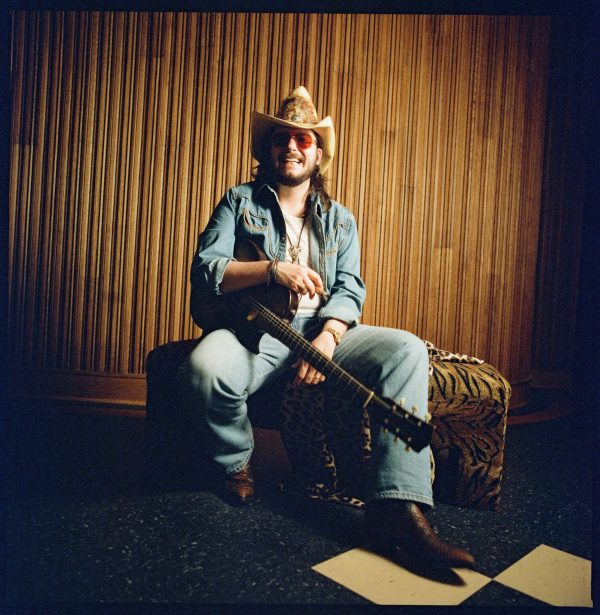
Eddie 9V interview (photo by Alysse Gafkjen)
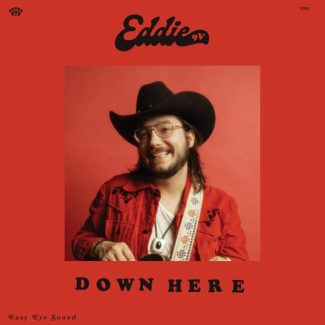
I had Eddie 9V’s new album turned up loud enough that my wife told me to turn it down. That is usually a pretty good sign. Down Here has the kind of guitar playing that makes you reach for the volume, but it also has something that matters just as much: songs you want to hear again after the solos are over. There is Southern soul, raw blues-rock, a little funk, gospel and even disco, all tied together by a singer who sounds comfortable following his own instincts.
Released November 6 on Easy Eye Sound, the 12-song album pairs the Atlanta-bred guitarist and vocalist with producer Dan Auerbach of The Black Keys. At Auerbach’s Nashville studio, Eddie joined a room of accomplished players and writers, including Marcus King, Pat McLaughlin and Daniel Tashian. The recordings came together quickly, but when I spoke with him, Eddie explained that the real change was not the schedule. It was finally being able to concentrate on being the musician.
“It was such a breath of fresh air,” he told me, recalling years spent handling his own production and engineering. With Auerbach, the relationship felt like two buddies who had known each other for years. Eddie could “do the music and sit back and listen to the result.” Four of the album’s songs began as compositions he had already written: “Horses,” “Satisfy The Way I Do,” “Can I Sleep In Your Backyard” and “Maybe That’s A Good Thing.” He took particular pride in seeing those songs hold their own alongside material developed in Nashville.
The opening “Whole Lot Coming For You” announces the record with a ripping, ZZ Top-like blues-rock charge. The guitar has the greasy drive of “Just Got Paid,” while Eddie’s vocal comes in with its own rough-edged rasp, sometimes sounding as if it is roaring through a battered PA. “Blowin’ Up” keeps the foot-stomping momentum alive. Its slide guitar and country-fried funk have swagger to spare, and the solo exchanges are even better once you know how they happened. Eddie explained that he came up with the riff while working with Marcus King; then the three guitarists took turns in the studio. “I go first, and then Dustin goes, and then Marcus goes,” he said, referring to Dustin McCook and King. “Just like how you do it at a jam.”
One of my own favorites is “Everybody Knows By Now.” Its winding guitar lines and shifting pulse gave me an Allman Brothers kind of Georgia-and-Florida feeling, with some older Canned Heat flavor underneath. Eddie laughed when I mentioned it: I was the first person to tell him that this was my favorite. The song, he said, was the last one they technically cut for the album, and it remains difficult enough that his touring band is still figuring out exactly how to reproduce it live.
“Satisfy The Way I Do” moves into a softer, funky love-song groove, with small, tasteful blues notes tucked around a voice that can sound remarkably smooth. “Horses” goes even further into Southern soul, its drums relaxed and Eddie’s high register floating over the arrangement. He wrote it while traveling in a van in Arizona. Auerbach was only moderately enthusiastic when Eddie first played it for him, so Eddie pushed to record it because he knew how well the song worked onstage. The finished version is sweet, unhurried and one of the most inviting songs on the album.
“It Don’t Bother Me” starts with an acoustic feel before slipping into something that recalls the Stones’ early blues-rock records. Every instrument has room to breathe. On “Can I Sleep In Your Backyard,” a psychedelic hint in the opening gives way to an irresistible pocket of organ, drums and responsive guitar. Eddie told me that songs like this and “Blowin’ Up” get stretched out onstage with longer solos and more blues. His regular road band has played together for about six years, so the live arrangements naturally take on a different personality from the Nashville recordings.
The biggest stylistic left turn is “Rock Your Baby,” the George McCrae disco-soul hit. I was not expecting it on an Eddie 9V album, but its danceable rhythm works beautifully against the laid-back Southern guitar. The choice was Auerbach’s. Eddie remembered hearing Dan blast the original 45 in the studio and then suddenly suggesting that they record it. “I’ve never played that song in my life,” Eddie recalled. That spontaneity is part of the charm; somehow they found a place where Southern rock and disco can share the same room without either one sounding out of place.
“Maybe That’s A Good Thing” begins with acoustic blues and gradually develops a heavier stomp, with gospel-flavored backing voices giving the song added lift. Then comes the title track, “Down Here,” and the album’s center of gravity shifts. I heard a stripped-down Southern swing and a story about hard days, small places and staying resilient. Eddie’s explanation made it more personal than I had realized.
He grew up visiting his grandparents’ roughly 100-acre farm in Monticello, Georgia, and eventually lived with his Mimi and Papa for about four years. He remembered fishing, hunting, tending cattle, sitting around a fire and eating homemade dinners. “It was the best times of my life,” he told me. His grandfather died this year, after having seen some of Eddie’s success. Eddie also described an unreleased song he hopes listeners will hear next year, one that mentions Mimi and Papa by name. Suddenly the easygoing rhythm of “Down Here” feels like more than nostalgia. It sounds like someone preserving a place and the people who made it home.
“Keep Turning Me Away” brings the heat back with gritty distortion, a little Lenny Kravitz-like rock-and-soul attitude and verses that pull away just long enough for the choruses to hit harder. Eddie’s high notes soar, but he never abandons the story of the song. Then “Come And Get Me Lord” closes the record in a calm gospel-blues mood. The gentle feel first struck me as comforting, with B.B. King-like restraint and some of Albert King’s bite in the phrasing. Our conversation revealed the weight behind it.
Eddie remembered writing that song around a table with Auerbach and Pat McLaughlin, accompanying themselves on acoustic guitars. He still has a fondness for the rough iPhone demo. Only afterward did he begin to recognize how much of his recent grief was inside the music. He had lost an uncle with whom he had been close, someone who lived at the farm and taught him to hunt. Auerbach was also facing the loss of his father. “We were both writing from deep down in the wells of our heart,” Eddie said. Hearing that story changed the way I heard the album’s final two and a half minutes.
Those expressive bends are rooted in a blues education that started long before he made records under the Eddie 9V name. He played drums in a death metal band, spent time in indie and synth-pop music, and grew up going to local blues jams. Older musicians there sent him home to study Albert King, B.B. King and Freddie King when he arrived playing too many fast rock licks. He listened, learned the phrasing and returned to compete with the best players he could find. You can hear the difference today: his solos have speed when they need it, but the note he lets hang in the air is often the one that stays with you.
There was also a remarkable piece of blues history in his hands during these sessions: Sean Costello’s 1953 Gibson Les Paul Goldtop. Costello was Eddie’s first guitar idol, though Eddie never got to meet him. Mat Koehler at Gibson, who acquired the instrument, let him use it for days at a time in the studio. Eddie described playing it with Costello’s own strap as “almost kind of like wearing a little bit of a cheat code.” That is a musician’s joke, but the respect underneath it is obvious.
Before we wrapped up, I asked what made him proudest of the road from those Georgia blues jams to this point. He did not talk about fame first. He talked about the family connection he has maintained, the band that has stayed together, and the fact that he is still able to play music for a living. His father, he said, never urged him to give up music for a more conventional job, even when times were difficult. Eddie wants to give something back to his parents and the people who helped him along. That answer fits Down Here as neatly as any guitar solo: a musician moving forward without pretending he arrived here alone.
The album is full of outstanding guitar work, but that is not the only reason it succeeds. Eddie 9V can move from a distorted blues-rock riff to falsetto soul, from a spontaneous disco cover to a song that quietly carries family grief, and still sound like the same artist. Working with Dan Auerbach has widened the musical frame. It has not changed the person at the center of it. If anything, Down Here lets us hear him more clearly.
Find more information here on his website: https://www.eddie9volt.com
Enjoy some of our previous coverage here: REVIEW: Eddie 9V “Capricorn”