



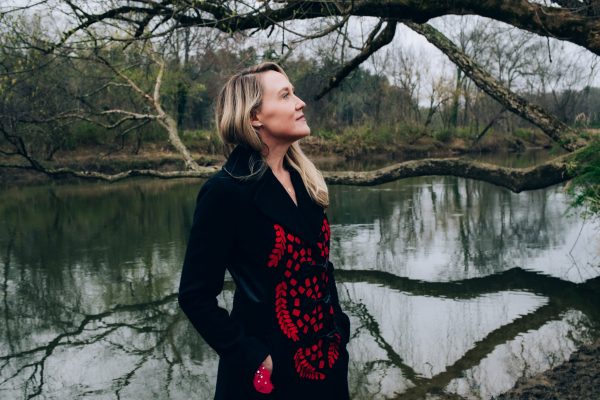
Angela Easterling photo by Sandlin Gaither
Angela Easterling on The Personal and Historical Resonance Behind Songs From The Knoxville Project
South Carolina-based singer/songwriter Angela Easterling has spent several years thinking about a very big project, one with the potential to be a musical stage play, that relates to her own family history in the Carolinas and Tennessee during the Civil War. It’s a story so poignant, and one originally told directly by her female ancestor through a diary, that it practically demands to be told on a bigger scale. Recently, Easterling released Songs From The Knoxville Project, which is a wide-ranging album that loosely tells the story of her family’s struggle and adventure, and brings in a whole ensemble of local musicians who provide the full scope of the story through many instruments and many voices. The album represents a selection of many songs that Easterling has written to tell the story of her female ancestors’ march with their children from North Carolina to Tennessee, a march they undertook to join their male family members who had decided to support the Union instead of the Confederacy and were stationed there.
Because this is a Southern story of resilience and determination, Easterling carefully curated Southern Folk musical traditions for the album, leaving drums out entirely, and leaning on mandolin, fiddle, and acoustic guitars for the most part. Some of the collaborators on the project include vocalists Fayssoux McLean and Will Kimbrough, Carolinians Darby Wilcox, Elizabeth McCorvey, Admiral Radio, and Audrey Neel and Molly Johnson of the bluegrass trio, The Wilder Flower. They built on the foundation of Sam Kruer on bass, Matt Purinton on mandolin, Robert Gowan on fiddle, and Angela’s musical and life partner Brandon Turner playing multiple guitars, banjo and dobro. I spoke with Angela Easterling about The Knoxville Project, what it represents in terms of a bigger landscape of work, and also about the documents and ideas that she drew on to make this story urgent and impactful for a modern audience.
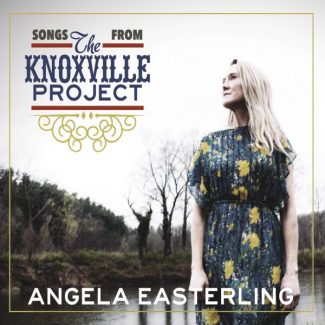
Americana Highways: I haven’t heard of that many concept albums or even stage performances that use Roots music as part of the narrative, though I think that it’s opening up more, and becoming more of an option for artists. But this project of yours has such a big scale, and it’s based on history. And you had local council support for this project, which shows its significance to your region, on top of having local South Carolina artists play on this right?
Angela Easterling: Yes, I was lucky that I got a state-wide grant from South Carolina Arts Commission. And I also got a local grant from Greenville County, South Carolina, where I live. That’s pretty cool because my project is about people who live in North Carolina, and go to Tennessee, but I live in South Carolina. So I feel grateful that my local arts council supported this, though it is my family history, and they lived not far away from here.
Originally, I wanted to record the whole project with a full cast, about a year ago, but I sat with it for a few months, and thought, “I’m not going to be able to get a budget for this right now.” So I kind of went back to the drawing board and thought, “Well, let me pick the songs from this project that I could play, if I was playing a solo acoustic show by myself, or me and my partner, Brandon.” That’s what led to the song selection that I picked for this album, songs that didn’t need a full cast. But I still wanted to give that flavor of what it would be like, with different voices.
I did write things for other people, and it’s the first time I’ve ever written for a male voice. That was a little challenging! I definitely wrote outside my own vocal range, which made it some of the most challenging vocals that I’ve ever done, when I got into the studio and started recording this stuff. [Laughs] I didn’t let my own limitations limit myself, like I usually do, so it was great to bring in other people. We have a wealth of musicians in this area, so I kind of made a dream list of people I wanted to work with, and contacted all of them, and they all said, “Yes”!
You’ll hear Will Kimbrough, and folks like Darby Wilcox, Elizabeth McCorvey, and Admiral Radio. We had Audrey and Molly from the Wilder Flower, a young bluegrass trio. We had great local string players, and I love how it came together. In a way, I was getting to cast my dream project, and bring all these folks in.
AH: It’s almost like putting on the producer’s hat, and the composers hat, and all these things. I love the fact that you were doing so many things that you have never done before, that’s definite artistic growth. How did you work with so many people on this album? Was it in the studio? Was some of it remote?
AE: Everyone except Will, who lives in Nashville, came into the studio here in South Carolina, and record.
AH: That’s amazing! I didn’t expect that answer.
AE: And Will has a home studio, so we sent him the tracks that we recorded, and he sent his back. What he did was just incredible. But everyone else was able to come into the studio because they are fairly local. I think Audrey came the furthest, down from Johnson City. They were coming across town, or down from Hendersonville, or Asheville, North Carolina.
AH: I think I had better say at this point that my family are from Western North Carolina, and I recognized the geography of this album, even some of the landscape place names, which was really cool for me to experience. Also, of course, it’s amazing to see the female role being so central to this story, which makes it very much an untold story. We don’t hear as much about what women experienced during the Civil War. How did you receive this story of your ancestors?
AE: The first thing I got, 15 years ago, was a photocopy of a handwritten document that had been passed around in my dad’s family. I believe he got it from one of his cousins. When I decided to do the musical, many years later, I asked my dad for it, since I didn’t know where it was, but also at that time, it had been printed in a local newspaper. Someone had transcribed everything. Mary Middleton Orr, who was the oldest daughter of my great, great, great grandmother, was 21 years old at the time of their journey, and her mother was 37.
Mary had an infant child, and Mary’s husband had left for Knoxville, Tennessee to join the Union army. Basically, all the men of age had gone to Knoxville already. Mary’s family was very poor, and her mother’s family couldn’t provide for her, so at the beginning of the story, Mary has to go to Transylvania County, to the Brevard area, to live with her in-laws. She starts writing her story at that point. One day, a crowd of people are walking up to her house, and it turns out that it’s her mom, and all of her ten brothers and sisters. And her mother has already walked there to say, “We’re going to Knoxville, and you can come or you can stay, but this is what we’re going to do so that the children don’t starve.” That’s where her story picks up. It’s an incredible story, kind of like The Odyssey, or in a modern context, Oh Brother, Where Art Thou? They have these different encounters along the way on this trip. There are highly dramatic moments in it, and it really gives itself over to the stage, I think.
Since this music has started coming out, I have a friend and fan in Spartanburg who is an historian, and he’s found all these war records, like from Mary’s husband, and it all backs up her tale and what she says. The dates, and the way things are laid out, are the same.
AH: Sometimes life really does beat any fiction. This is such an incredible story, and the fact that it not only focuses on women, but was written down by women, conveys that perspective so clearly. Was there emotion in Mary’s actual writing so that you could pick up on it? Sometimes in the 1800s, people wrote in a formal way.
AE: She is a very emotional writer. She writes a lot of times about her feelings. In a lot of ways, I didn’t have to imagine what they were feeling, because she says what they were feeling. At one point she says, “I got so down at heart, I just sat down and cried.” I don’t think you’d get that in something that was written down by a man in that time period. It is, to a modern ear, still quite stoic. These are people walking on foot, carrying babies, walking across the French Broad River, laying down on the ground, wearing all their clothes in the middle of August. It’s things that I hope I never have to go through! I couldn’t even imagine it. So that part is quite stoic, but she gives a lot of insight into her own character. She gives a lot of insight into Narcissus, her mother, my great, great, great grandmother. At the heart of it is these two women.
You have Narcissus, who was shy, quiet, who would not usually step out and do something bold on her own, but she does do something bold on her own. Then you have Mary, who is resourceful, and will tell a lie if she needs to get by. There’s a whole scene where she goes to Asheville and has to get a pass from the Confederate General, so they can travel through this war-torn area. And Mary makes up this whole story about how she hasn’t heard from her husband since his battalion got captured, and all the children are starving, and that’s why they have to go to Knoxville. And he lets them pass. So that’s one of the songs that didn’t make it onto the album, but hopefully we’ll do it one day. She plays this Southern belle and is kind of able to use men’s preconceptions about her in her own favor. I had to use my imagination for some things, but there were also a lot of clues in this relatively short document about Mary and her mother’s personalities and feelings.
AH: That must be a specific tension in that you need to be able to give yourself freedom in order to do this creative project, even if you’re trying to be faithful to such important family history and regional history. I appreciate that you let yourself have the freedom to create something, investing yourself into their story.
AE: My first exposure in the arts was in theater, so I grew up doing acting classes, and things like that. I definitely used a lot of that character interpretation. In many ways, I think the similarities between some of the things going on in our country over the last few years, and some of the things they were dealing with, making it not quite as hard to work on. We understand what it’s like when people in our family, or people in our church, or people in our workplace, do not want to have anything to do with us anymore.
We’re in a very divided time. We’re in a very fragile time. There are things that we’ve gone through, like the pandemic, where we were concerned with our children’s survival. There’s a lot that’s gone on in the last few years that made this more relatable for me, in my brain, and in my imagination, than it may have been previously. That’s kind of what I was trying to do. I didn’t want to make this like a history book. I want you to feel like you’re in their skin. I want the listener to feel like they are facing this dilemma: If I go on this journey, we might get lost, we might fall in this river and drown, we might starve to death, we might get arrested and thrown in jail, the boys might be shot. Stuff like that was going on during that time, and I want people to feel like they are inside the story with them.
AH: I notice that you use a lot of the first person, “I,” in the songs, as if you are in the story, rather than using a narrator’s voice. That’s a great way to draw people in. You also have this song “The Story” which is a bit of an introduction, though, that helps the audience see how you, the writer, feel about this project. It helps our modern audience approach the story. It’s a great prologue.
AE: Thank you. When I started writing that, it was after we went on a trip to the Grand Canyon, and I was blown away by seeing the power of water. It got me thinking about how our stories that we tell, and our history that we understand, really shapes who we think we are, and our culture. I wanted to do a prologue and ease into things. It says, “I’m going to tell a story. Will it mean something to you? I hope so. Maybe it’ll change the way that you think about yourself. Maybe it’ll change the way that you think about your history.”
AH: By the way, I notice what you were saying about Narcissus’ personality in the song “Trouble.” She just wants to be left alone! To me, that’s the most modern thing, something I can relate to, is her mindset. This is the practical approach that a lot of women have to take, focused on the survival of their family. Then we have to ask, “What would it take to get her involved in this situation?” And you really paint an almost mythologically dark picture of what’s looming in that song, the threat that’s coming.
AE: Something that’s interesting about “Trouble” is that I play it at a lot of shows, and I don’t tell people the backstory. We just play that song. Even people who were musicians playing on this album came in, and said, “I can tell that you’re writing about what’s going on in our country right now!”
I was at one show, and a man called out from the audience after we played the song “Trouble,” and said “What’s THAT song about?” [Laughs] He obviously had an idea of what that song was about. I like that, though. I want people to feel like they are in this skin, in these shoes, and understand. Because, in a way, we do.
Thanks very much for talking with us, Angela Easterling! Find more information her eon her ebsite: https://angelaeasterling.com/
Enjoy our earlier coverage here: REVIEW: Angela Easterling “Songs From the Knoxville Project”