





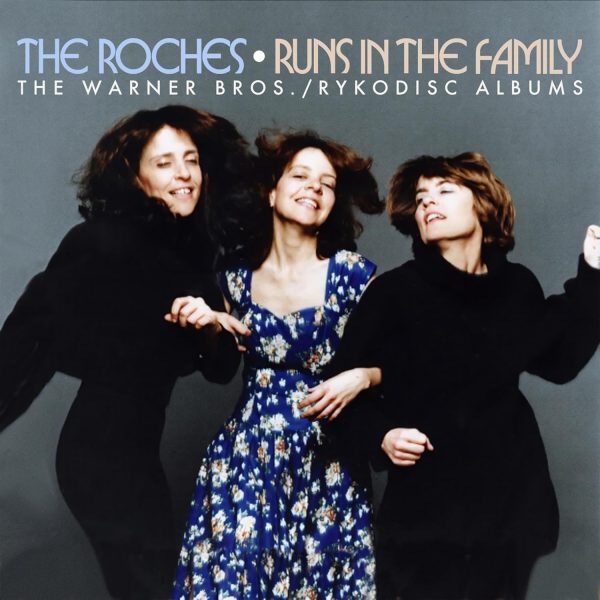
Maggie, Suzzy, and Terre Roche, three sisters from northern New Jersey, sang like angels on the albums they made together, with astonishingly close harmonies and imaginative phrasing. Though rooted in folk, their music owes debts to everything from jazz and barbershop quartets to 1940s vocal groups and punk. Their lyrics, which often chronicle events from their own lives, offer compelling, at times hilarious, commentary on career struggles, boyfriends, and more.
You’ll find evidence of all the Roches’ strengths on a new box set called Runs in the Family: The Warner Bros./Rykodisc Albums, which includes their first four studio LPs and one later release. The group issued about half a dozen other LPs, all of which are worth seeking out, but Runs in the Family contains much of their must-hear material.
The set’s first CD features the trio’s eponymous debut album from 1979 and Nurds, their 1980 sophomore release.
The Roches was produced by King Crimson’s Robert Fripp, whose involvement is not as crazy as it might seem, as the trio’s music is more than a bit avant-garde. You don’t have to venture beyond the album’s opening track to conclude that the group had something unique and noteworthy to offer, both musically and lyrically. They wrote the song, called “We,” after a venue for one of their first gigs asked for a bio. “We are Maggie and Terre and Suzzy,” it begins. “…We don’t give out our ages, and we don’t give out our phone numbers / Sometimes our voices give out, but not our ages and our phone numbers.” Their voices never do give out on the record, but by the time it’s over, you might be wishing you could get ahold of their phone numbers.
Other standouts on that album include “Hammond Song,” which features some of their most breathtaking harmonies, and the simultaneously funny and heartbreaking “Mr. Sellack,” in which an out-of-work singer pleads with a restaurant manager for a second chance at a job she’d quit. “Give me a broom and I’ll sweep my way to heaven,” proclaims the song’s protagonist, who confides, “Waiting tables ain’t that bad / Since I’ve seen you last, I’ve waited for some things that you would not believe to come true.”
The Nurds, which the Roches made with Paul Simon’s producer, Roy Halee, delivers more memorable, frequently quirky material. Highlights include a cover of “Factory Girl,” the traditional Irish ballad, and “The Death of Suzzy Roche,” an oddly humorous tale written by Terre and Suzzy in which a worker in a laundromat patronized by the latter complains about her “stinky crusty socks,” “underwear that shocks,” and assorted annoying habits, and concludes “I’d like to stick a turd in her mailbox.”
The second CD contains Keep on Doing, the group’s third album, which came out in 1982, and 1985’s Another World, their final Warner Bros. LP.
While arguably not quite on par with the first two albums, the Fripp-produced Keep on Doing includes such standouts as an a cappella version of Handel’s “Hallelujah Chorus,” Terre and Suzzy’s droll “I Fell in Love,” and “Keep on Doing What You Do/Jerks on the Loose,” where the Roches cheerily sing, “Why don’t you listen to my little pep talk / Instead of what that person said / And now I’m gonna open up the window /And you will come in off that ledge.”
Brill Building songwriter and Blondie and Go-Gos producer Richard Gottehrer is among several producers who oversaw Another World. Selections here include a sublime cover of the Fleetwoods’ 1959 chart-topper, “Come Softly to Me,” which was featured in the 1988 film Crossing Delancey. Also on the program is “Face Down at Folk City,” about being sick at the New York club. “I showed up at rehearsal with a crushing hangover,” Terre says. “All of the details in this song actually happened.”
The set’s third and final CD contains Can We Go Home Now, which came out 10 years after Another World. It includes the sweet “You (Make My Life Come True),” by Maggie, who died of breast cancer in 2017, and her “My Winter Coat,” which proves she could write smile-inducing lyrics about almost anything. This album has been expanded to include the box set’s only bonus tracks, Suzzy’s “Second Family,” a sad song about an abusive partner, and a live version of “My Winter Coat.”
A well-illustrated 32-page booklet includes an essay about the Roches by critic Joe Marchese, who compiled the collection in collaboration with Terre. Also featured are lyrics to every song and notes about each of them by Terre and fans such as Linda Ronstadt and Linda Thompson.
Eli ‘Paperboy’ Reed’s Must-Hear Music
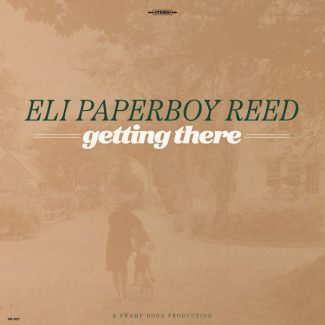
Last year, Eli “Paperboy” Reed released a 20th-anniversary edition of his auspicious debut album, the hitless, jokingly titled Sings Walkin’ and Talkin’ and Other Smash Hits! Now comes Getting There, a new CD that suggests the Massachusetts native deserves to be headed toward a real smash-hits collection.
It would be difficult to overstate the excellence of this album, which was winningly produced by country soul singer and songwriter Swamp Dogg, who duets on one number. The set, which features judiciously employed brass, includes 11 new Reed originals plus “How Can I Forget,” which Ben E. King and Jimmy Holiday popularized, and “Knock, Knock Memories,” which Swamp Dogg co-wrote. All these tracks are melodic and catchy, with memorable lyrics about adult love relationships. (“There’s plenty of music out there about falling in love,” says the singer. “I wanted to write about staying in love…This is grown-folks music.”)
While the material is terrific, it’s Reed’s soul-soaked vocals—which manage to recall both Clyde McPhatter and Jesse Winchester—that most makes the album great.
Sublime Soul from Thee Sinseers
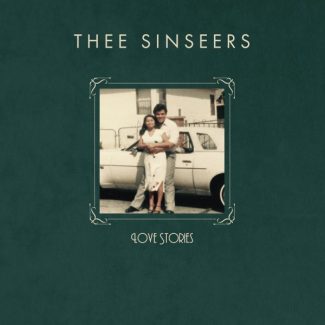
Have you heard the debut studio LP from the Los Angeles–based Thee Sinseers or the recent first solo album by its ultra-talented singer, Joey Quinones? If so, you won’t be surprised by the sound—or the quality—of Love Stories, the group’s sophomore release.
As its title suggests, the record finds the band once again exploring the ups and downs of romantic relationships. The group’s music recalls the best of vintage Chicago, Philly, and Chicano soul, plus a hint of doo-wop. If you like outfits such as the Chi-Lites, the Intruders, the Spinners, the Delfonics, Thee Midniters, and the Stylistics, you’re gonna lap this up.
With nine members and several guests, the group has a lot to work with. Besides winningly producing the set and delivering the gorgeous lead vocals, Quinones plays trumpet, piano, organ, guitar, drums, and percussion. His bandmates provide additional percussion, guitar, trumpet, and keyboards, plus sax, flute, trombone, bass, and backing vocals. Other musicians add violin, viola, lap steel guitar, and more.
The CD features 10 effusive ballads and mid-tempo numbers that showcase sublime vocal harmonies and inventively arranged, lushly textured music. An album-closing 11th track, “While You Were Sleeping,” is a dreamy instrumental that sounds like a companion to Santo & Johnny’s 1959 chart-topper, “Sleepwalk.”
J.M. Kearns’s Richly Detailed Vignettes
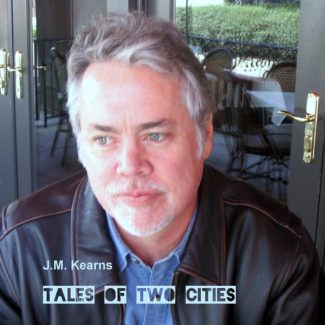
On past albums such as Surviving in the City, Vol. 1, New Jersey–based singer/songwriter J.M. Kearns drew on real-life experiences to craft richly detailed vignettes. He does so again on the digital-only Tales of Two Cities, whose engaging songs are mostly based on events he lived through or witnessed while residing in Nashville and Los Angeles.
In “Circle of Friends,” for example, he tells of a group of songwriters who came together in Nashville until an out-of-state romance disrupted their congeniality. And in “Living in a Car,” which Kearns says owes a debt to his admiration for John Prine’s catalog, he describes a couple who decide to head for California because “it’s nicer livin’ in a car when it don’t rain.”
The folk/Americana release is mostly a one-man effort. Kearns wrote all the songs and produced the album, and while other musicians show up on one track, the remaining nine numbers find the singer accompanied only by his own guitar and occasional harmonica.
______________________
Jeff Burger’s website, byjeffburger.com, contains more than four decades’ worth of music reviews and commentary. His books include Dylan on Dylan: Interviews and Encounters, Lennon on Lennon: Conversations with John Lennon, Leonard Cohen on Leonard Cohen: Interviews and Encounters, and Springsteen on Springsteen: Interviews, Speeches, and Encounters.