Two weeks ago, this column discussed singer Joe Brown, who is virtually unknown in the U.S. but has some fans in England, where several of his songs charted in the 1960s. Cliff Richard’s career offers a more extreme example of a similar dichotomy.
Though he scored two Top 10 hits in America in the 1970s, nearly all his many other singles and every one of his albums have flopped here. Most of today’s U.S. record buyers, particularly the younger ones, probably don’t even know his name.
In England and some other countries, the situation has been different, to put it mildly. In the UK, according to Wikipedia, Richard has sold more than 21 million 45s, making him the third-highest-selling artist in singles chart history, behind only the Beatles and Elvis Presley. He has had a whopping 130 Top 20 singles in the UK, including 14 No. 1s, and is the only artist other than Presley to make England’s singles chart in every decade from the 1950s to the 2000s. All told, Richard has sold more than 250 million records worldwide, making him one of the most commercially successful singers of the entire rock era.
His good fortune in the UK and elsewhere seems easier to explain than his stateside obscurity, though the latter might be partly attributable to his being overshadowed by the similarly styled Presley. Richard is a talented and versatile singer who, like Presley, has proved just as comfortable with romantic pop ballads as with hard-driving, rockabilly-influenced rockers. Moreover, much of his best work has featured backup by the excellent Shadows (who were known as the Drifters until the U.S. group of the same name threatened legal action over rights to the moniker).
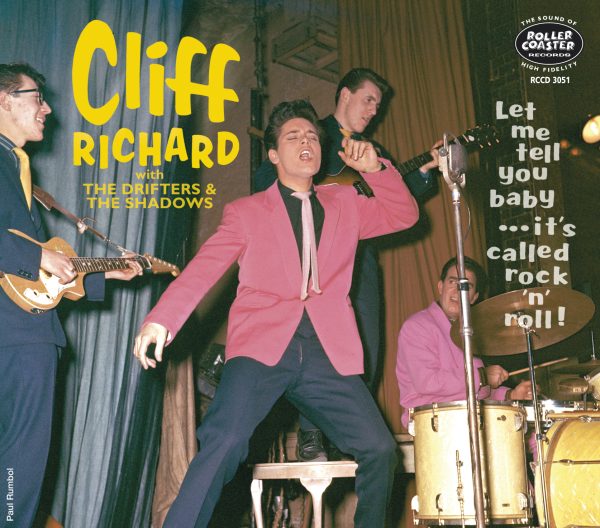
Richard’s capabilities were obvious from the get-go, as you can hear on the two-disc Let Me Tell You Baby…It’s Called Rock ‘n’ Roll, which features performances on the BBC’s influential Saturday Club radio show between 1958 and 1960. The singer—still a teenager at the time of these broadcasts—later shifted into more mainstream territory, but this is the period when he was a bona fide rocker. Previously unavailable on CD, the recordings feature stellar sound quality despite their age.
The 34-track first disc includes numerous covers of American and transatlantic hits, among them Fats Domino’s “I’m in Love Again,” Bobby Darin’s “Dream Lover,” Eddie Cochran’s “Summertime Blues,” Presley’s Leiber & Stoller–penned “(You’re So Square) Baby, I Don’t Care,” and Jerry Lee Lewis’s “Whole Lotta Shakin’ Goin’ On.” Also featured are several of Richard’s biggest early UK hits, including 1958’s “Move It” and “High Class Baby,” and 1959’s “Mean Streak,” “Dynamite,” and “Living Doll.” The last of these was his first UK chart-topper and first international smash, and speaking of chart-toppers, the CD also makes room for the Shadows’ instrumental single, “Apache,” which went to No. 1 in England in 1960.
If you want only the music, you can stop with Disc One of this anthology. But if you want to feel what it was like to be listening to the BBC’s Saturday Club in the pre-Beatles era, continue on to the atmospheric second CD, which reprises most of the first disc’s performances, interspersed with introductions and commentary by Richard and program host Brian Matthew, who also reads requests from fans.
Helping to put these radio programs and Richard’s early work in context is the set’s 44-page illustrated booklet. It includes a lengthy essay by British music historian and producer Rob Finnis, plus detailed session information about all of Richard’s Saturday Club performances.
This album, first released more than a decade ago, was difficult to find until recently. It now has a new U.S. distributor and is readily available.Also NoteworthyWesley Stace, One Last Heist. This is the first album in five years from Wesley Stace, aka John Wesley Harding, following Late Style. He says, “I like my music sweet, but my lyrics tart,” and One Last Heist underscores that sentiment.
A British native who has lived in Philadelphia for 16 years, Stace produced, arranged, and wrote the album with longtime collaborator David Nagler, who plays piano, keyboards, and guitars. They recorded live in the studio with a bassist and a drummer, and other players later added strings, flute, trumpet, flugelhorn, clarinet, and other instruments. Their mellow, jazz-influenced sound marks a departure from Stace’s earlier folk/rock CDs.
The program includes “Thoughts and Prayers,” which concerns apathy in the face of gun violence, several songs about romantic relationships (“Not My Speed,” “A Funny One,” and “In Our Own Time”), and two quirky numbers about retirement. In the title cut, a robber contemplates pulling off a final job “before I hang up my holster by the fire.” And in “Hanging Up the Sickle,” Death asks a stranger to take over his job because he’s had enough.
The Muffs, Live at Fort Apache. The music of the Muffs incorporated punk and pop elements but drew more from the former than the latter, especially in their explosive concerts.
For evidence of that, check out this first officially released live album from the band, which broke up in 2019, when its songwriter and lead singer, Kim Shattuck, died of ALS. The latest in a Muffs reissue series from the Omnivore label, the CD was recorded at Boston’s Fort Apache studio and broadcast on the radio in June 1995. It includes eight numbers from the group’s then newly released sophomore album, Blonder and Blonder, four from its eponymous 1993 debut, and two other selections.
Shattuck seems to spit out her lines throughout the high-octane set, which features searing guitar work. The songs are as succinct as anything by the Ramones—only two exceed the three-minute mark—and frenetic enough to remind you of the Sex Pistols.
Leslie Waugh, Night Bloom. Night Bloom is the first full-length album in more than a decade from Houston-based alt-country singer/songwriter Leslie Waugh, though she did release three excellent EPs between 2018 and 2023. Waugh, who plays acoustic guitar, co-produced the album with Pat Manske, who contributes percussion, acoustic guitar, and bass. Other players add fiddle, piano, organ, pedal steel, dobro, guitar, and mandolin.
Waugh comes across as a charming and affable vocalist on the self-penned, 10-track set, which features strong melodies. Some of the songs address dark subjects, such as poverty and failed relationships, while others, including the lilting “I’m Your Friend,” are more upbeat.
The lyrics incorporate a surfeit of cliches. “If I could turn back the hands of time,” Waugh sings at one point. Elsewhere, she mentions that “every cloud has a silver lining,” talks about “a cold day in hell,” and how “every day’s a struggle to survive.” The sweet music and effusive vocals will likely make you forgive the platitudes, however.
______________________
Jeff Burger’s website, byjeffburger.com, contains more than four decades’ worth of music reviews and commentary. His books include Dylan on Dylan: Interviews and Encounters, Lennon on Lennon: Conversations with John Lennon,Leonard Cohen on Leonard Cohen: Interviews and Encounters, andSpringsteen on Springsteen: Interviews, Speeches, and Encounters




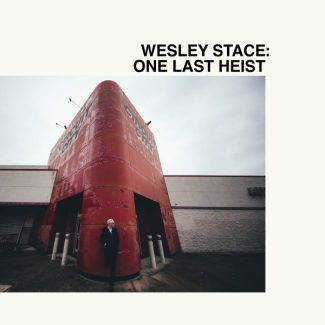 Wesley Stace, One Last Heist. This is the first album in five years from Wesley Stace, aka John Wesley Harding, following Late Style. He says, “I like my music sweet, but my lyrics tart,” and One Last Heist underscores that sentiment.
A British native who has lived in Philadelphia for 16 years, Stace produced, arranged, and wrote the album with longtime collaborator David Nagler, who plays piano, keyboards, and guitars. They recorded live in the studio with a bassist and a drummer, and other players later added strings, flute, trumpet, flugelhorn, clarinet, and other instruments. Their mellow, jazz-influenced sound marks a departure from Stace’s earlier folk/rock CDs.
The program includes “Thoughts and Prayers,” which concerns apathy in the face of gun violence, several songs about romantic relationships (“Not My Speed,” “A Funny One,” and “In Our Own Time”), and two quirky numbers about retirement. In the title cut, a robber contemplates pulling off a final job “before I hang up my holster by the fire.” And in “Hanging Up the Sickle,” Death asks a stranger to take over his job because he’s had enough.
Wesley Stace, One Last Heist. This is the first album in five years from Wesley Stace, aka John Wesley Harding, following Late Style. He says, “I like my music sweet, but my lyrics tart,” and One Last Heist underscores that sentiment.
A British native who has lived in Philadelphia for 16 years, Stace produced, arranged, and wrote the album with longtime collaborator David Nagler, who plays piano, keyboards, and guitars. They recorded live in the studio with a bassist and a drummer, and other players later added strings, flute, trumpet, flugelhorn, clarinet, and other instruments. Their mellow, jazz-influenced sound marks a departure from Stace’s earlier folk/rock CDs.
The program includes “Thoughts and Prayers,” which concerns apathy in the face of gun violence, several songs about romantic relationships (“Not My Speed,” “A Funny One,” and “In Our Own Time”), and two quirky numbers about retirement. In the title cut, a robber contemplates pulling off a final job “before I hang up my holster by the fire.” And in “Hanging Up the Sickle,” Death asks a stranger to take over his job because he’s had enough.
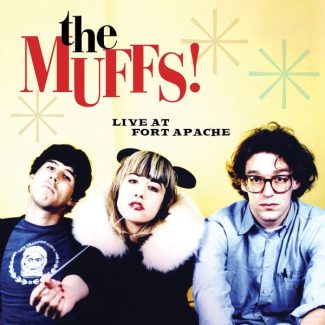 The Muffs, Live at Fort Apache. The music of the Muffs incorporated punk and pop elements but drew more from the former than the latter, especially in their explosive concerts.
For evidence of that, check out this first officially released live album from the band, which broke up in 2019, when its songwriter and lead singer, Kim Shattuck, died of ALS. The latest in a Muffs reissue series from the Omnivore label, the CD was recorded at Boston’s Fort Apache studio and broadcast on the radio in June 1995. It includes eight numbers from the group’s then newly released sophomore album, Blonder and Blonder, four from its eponymous 1993 debut, and two other selections.
Shattuck seems to spit out her lines throughout the high-octane set, which features searing guitar work. The songs are as succinct as anything by the Ramones—only two exceed the three-minute mark—and frenetic enough to remind you of the Sex Pistols.
The Muffs, Live at Fort Apache. The music of the Muffs incorporated punk and pop elements but drew more from the former than the latter, especially in their explosive concerts.
For evidence of that, check out this first officially released live album from the band, which broke up in 2019, when its songwriter and lead singer, Kim Shattuck, died of ALS. The latest in a Muffs reissue series from the Omnivore label, the CD was recorded at Boston’s Fort Apache studio and broadcast on the radio in June 1995. It includes eight numbers from the group’s then newly released sophomore album, Blonder and Blonder, four from its eponymous 1993 debut, and two other selections.
Shattuck seems to spit out her lines throughout the high-octane set, which features searing guitar work. The songs are as succinct as anything by the Ramones—only two exceed the three-minute mark—and frenetic enough to remind you of the Sex Pistols.
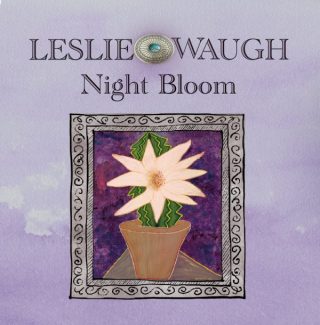 Leslie Waugh, Night Bloom. Night Bloom is the first full-length album in more than a decade from Houston-based alt-country singer/songwriter Leslie Waugh, though she did release three excellent EPs between 2018 and 2023. Waugh, who plays acoustic guitar, co-produced the album with Pat Manske, who contributes percussion, acoustic guitar, and bass. Other players add fiddle, piano, organ, pedal steel, dobro, guitar, and mandolin.
Waugh comes across as a charming and affable vocalist on the self-penned, 10-track set, which features strong melodies. Some of the songs address dark subjects, such as poverty and failed relationships, while others, including the lilting “I’m Your Friend,” are more upbeat.
The lyrics incorporate a surfeit of cliches. “If I could turn back the hands of time,” Waugh sings at one point. Elsewhere, she mentions that “every cloud has a silver lining,” talks about “a cold day in hell,” and how “every day’s a struggle to survive.” The sweet music and effusive vocals will likely make you forgive the platitudes, however.
______________________
Jeff Burger’s website, byjeffburger.com, contains more than four decades’ worth of music reviews and commentary. His books include Dylan on Dylan: Interviews and Encounters, Lennon on Lennon: Conversations with John Lennon, Leonard Cohen on Leonard Cohen: Interviews and Encounters, and Springsteen on Springsteen: Interviews, Speeches, and Encounters
Leslie Waugh, Night Bloom. Night Bloom is the first full-length album in more than a decade from Houston-based alt-country singer/songwriter Leslie Waugh, though she did release three excellent EPs between 2018 and 2023. Waugh, who plays acoustic guitar, co-produced the album with Pat Manske, who contributes percussion, acoustic guitar, and bass. Other players add fiddle, piano, organ, pedal steel, dobro, guitar, and mandolin.
Waugh comes across as a charming and affable vocalist on the self-penned, 10-track set, which features strong melodies. Some of the songs address dark subjects, such as poverty and failed relationships, while others, including the lilting “I’m Your Friend,” are more upbeat.
The lyrics incorporate a surfeit of cliches. “If I could turn back the hands of time,” Waugh sings at one point. Elsewhere, she mentions that “every cloud has a silver lining,” talks about “a cold day in hell,” and how “every day’s a struggle to survive.” The sweet music and effusive vocals will likely make you forgive the platitudes, however.
______________________
Jeff Burger’s website, byjeffburger.com, contains more than four decades’ worth of music reviews and commentary. His books include Dylan on Dylan: Interviews and Encounters, Lennon on Lennon: Conversations with John Lennon, Leonard Cohen on Leonard Cohen: Interviews and Encounters, and Springsteen on Springsteen: Interviews, Speeches, and Encounters