




Eric Conn Celebrates 25 Years of Nashville’s Independent Mastering
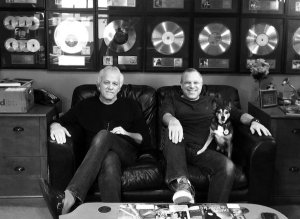
Eric Conn is the Grammy-nominated mastering engineer and founder of Nashville-based studio Independent Mastering. This year, Independent Mastering celebrates 25 years, a major milestone, and in that time, Conn has worked with Garth Brooks, Neil Young, Joan Osborne, John Prine, Skid Row, Willie Nelson, JJ Cale, and so many more. Some of Conn’s most recent projects have included Guy Clark’s Truly Handmade Vol. 1, The Wood Brothers’ Puff of Smoke and Don Williams’ Epilogue: The Cellar Tapes.
Independent Mastering, where Eric Conn works alongside the semi-retired Don Cobb, has handled a continually shifting musical landscape across the years, and the option of working in person or remotely is currently the norm. However, in some cases, particularly with archival work, Conn often gets physical tapes in hand that need some TLC to bring them to life again in a widely accessible format. While every single project Eric Conn works on is different, he always brings an adaptable artist-first style to his work. With the resurgence of vinyl, vinyl mastering is also a significant part of Conn’s work these days. I spoke with Eric Conn from his workplace at Independent Mastering about his approach to his incredibly varied projects, and also about some specific records that he’s worked on in recent years.
Americana Highways: Happy Anniversary to Independent Mastering! It’s always reassuring to hear about a studio that’s been going for a long time when I know there are so many challenges. Do you have particular ways of communicating with clients when they come in, to try to figure out what they are going for, and help reach their goals?
Eric Conn: If it’s a familiar client, someone I’ve worked with, the discussion may not be as in-depth as it would be for someone that is new. For someone who is new, I want to take the time to understand where they are going to fit in the marketplace, because at the end of the day, this is a product. It does have a place in a SKU, or on a stream, or on the radio. I want to understand where the end-product is going to be. I also want to understand what they hope to achieve with the half-technical, half-creative process that mastering is.
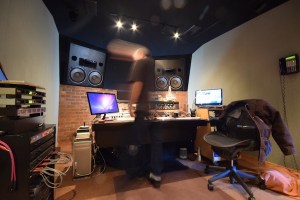
We’ll discuss “level,” how loud they want the record, or the single. We’ll discuss how they feel about the low-end. A lot of people are doing their mixing and recording in less traditional places, so we have monitoring situations for people who might not be ideal. But some people have really learned their spaces, and their rooms, and are doing exactly what they want. Others don’t. Others may be hesitant about what they have been listening to, or are just in a new space, with new speakers.
With both new and old clients, we’ll talk about what they are listening to, what they are listening on, how they are referencing, so that I can make decisions here based on what they know and are familiar with. Sometimes that means corrections on things, and sometimes it doesn’t. It’s a lot of front-end discussion.
AH: It’s hard to imagine this work as anything other than a case-by-case basis. Every single thing that comes in your door must be different in some way.
EC: Every single thing is different, and that’s what really keeps me interested. [Laughs] It’s not the same thing over, and over, and over. It’s always something new.
AH: That speaks to your personality, being so open to that. Do you have days where you say, “I thought this project was one thing, but actually it’s another. Now I have to back-track.”
EC: Yes! Sometimes it’s the client, and sometimes it’s me. I’ll get to the end of a record, maybe after spending three or four hours doing it, and then I’ll go back and listen to the first song, and I’ll say, “Well, I might need to redo a couple of these to match where it’s gone.” I’ll start out with a direction and an understanding, then six songs in, I’ll listen to what I’ve done, and sometimes things change. Sometimes they don’t. But for my personal workflow, I’m willing to second-guess myself a little bit, to go back and evaluate if what I’ve done is matching what I’m now doing. As I progress, I might discover things later that make the songs better, then there are some songs that need to be redone at the beginning of the record. That’s okay! It’s a process of making it better.
AH: It’s a process of discovery.
EC: Yes, you’ve made discoveries, and learned things, like a little more compression is helping, not hurting, or cutting more low-end is helping. It’s whatever is helping, and sometimes doing nothing is helping. Realizing that doing nothing is helping is probably one of the most important things in my world. If it needs nothing, do nothing.
AH: That’s very egoless, but it probably also frees you up for the other work that might need to be done.
EC: Yes, it’s not my record, it’s my client’s record. We can focus on editing, and leveling instead. As we said, each record is different.
AH: To be specific, I understand that for Don Williams’ Epilogue: The Cellar Tapes, you had to work with some archival material that needed some special handling. That’s a very recent release. How long ago did you work on that?
EC: Garth Fundis, who I’ve known for at least 25 years, brought some analog tapes over in summertime of 2024. They were quarter-inch, 15 inches per second, outtakes, from the early 1980s. We baked them, transferred them, and I think there were six or eight songs.
AH: When you saw those tapes, what was your reaction?
EC: I thought, “How fun is this! No one’s heard this! This is fun!”
AH: That’s a pretty special kind of project. Was there anything in the condition of the tapes that gave you pause, or were you optimistic?
EC: I had optimism. There was some mold, but it wasn’t bad. The process here is that we stick them in a convection oven, and we use the indirect heat as a drying mechanism. You can use a food dehydrator. I don’t have any experience with that.
AH: Convection ovens just use air, right?
EC: Yes, emphasis on the “air.” It is not direct heat, and it is only warm air. It is not hot! It is warm! Lest anyone decide they are going to throw something in their range at home, please don’t! We have a special oven for this. So, yes, the tapes had some mold, but other than that, they seemed to be in great condition. We transferred those, and by the Fall of 2024, they had also had some multi-track analog.
AH: Yes, I think they brought in some people to fill in some parts.
EC: Exactly, I think the tracks were incomplete originally. So they filled out what they filled out. In Fall of 2024, I got the master mixes, and put something together. We resequenced it in the Spring of 2025, and then it sat for a bit. Fall of 2025, Craft Recordings picked it up, and I made masters at the end of 2025. I cut lacquers at the first of the year.
AH: Vinyl is a big push for that release, I noticed.
EC: Yes, we did a compact disc master and we did high-resolution masters, and we did LP masters, the lacquer masters.
AH: Was there anything particular to the ’80s origin of these tracks that influenced how you mastered these tracks?
EC: No, it is what it is. I didn’t do anything specific for the era that it came from. Don Williams’ voice is so timeless, that I think no matter what you do, it’s Don Williams!
AH: Another project that I heard about when it came out was Guy Clark’s Truly Handmade Vol. 1. That project sounds like it was more of a challenge, even, because what you were working with was more splintered, I think.
EC: It was, yes. For that, a lot of the audio came from DAT [Digital Audio Tape], and some from cassette. I didn’t do the original transfers. The sources were that we had one channel that was Guy’s vocal, and the other channel was the guitar. For that one, in a sense, I actually had to mix it. I had to blend the vocal with the guitar, and add a little echo here and there, and make things fit. It was pretty challenging to make it sound as good as it sounds, I think. And I think it sounds really good. The performances are just so cool. It’s just so cool. Guy and a guitar, what’s better?
AH: You’re really giving audiences a chance to feel like they are in the room with that recording.
EC: It really did come out like that.
AH: Is there a difference for you in how you feel when you’re working on projects that are posthumous versus ones where the artists are still with us and can give you feedback? Do you feel more of a responsibility for the ones where the artists aren’t here anymore?
EC: I’ve never really thought about that. That’s a great self-reflecting opportunity. So, there’s always a responsibility to the music, the artist, and the art. The posthumous projects that I’ve been involved with have always involved first-generation, direct-descendent people. That’s not necessarily family, but a Producer, an engineer, someone who was part of the original work. That sort of person has always been involved in whatever posthumous projects I’ve been involved in.
AH: That’s a link back to the original creation of that music for you?
EC: Yes, so that there is a link back to the source, to the origin. That has, I think, prevented me from asking myself that question about responsibility. It’s my responsibility, but ultimately, it’s not my responsibility. With Guy Clark, it was Tamara Sarviano and Rodney Crowell, who said, “Just do what you think it right.” That was a lot of freedom, and a lot of trust from both of those people, and they ended up liking it. That was very nice.
AH: Would you like to contrast those archival works with something more contemporary, like working on the latest Wood Brothers album, Puff of Smoke? How is that a different experience for you?
EC: I’ve done five or six Wood Brothers albums and they are a joy to work with. The last record, Brook Sutton was the engineer, and then the two Wood Brothers were there, and Jano Rix was on percussion. They all take their part in the production seriously, but with joy. [Laughs] They have their specifics for what they are hoping to achieve. They have a direction, and it’s nice to be able to know, when one of their records comes in, “This is familiar. I’ve done four of them. Now we’re doing the fifth one. I know who to ask when I have a question.”
It just gets done. And they always sound great. They are really fun records to work on, because the percussion is always so interesting, and the bass parts are so interesting. Oliver’s guitar and vocals are always so much fun, and the grooves are so much fun. Those records are really great to work on. I hope there will be another one coming!
AH: It’s interesting to hear that you work with the same artists over a long period of time, and yet I know, for instance with the Wood Brothers, that they do change things up a bit. One album is different from the next. Does that make it a different experience every time for you?
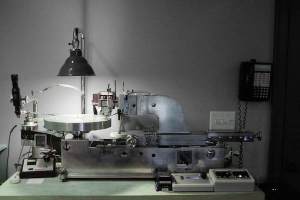
EC: There’s very little boredom here! For The Wood Brothers, I actually did their first record for vinyl, too, which was a Blue Note release [Ways Not To Lose 20th Anniversary Edition], and that came out this Spring, I think. I made the side-splits, prepped it, and cut it. It was pretty straight-forward. I did do a reference acetate, which is a 12-inch lacuquer. The same size as a regular LP.
I’ll make a 12-inch to send to somebody, or make a digital capture, so they’ll have a preview of the whole record. For critical records, I’ll do an acetate. I’m not saying that every record isn’t critical, but sometimes there isn’t time, and there isn’t budget. But for the projects that have time, and have budget, we do cut a reference for the entire album, so that we know what things sound like. Because things change. It’s a completely different medium from digital. It’s more of a mechanical medium than a digital medium.
AH: Because vinyl is so expensive, it makes sense to take that extra step. It’s like insurance against big problems after the records are pressed.
EC: I think so! You have an opportunity to hear how it’s going to sound when it comes back on the test-pressing. This is an endorsement for taking the time and spending the money, but it’s not a necessity.
AH: Do you ever catch things, problems, at that stage?
EC: Yes, we catch things at the acetate stage. Generally speaking, the very outer diameter of the record sounds a bit better than the inner diameter.
AH: How can we hear that, for instance?
EC: Essentially, you’re putting the same amount of information in less space, so everything is closer together. That proves to be a problem when playing back, sometimes. So there are some things that we can discover in terms of volume and level of what we’re putting down on the disc, when we make an acetate and play it back. The possibility to catch a potential skip happens when you make an acetate, and we can correct for it. Those are the primary things, skips and playback distortion.
AH: I’ve had an all-star teacher on this subject for an hour, thank you so much!
EC: I appreciate the interest.
Thanks very much for chatting with us, Eric Conn. More details are available here on his website: https://independentmastering.com/aboutus.html