





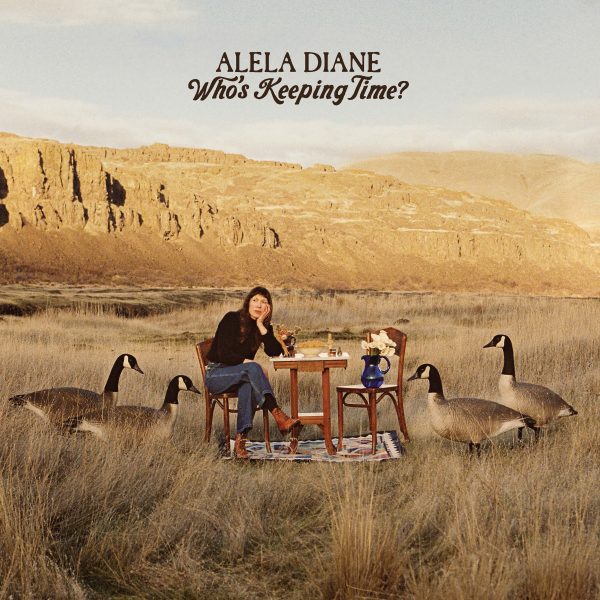
Alela Diane Who’s Keeping Time?
Alela Diane’s Who’s Keeping Time? arrives as a beautifully realised, quietly ambitious work shaped by an exceptional cast of musicians and collaborators. Produced by Sam Weber and Alela Diane, the album was recorded primarily in the attic of her rambling 1892 Victorian home—where every song was also written—before additional tracking and mixing sessions with Weber and Peter Lalish.
The core ensemble features Diane on vocals, acoustic and nylon‑string guitars, piano, and whistling; Danny Austin‑Manning on drums and percussion; Sebastian Owens on upright and electric bass and bass clarinet; and Weber contributing acoustic, electric, and rubber‑bridge guitars alongside piano. The extended circle of guest musicians includes Kati Claborn (backing vocals, dulcimer, clarinet, banjo), Luke Ydstie (backing vocals, lap steel, octave mandolin, Wurlitzer, piano), Peter Lalish (acoustic, electric, nylon, and baritone guitars, Ace Tone), Anna Tivel (backing vocals, violin), AC Sapphire (backing vocals), a voicemail cameo from Michael Hurley, and even a brief appearance from Maggie the cat. The project was completed with two final days of mixing at Weber’s home studio. It is, in every sense, a handcrafted record—right down to Sam and Danny hauling recording gear up and down three flights of stairs.
From the outset, Who’s Keeping Time? establishes its tone with “California,” a warm, unhurried opener whose gentle whistling lends it a faint spaghetti‑western shimmer. The album’s relaxed pacing and understated arrangements allow Diane’s songwriting to take centre stage—songwriting that has earned her international acclaim since her 2006 debut, which Uncut famously placed among the 50 greatest singer‑songwriter albums of all time. Expectations have remained high ever since, and here she meets them with quiet confidence.
Diane’s gift for drawing from lived experience remains one of her defining strengths. Her lyrics glow with vulnerability on “Dusty Roses” (a standout), “Wide Open Spaces,” and especially “To Be Kind.” Written from a mother to a child in the throes of a difficult emotional phase, the song unfolds with disarming intimacy. Sparse strings and a delicate piano frame the central plea—I need you to be kind / to me—and the unwavering reassurance that follows. It is songwriting that feels both deeply personal and universally recognisable.
Elsewhere, Diane delivers songs that already feel like future classics. “Could Be” is a meditation on identity and possibility, its cascading lines—I could be a mother / I could be a lover…—balancing simplicity with emotional weight. “In My Time” is equally evocative, its imagery (“Honey, please leave the day downstairs / Light a candle / I’ll let down my hair”) capturing the tender, private spaces where love and longing meet.
The album closes with two haunting reflections on mortality: “Fragile As a Flame” and “Endless Waltz.” The latter, a love letter to her grandparents, contemplates the slow dance toward the unknown while life continues around them—the birds riding the wind, the papers gathering dust. This acceptance of impermanence, this willingness to move with time rather than resist it, forms the philosophical heart of Who’s Keeping Time? As Diane herself puts it, “Everything in perpetual motion… We’re all just passing through.”
In the end, the album is a triumph of restraint, craft, and emotional clarity. If you favour Americana that moves at a mid‑tempo sway—rich with melody, poetic lyricism, and beautifully played acoustic instrumentation (the upright bass is a particular delight)—then this record will feel like home. It is, without hesitation, highly recommended.
Get your copy here: https://www.aleladiane.com/