




Laura Chavez My Voice
On My Voice, blues guitarist Laura Chavez treats the instrumental album like a self-portrait: part ancestry, part flex, part love letter to the sounds she grew up listening to. Split between covers and originals, the record doesn’t just showcase chops—it reveals the complexities of touch, tone, and taste, the kind of playing that blows the minds of listeners.
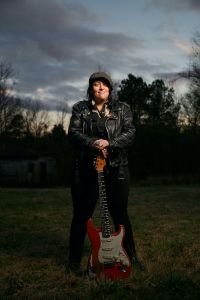
Recorded in Germany, the album finds Chavez co-producing with label owner Thomas Ruf and handling every guitar part herself—including an electric nylon-string that adds a warm, glassy edge to the mix. Lea Worms adds color on organ and piano, with Tomek Germann on bass; Marty Dodson and Denis Palatin split drum duties; and Antonio Econom adds percussion. The structure is clean and declarative: five covers, five Chavez originals, all of it arranged like chapters in a book.
She kicks the door in with Creedence Clearwater Revival’s “Born on the Bayou,” but she rewires it for speed and spark. As she puts it, “I did this song for my dad. He is a huge CCR fan and would play the tape all the time in the car. I wanted to do it up-tempo and driving—completely the opposite of most of what CCR is known for—but I knew the guitar part and melody were so iconic everyone would instantly recognize it.”
Her Southern California roots-rock approach shows up again on “So Long Baby. Goodbye,” the Dave Alvin-written Blasters cut. Chavez reimagines the tune in her own style—clean, pointed, and unshowy.
On “Chinese Checkers,” originally cut by Booker T. & The MGs, Chavez plays Booker T.’s organ parts on guitar, letting Worms’ organ hover in the backdrop, always present, a second voice that gives the track an alluring duality.
The album’s emotional center of gravity arrives with “La Llorona,” a slow-burning piece drawn from Mexican folklore. Label owner Thomas Ruf wanted the song on the album.
Chavez explains, “He insisted there be a slow blues. I really wanted to focus on songs that weren’t only vehicles for guitar solos and didn’t know how to do it without vocals… This was around Día de Los Muertos, and when I heard this song again, I thought maybe I could do it as a slow blues, perhaps in the style of Peter Green.”
The five originals expand the stylistic scope of the album, ranging from straight-ahead rock to Tex-Mex. The sound embraces a big tone and phrasing that’s both potent and clear.
“Wanderer” takes the long way around: it simmers, drops quick flashes of melody, and then finally opens into a spiraling statement that feels both patient and fearless—one of the album’s most thrilling stretches of guitar magic.
“Mamba Negra” and “Napa Street” emphasize groove, showing off Chavez’s flair and technique. The drums on the former hit like a hard slap across the cheek. Whereas “Napa Street” is all about momentum. On the outro, Chavez dazzles listeners with another scorching solo.
With My Voice, Laura Chavez makes a statement about her guitar genius: she has a nonpareil gift for sonic shape and syntax.
Discover more about Laura Chavez here.