



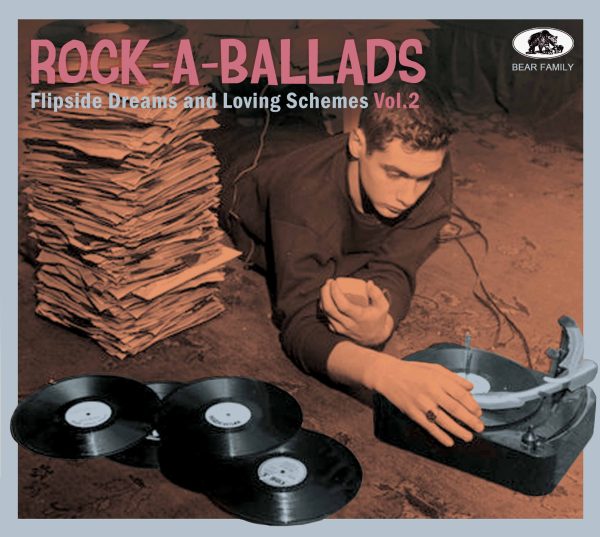
What music comes to mind when you think of rock and roll’s earliest years? For many people, the answer is probably the sort of material that signaled a major break from the overly polished, sanitized pop that previously dominated the charts—manic, upbeat rockers like Jerry Lee Lewis’s “Whole Lotta Shakin’ Goin’ On,” Elvis Presley’s “Hound Dog,” and Little Richard’s “Tutti Frutti.”
As the liner notes for 2025’s Rock-a-Ballads, Vol. 1, observe, however, “The hallowed architects of rockabilly and rock and roll didn’t always stoke their tempos at 100 miles an hour. They knew when to slow it down, to make a song connect with slow dancers as they testified to either eternal romantic devotion or broken hearts.”
You’ll find evidence of that on the aforementioned 32-track anthology as well as on the new 31-song Rock-a-Ballads, Vol. 2. Both albums feature remastered music that owes debts to traditional pop but also incorporates rock elements, and both come with illustrated 38-page booklets that include copious information about every artist and song.
Their programs incorporate a few big hits, such as Sonny James’s “Young Love” (1956), the Everly Brothers’ “All I Have to Do Is Dream” (1957), Ricky Nelson’s “Poor Little Fool” (1958), and Santo & Johnny’s instrumental “Sleep Walk” (1959), all of which topped the charts. However, relatively obscure recordings dominate both sets. Some of them come from well-known acts, such as Gene Vincent (“I Sure Miss You”), Joe South (“It’s Only You”), Carl Perkins (“Forever Yours”), and Roy Orbison (“A True Love Goodbye”).
In many cases, though, the performers are as unsung as the material. Examples include the country-based Dennis Roberts (“Blue Carnation”), rockabilly singer Marty Lott aka The Phantom (“Whisper Your Love”), and Canada’s the Prowlers with Les Vogt (“Most of All”).
Such artists’ lack of commercial success notwithstanding, the quality level on these discs is consistently high. In fact, if you’re not familiar with the music of the late 1950s and early 1960s, you’ll probably have a hard time guessing which of these tunes rocketed up the charts and which never dented the Hot 100.
Also Noteworthy
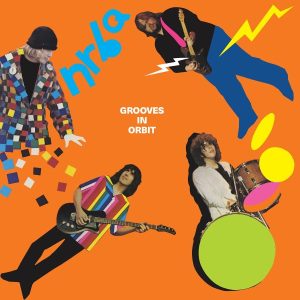
NRBQ, Grooves in Orbit. As this column has previously noted, it’s good that NRBQ is best known by its initials because its full name, New Rhythm & Blues Quartet, barely hints at its diversity. In business for 60 years, the band has dabbled in everything from jazz and pop to rockabilly and, yes, R&B.
Grooves in Orbit, originally issued in 1983, is the latest in a series of reissues from the group’s vast catalog to showcase that eclecticism. It also demonstrates the excellence that has kept NRBQ going for more than half a century. Featuring remastered audio and new liner notes, it includes such standouts as “How Can I Make You Love Me,” a midtempo pop ballad; the early-rock-influenced “Rain at the Drive-In”; a high-octane cover of Johnny Cash’s “Get Rhythm”; a polka called “Daddy-O” that was recorded in concert; and the playful, rhythmic “Hit the Hay.”
Seven bonus tracks, three of which were previously unissued, include alternate versions of several of the original album’s songs, a smile-inducing promotional ad for the LP, and a version of “Tonight You Belong to Me,” a song that provided a No. 4 pop hit for Patience and Prudence in 1956.

The New York Second, Café Madrid. Last year, the New York Second issued its fifth album, Room for Other People, which benefited from the collaboration between jazz pianist and group leader Harald Walkate and guest vibraphonist Rob Waring. The pairing of their two instruments was so successful that Walkate invited Waring to join his Netherlands-based outfit for this sixth LP, which also features double bassist Lorenzo Buffa and drummer Max Sergeant.
The 11-track album—whose liner notes credit the influence of Keith Jarrett, Gary Burton, Antonio Carlos Jobim, and Pat Metheny—mingles recent Walkate compositions with ones he wrote long ago. All of them offer excellent opportunities for piano/vibraphone interplay. Highlights include the languid “The Lost Christmas”; “Algerian Boardwalk,” which Walkate accurately describes as “dark [and] mysterious”; and the title track, a 1995 composition that seems to owe a debt to Burton.
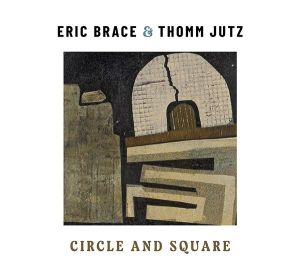
Eric Brace & Thomm Jutz, Circle and Square. This is the second folk album that Eric Brace and Thomm Jutz have made as a duo, following 2024’s impressive Simple Motion. Earlier, they were part of a trio with singer/songwriter Peter Cooper, who died in 2022 after a fall. His loss is the focus of the saddest, most poignant song here, Brace’s “Nothing Hurts.”
That number is far from the LP’s only standout, however. Others, all co-written by Brace and Jutz, include “10 to 4,” which is about being separated from a loved one by six time zones; “Diego in Detroit,” which concerns Diego Rivera’s murals; and “Fontana Dam,” which addresses the negative effects of the TVA’s construction of a North Carolina dam in the mid-1940s. Also memorable is “Thomas Hart Benton,” a tune by Jutz and country/Americana singer Shawn Camp that celebrates Benton’s evocative 1975 painting, The Sources of Country Music.
Throughout, the album benefits from Brace and Jutz’s vocal harmonies, richly detailed lyrics, and complementary acoustic instrumentation, which includes Brace on guitar, Jutz on guitar, banjo, and bouzouki, and three other musicians on piano, bass, and drums.
_____________________
Jeff Burger’s website, byjeffburger.com, contains more than four decades’ worth of music reviews and commentary. His books include Dylan on Dylan: Interviews and Encounters, Lennon on Lennon: Conversations with John Lennon, Leonard Cohen on Leonard Cohen: Interviews and Encounters, and Springsteen on Springsteen: Interviews, Speeches, and Encounters.