




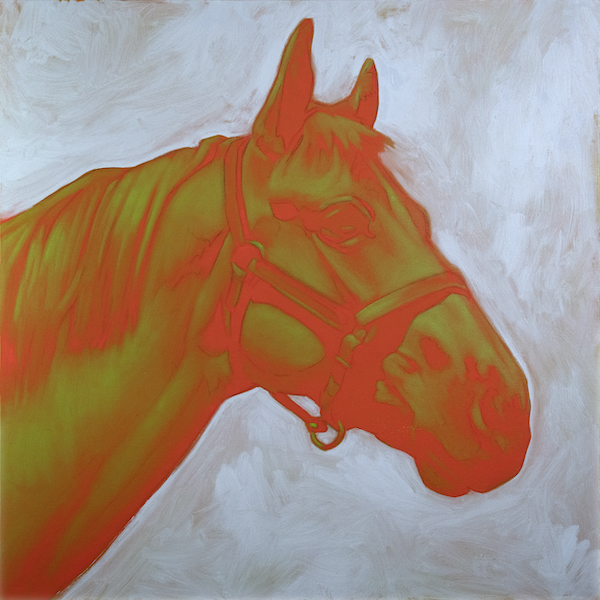
Nick Flessa “Medicine Hat City Slogan”
Americana Highways brings you this premiere of Nick Flessa’s song “Medicine Hat City Slogan” from his forthcoming album A Different Kind of Energy. This is an instrumental album, recorded and mixed by Neil Wogensen, mastered by Daniel Eaton and set for release on April 17. This song will be available on January 20.
“Medicine Hat City Slogan” is J.D. Carrera on pedal steel; Ross Chait on drums; Nicki Chen on viola; Nick Flessa on guitar; and Gina Segall on bass.
We had a brief chat with Nick Flessa about the song. The premiere appears just beneath the interview.
Americana Highways: A Different Kind of Energy is an entirely instrumental album built around landscape and expansive, cinematic sound. How did your background in filmmaking shape the way you structured and paced the music?
Nick Flessa: The tracks on the record flow between one another in an episodic way, reminiscent of a collection of scenes, which amount to a larger narrative that might resemble a movie. The song names play like intertitles between sections. While each track is distinctive in mood and pace, the sequencing creates an overall narrative that emerges through the contrast between these individual moments.
I approached the record as a documentary, or even a loosely scripted narrative. While not exactly improvisatory, I provided a series of relatively simple compositions/frameworks for the band to build upon while we recorded. This blossomed into the songs in their current form, elevated by contributions from a group of strong supporting players who had the freedom to fire on all cylinders within the given compositional frameworks. The end result is a high fidelity document of that interaction. Within that, there is a level of spontaneity and human error captured that give the record its own distinct energy.
The process, like my other records, was similar to my approach to directing a film project. Choosing the performers was a form of casting, and the engineer/producer served as the cinematographer, with this analogy. There was an outline and set of formal parameters for consistency, but the album came to life through the collaborations. Once recorded and mixed, sequencing became part of the editing process – like a cut between two scenes or moments, each transition helps form an experience that is greater than the sum of its parts.
AH: What story does the lead single, “Medicine Hat City Slogan,” tell, and why did it feel like the right introduction to the album?
NF: “Medicine Hat City Slogan” tells a story that moves between prairie and badlands, two landscapes that intersect in Medicine Hat (Alberta, Canada). That region is geographically distinct and archaeologically rich, while also being a significant hub for Canada’s oil and gas industry. The album title, A Different Kind of Energy, is the actual city slogan of Medicine Hat, so this felt like a good place to start.
Musically and conceptually, “Medicine Hat City Slogan” alternates between steady, soothing sections resembling a prairie and harsher, driving sections reminiscent of the badlands. Throughout A Different Kind of Energy, there’s often a restorative power derived from these iconographically Western landscapes, which is nevertheless tempered by their proximity to industry and the fraught history of Western Expansionism and conquest.
Regarding “Medicine Hat,” there’s a curious sense of healing conveyed in the name. While the historical origins are not completely known, it is sometimes attributed to a Blackfoot legend about a mer-man who appeared to a hunter and convinced him to sacrifice his wife in exchange for mystical powers, which were manifested in a special hat. Combining “Medicine Hat” with “City Slogan” is dialectical to me – a name with indigenous origins pushed against the concept of a modern city with its present industrialization and land usage – which uses a catchy motto – A Different Kind of Energy – that appears to nod to both the eccentricity of the place and its connection to the oil industry.
My partner’s dad, a geologist, is from Medicine Hat; it was through his stories about growing up there that I became fascinated with the city and the suggestiveness of its name. That being said, I wrote the music in Wonder Valley, a tranquil part of California’s high desert just miles away from a large military base. Overall, I see a thematic link. With both landscapes, as in this track, there is a feeling of something steady and vast, rugged yet enchanting, with life roaring forward through external forces and then sinking back into a tranquil routine.
AH: Though the album is instrumental, it feels like a continuation of the character studies and social critiques from The Politics of Personal Destruction. How did you approach “speaking” without lyrics, and what kinds of ideas were easier—or more difficult—to communicate this way?
NF: Presently, I feel there is already a political gesture to recording music live in the same room with other human artists. I would have found this statement somewhat ridiculous two years ago, but it now seems pertinent given the current proliferation of AI within the music industry. Capturing strong yet imperfect, non-automated performances and embracing their humanity feels like a social statement in its own right.
Otherwise, with this record, the titles do much of the “speaking.” This was a fun and exciting challenge – how could I name things in such a way as to suggest an additional lyrical resonance to how the music is heard? Suddenly, the mood conveyed through the physical experience of listening is specified in a way that opens up a new, suggestive poetic space. The titles nod to a context, and then the feeling and experience of the music places the listener in their own interpretation of that context. In a full circle, synergistic way, the result is a lyrical record without lyrics. In one way this creates a more abstract approach to ideas than those that are more directly addressed in The Politics of Personal Destruction – but in another way, the generative potential for exploring contradictory ideas and feelings, the “poetics” if you will, is more expansive and open-ended here.
Easygoing and disarming, this song is dreamlike with sustained swirls of pedal steel, viola, and guitar. The energy rises and falls in a universally recognizable storytelling pattern – quite remarkable.
“Medicine Hat City Slogan” pre-save: https://hypeddit.com/ds2oh2
A Different Kind of Energy pre-save: https://hypeddit.com/d50gaj