



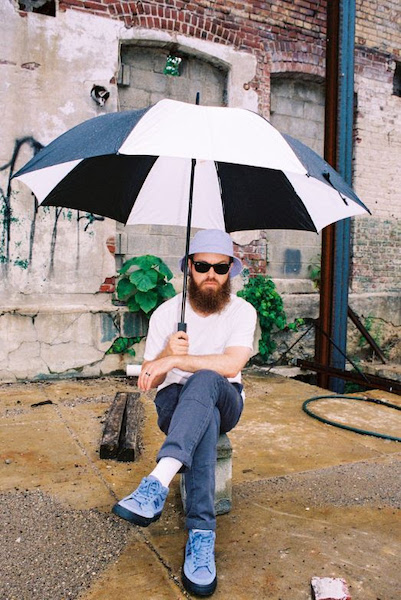
Corey Bernhard of The Late Show Fuses Elements For A Blessed Leap Into Eternity
The Late Show with Stephen Colbert house Band keyboardist and composer Corey Bernhard recently released his sophomore solo album, an experimental jazz/folk/hip-hop LP, A Blessed Leap Into Eternity, earlier this year. It marked a departure from his first collection by becoming even more eclectic, including influence from indie rock, folk, and classical music. Meanwhile, the album is presented in such a way that the audience is both guided into the experience, and also left with plenty of time and emotion for reflection at its conclusion, making the seven-song collection a suite. Bernhard worked with Philly-based engineer Michael Cumming (Sun Ra Arkestra, Odean Pope, Lotus, Orion Sun) to create this new direction in sound, and will be bringing several album release shows to Philadelphia, New York, and Boston, on March 14, 15, and 16, 2025.
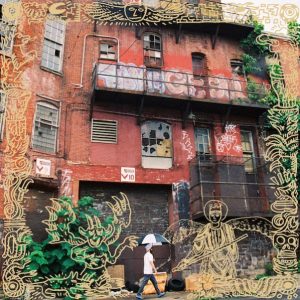
Another fortuitous element for Bernhard was working with close friends and longtime musical collaborators, including saxophonist and woodwind player Yesseh Furaha-Ali (Snacktime), bassist Jon Smith (Jazmine Sullivan’s Heaux Tales), and drummer Lenny Mobley (Lauryn Hill, Jazmine Sullivan, J Brown). Together, they brought an open approach to composing during a live session that lit the spark for the complete album to take shape. I spoke with Corey Bernhard about his experiences stepping into the role of a band leader, how he created an experimental atmosphere for the album, and why emotion continues to be the strongest inspiration for his work.
Americana Highways: I’ve been hearing about your album for a few months and now you’ve got some more shows coming up. It’s nice that you give the release a proper arc over time.
Corey Bernhard: I’m looking forward to playing the music live, once it’s been out for a couple of months. I’ve actually never been to a show at the venues I’ll be playing, but I’ve seen the bands who do shows and go to shows at those venues, and it’s usually big music fans. It’s a unique opportunity.
AH: Is there a particular set-up when you all want to do a show for this album? Is there a lot of load-in.
CB: I’ll probably be bringing a few keyboards, trying to limit myself to only a few. We’re not personally bringing any sound equipment, luckily, so we don’t have too much.
AH: Between these different songs, there seem like a lot of different instrumental approaches, but I know that some of it was fairly spontaneous, so did that mean you were more sparing about it?
CB: We started each song with pretty basic instrumentation of drums, bass, saxophone or flute, and piano. That was kind of it. We all recorded each track together, in the same room at the same time, and that became the foundation for each track. Then I went back in and built it out, with a lot of layers and sounds. That’s maybe where some of the more experimental sound stuff comes in.
AH: With some of the songs that have vocal elements, which are more like samples, I was more aware of how you must have been building it.
CB: That’s right, kind of digging through my record collection, and finding stuff that I felt might thematically fit with certain songs.
AH: I’m really impressed by the album in the context of how different than what you did for your previous album. This was a lot to take on. Did you take a fair amount of time deciding what you wanted to do with this album?
CB: Leading up to it, in the time between my first solo project and this, I was listening to a lot of music, creating and experimenting. And trying to find something that felt like an honest, original concept that I could release, that I liked but wasn’t doing my first project over again. To be honest, it was kind of frustrating and discouraging at times, because I felt like I was stuck in the same track, the same road or path, that I had been on. Then, this almost came about by accident, through booking a session, and recording with no expectations.
AH: You were working with people who you know pretty well, which I’m sure helped. I think you had done some sketches of the song beforehand. Did you talk with them much beforehand about what you were hoping for?
CB: I think I did have some sketches on sheet music, just to give a direction to some of the tunes. But we didn’t talk too much about how to approach things. Partly, I think, because we’ve all played together a lot over years, and years, here in Philly. We can kind of have that conversation once we’re playing, instead of having it beforehand.
AH: I’ve seen the video of you guys working together on “Vita Nuova,” and that’s very behind-the-scenes. I love that because you can see the little communications between you all and the little adjustments going on while you’re playing. It’s not total verbal silence.
CB: Right! That’s the nice thing about this group of guys, is you can make suggestions, and people don’t take anything personally. You’re trying to experiment in the studio, so that’s nice, trying to see what works, and what doesn’t.
AH: You’re someone who has played with a lot of people, so you’re someone who’s often taking suggestions from others, and leaving the ego at the door.
CB: Absolutely.
AH: So, this is different for you to make these solo albums, since then you’re the band leader making the suggestions. Has that been a journey for you to become a band leader?
CB: I think it has been a little bit of a journey, and I’m still on it, to be honest. Even in different bands that I’ve played in, playing original music, it’s always been a little bit of a democracy, with everybody contributing ideas. But I’ve also been really lucky to play with some amazing bandleaders who have different styles of communicating what they are hearing and where they are wanting to go. I play with an artist called Bilal here in Philly. He’s very blunt, and it’s not a personal thing. He’s getting the best sound that the band can bring. But I’ve also played with band leaders who are much more sensitive, you could say, in the way that they ask to change a sound, chord, or pattern. I think that’s the other thing about recording with your friends, it allows you to be really blunt about where you see things going.
AH: You had Michael Cumming putting in his two cents on engineering, as well, and giving input on the songs. Was he involved after making initial recordings, or during?
CB: We recorded everything at Michael’s studio, so he was engineering the actual recording session. Every studio has a sound, and his studio and sound are unique. He also mixed the project after we recorded everything. I’d come in and listen to one or two reference songs with him, saying, “Can we try to get this type of sound?” Then, we’d go from there. He’s, technically speaking, a mastermind of music and sonics. Any challenge that I posed, he could figure out a way to make it happen, sonically.
AH: What conversation had you had with him before the recording session? Had he seen the sketches?
CB: [Laughs] Zero! I said, “Hey, can me, and John, and Lenny come through and record?” But I’ve worked with him before in different settings, and I knew that he was a great engineer.
AH: Does he prefer a more live recording style?
CB: His studio is definitely set up in a way that’s conducive to recording a live band. He’s able to record digitally, he’s able to record to tape, and we did a little of both. He’s great! I can’t say enough good things about him. He’s open to interpretation. He’s happy to make suggestions, but doesn’t try to dominate discussion about the direction of the music. He’s open to experimentation, which is always nice.
AH: Because you were doing this more intuitively, I was wondering if you played for longer periods during your sessions, and then have just lifted sections of those sessions out to make your album. Is what we hear on the album part of a larger whole?
CB: Some of them. Everything you hear is the full track and the full song. But there were a few recordings that we did that we have completely left off. Sometimes we’d take a song and turn it into three songs. And due to Michael’s abilities, we could take a section from one take, and a section from another take, and put them together.
AH: When you play live, will you play other songs from your previous album with these new ones?
CB: There’s a couple of songs off my first project that I think could work with this project. I think there could be an opportunity to mix older stuff in.
AH: Obviously, the opening track of the album seems to have a specific role. It’s like an introduction. It’s pretty surprising, and very energetic, with multiple layers, and vocals. The album is called A Blessed Leap Into Eternity, and this is like the first encounter. Is it supposed to be like taking the first step onto the other side of a different reality?
CB: Sure, yeah! I don’t want to interpret it for anyone else in terms of what it gives them. But the original title of that first song, when we recorded it, was “Invocation.” It was like an opening prayer of an experience. That was the intention.
AH: That’s great. How did these different ideas, like emotions and overtones, get associated with the instrumental pieces? We can see them reflected in the song titles. Like, why is “Sagittarius” called that?
CB: I do think for writing music, stuff that you end up creating has an emotional connection, for sure. I think the best stuff that you’re creating is coming out of your emotions, and not out of any other kind of reason that you might be trying to write music. But “Sagittarius” is called that because my daughter is a Sagittarius, and as the song was taking shape, it was starting to feel like a bittersweet reflection on children, how much we love them, and the fact that they are growing up in a pretty brutal world. It’s that push and pull of really deep love, and also the pain of knowing what they are getting themselves into. Or what we’re getting them into!
AH: You’ve got some crazy piano parts on that song, too, and I wouldn’t say that it feels chaotic, but maybe it reflects what you were saying about life’s unknown outcomes. That one felt a little more reflective to me, too.
CB: I’m not sure how specific I would get into what’s being reflected on, but the reflective quality is there, overall.
AH: Does the title of the final song, “Vita Nuova” mean new life?
CB: Yes, it means “new life” in Italian. That was one of the last songs recorded, but not the last one. It means new life, rebirth, which was kind of the theme. It was kind of going for a Brazilian vibe, and Brazilian rhythm, and the Portuguese is close to that phrase. I used the Italian.
AH: I think there’s a collection of poems by Dante called “Vita Nuova” that is somewhat religious, but also more like love poetry.
CB: That is interesting. I was trying to read Dante’s Inferno around the time that we recorded that.
AH: Does that sort of thing link to your music for you, looking at other types of art for inspiration?
CB: Yes. It’s not specifically for any one song, or one project, but in general, I’m curious about larger themes in life, and art, and how they relate. Art and music are such deep things, and you don’t have to make sense of them, but sometimes reading something like Dante, opens up your mind and takes you out of the current state of things, so you’re not just thinking about current trends. It lets you zoom out and see a broader human picture across history, to see what people were feeling about life, and art, and God.
Thanks very much for chatting with us, Corey Bernhard! More information and details are available here on his BandCamp page: https://coreybernhard.bandcamp.com/album/a-blessed-leap-into-eternity