



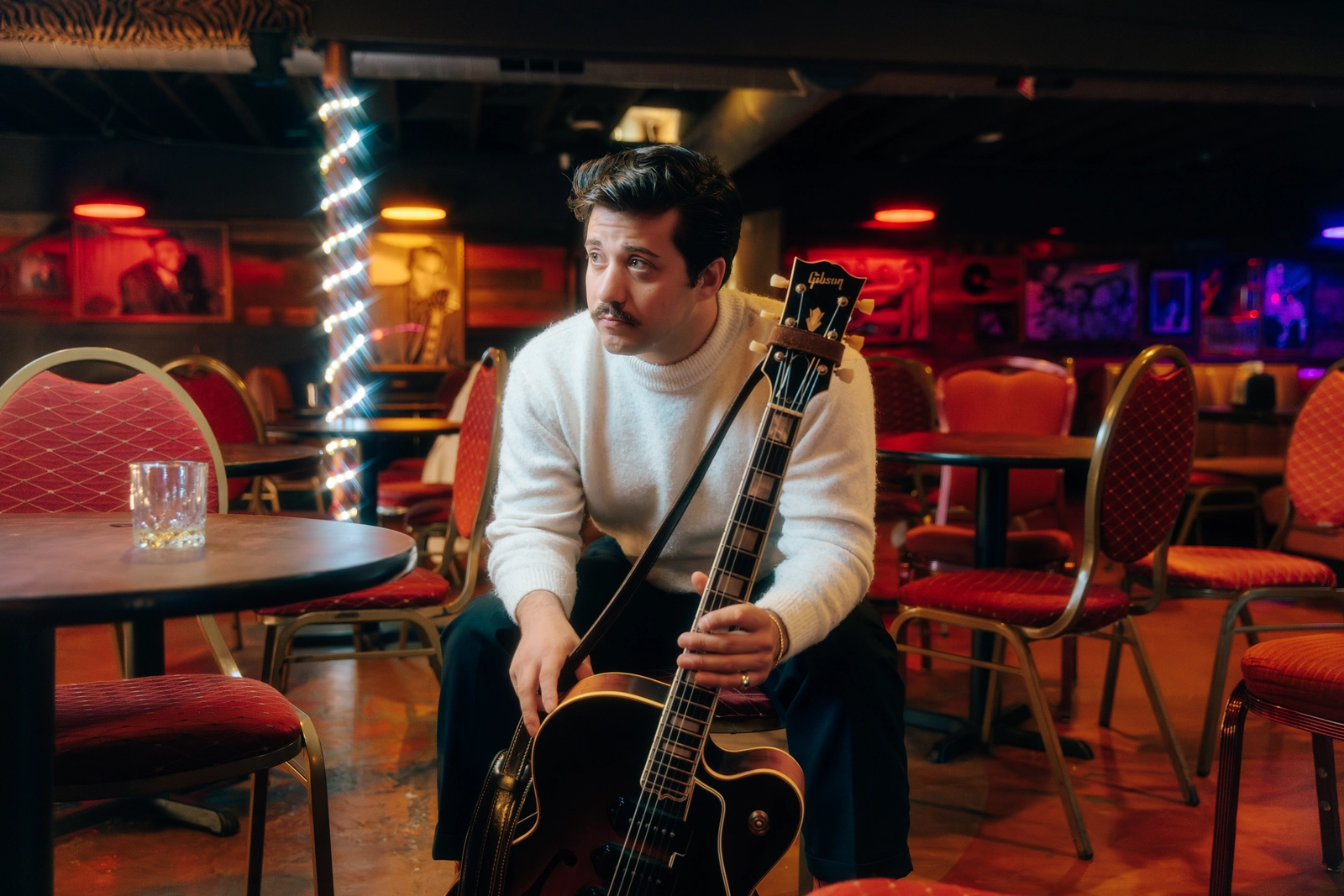
Jad Tariq on His Life and Times While Finding Precious Company
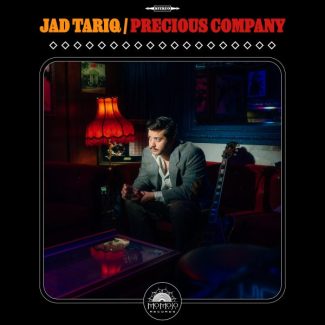
Jad Tariq is a Memphis-based Rhythm & Blues guitarist/vocalist who recently had the honor of being invited to join Bob Dylan’s touring band for a series of dates. His sophomore album, Precious Company, arrived in mid-September, and follows debut album Jad Tariq Sings. Featuring a blend of rhythm & blues, the new album shows off a modern sensibility in songwriting from Tariq, carefully balanced with classic sounds and emotional appeal.
Each song sits in its own world, sonically, but also draws substantially on the traditions that Tariq loves, making for a varied album listening experience. The album was recorded in large part live, and it has that “in the room” feel that brings a lot of energy and excitement to the tracks. Many of the songs capture relationship predicaments from different angles, each packing an emotional punch, but Tariq also makes room on the album for other relatable situations drawn from life, seasoning them with a pinch of humor. I spoke with Jad Tariq about his musical loves, his very busy performance life, recording Precious Company, and about the evolution of some of the tracks.
Americana Highways: I see a lot of performances in and around Memphis for you currently and coming up.
Jad Tariq: It’s a great local scene. It’s a good place to live if you want to gig a ton. Aside from the dates I have listed, I get to do a lot of sideman work with other bands in town. I actually grew up in Connecticut.
AH: Which makes it amazing that you got so into this kind of rhythm & blues music, but I talk with New York musicians who became folk musicians living there. I think there’s some benefit to being near musical hubs, and being able to see bands when they come through.
JT: I think that’s a big part of it. But when I was growing up, there was a lot of access to music. Youtube kicked off when I was a teenager, but there are so many rabbit holes that you can go down. It was a little easier to find stuff that speaks to you when I was growing up than going off a genre bin at a record store.
AH: Absolutely. Being able to find out historical information, too, about the people who made the music, was important to me growing up, too, finding out the human element.
JT: Totally! You don’t necessarily like a person because they are the best, you like them because of their personality, too. That comes through when they are playing and singing. I love the background stories behind the songs and albums.
AH: It feeds the obsession for sure!
JT: It really does.
AH: Given that you play a lot, do the songs on Precious Company have a live history for you? Was that part of their genesis?
JT: Oddly enough, I hadn’t really planned on working on an album. October of last year, I had just two songs that I’d written, which ended up as tracks on this album, “Poor Me,” which has been a single and “Whiskey, Ain’t But a Dollar.” I was planning on putting them out as an A/B single. But then around November or December, I had a two-week spree where I wrote about 15 songs! It was one of those creative sprees. I thought, “Man, I’ve got all this material, I’m just going to go in and cut the rest of these songs.”
So we went in and cut the rest, and had maybe two or three other sessions, a couple tunes at a time. But no, we never had heard them live before performing them! A lot of the takes that you hear on that record are maybe first takes. “Poor Me,” for example, was one where I had shown the song to the band, and we did a run down to make sure that we had the form. Then we hit record, and the version that you hear on the record is 100% the first take of playing that song!
AH: That’s amazing.
JT: Sometimes these things happen. And that’s one where, towards the end, I was singing kind of high, and shouting a bit. And after the take I said, “Man, I can’t do that again! My voice can’t handle it!” So that had to be the take, there was no other option.
AH: It does feel like I’m in the room when I listen to this album, so it does feel a bit live, but it’s also very precise.
JT: That was what we were going for, for sure. My favorite recordings are ones where you can physically imagine yourself in the room with the band, if you put headphones on. Those are my favorite kinds of records. I like having some element of “room sound.” I don’t want things to sound sterile. The record is 95% live, with my vocals and guitar. We overdubbed a couple things here and there, but I’m singing and playing guitar live with the band in the room, for better or for worse! [Laughs]
AH: This is an era where things are often fixed and corrected, digitally, and I can see the appeal of having that level of control, but I think it’s really cool when tracks are substantially live, because it feels so human, to state the obvious.
JT: Right now, with AI and digital music in general, it’s easier than ever to make something that’s as “correct” as possible. But I’m getting disillusioned with that, because I want to hear the mistakes, I want to hear somebody live in the room doing something. The way that I view recording is not that you’re trying to make this masterpiece, or this grand artistic statement. No, it’s more like, “I wrote these songs, it’s a snapshot in time of where I was at emotionally as a singer, as a guitar-player, as a writer.” Thinking of it that way is a way of not letting the weight and heaviness of permanence sit on my mind.
AH: In terms of the traditions that you’re working with, those people felt the same way. Those live recordings were maybe for the radio, or for a vinyl single, but it was about the tradition and about the live shows.
JT: Absolutely, and back when this music was in its heyday, the same way that I’m gigging all the time, those people were gigging. Especially around Memphis, there has always been a big live music scene, and those guys were capable of going in and cutting a record live because that’s just what they did. They were all recording to tape, too, so there wasn’t as much ability to go back and fix things. So those guys got used to getting it right in at least the first couple times.
AH: They really would have gotten yelled at if they didn’t!
JT: You couldn’t afford to. I love the spontaneity of it. That’s part of why I don’t road-test or show-test songs before recording them, when it’s still fresh on my mind. Later on, if we have a live version that differs from the studio version, the crowd gets to hear something new.
AH: These songs are varied. You have done a lot with vocals on this album, as well as with guitar playing, and even different styles between songs.
JT: Singing is really about how much you can do with the human voice. There are so many things that you can do and manipulate in the human voice to really deliver a lyric. There are physical limitations, you can only change your range so much. Finding out what the song needs, but also finding a way that you can do it in a healthy way, and in a way that compliments your abilities and identity, is important. You shouldn’t stretch too far outside of what your body wants to do.
AH: Especially with as many shows as you do, that could be a problem if you don’t handle it carefully.
JT: Yes, there are months where I do 30 or 40 shows, singing a four-hour gig.
AH: That is a lot! Please take care of yourself. Not surprisingly, I guess, some of these are relationship or love songs on the album. I would kind of expect that, working with these traditions. Were you aware that was going to be a substantial part of this album?
JT: A lot of blues and jazz, and pretty much everything I listen to, are love songs. It’s one of those universally relatable things. I think that’s where my mind was when I was writing a lot of the songs.
AH: But you do also bring in other subjects on a few songs. Amusingly, but sadly, “Inflation’s High Blues” is very relatable right now. You must’ve written this a while ago, so you didn’t know how bad things were going to get!
JT: Well, it’s getting worse and worse. It’s been getting worse for a while. It speaks to how relatable that song might be. When I wrote these songs, I was either reflecting about things going on in my own life, or making observations about things happening in others’ lives. Being on the road a lot, and touring, and traveling, you’re hyper-aware of things, like, “Gas prices are really going up, and I’m getting paid the same.” You start noticing things like that coming out of your paycheck, and you’re like, “Damn! I know inflation’s high, but they’ve been saying that forever.” That kind of stuff comes just from living.
Then, there’s other stuff that’s more observational, like “Half Measures.” I wrote that about a buddy dating outside of his tax bracket. That’s observational, and you say, “I have to write a song about that.” With relationship songs, a lot of that gets inspired by my own life. That’s one of the great things about roots music, you can really talk about anything going on in your life, or somebody else’s life, and people will always find a way to relate what you’re saying to what’s going on with them.
AH: I felt a lot of relatable, modern stuff coming up in the songs. Even things like “Precious Company,” made me think of the ways that everything in society seems to want something from you these days. Like social media and being online, they want your attention, purchases, subscriptions, etc. But the song keeps going back to just wanting to be with a person, not wanting something from them. It’s a contrast.
JT: I think there are so many things dividing our attention, constantly, that I think it’s a miracle to get somebody to listen to a whole album, front to back. But with “Precious Company,” I had gone on a vacation with a bunch of guys who I grew up with, who I hadn’t seen in a really long time. And a fellow named Kit Conway, of a New York band called Stello, though he’s out in LA now, said, “Let’s write a tune together.” Kit Conway came up with most of those lyrics when we were walking around a Shaw’s grocery shopping, getting some beer to go to the beach. We ended up finishing it later, but I thought it was really fitting to say, “I only want your precious company” when you’re on a little trip with your best friends who you grew up with. You’re in that mode.
AH: That is really fitting. Because it’s intangible what people give to our lives, but it is so impactful. I’m sure you felt really different after that trip, for instance, in a positive way.
JT: Totally. As you get older, you don’t get as many opportunities to spend as much uninterrupted time, with people in general. It’s a complicated world, and it’s hard to find the time or the money to get away and just enjoy spending time with people.
AH: How did that song acquire the horn parts?
JT: When it came time to arrange that song, I knew that I wanted some kind of Mills Brothers-esque outro, which Jon Hay came up with. He’s the one who played the acoustic guitar on that. I played the electric guitar on the solo, but all the rhythm guitar on that is Jon Hay. He had come up with that intro, and then the horns were the only thing on that track that weren’t live. We overdubbed those horns. I was torn between whether I wanted a kind of New Orleans, Dixieland vibe of horns with multiple voices intertwining and weaving, or whether I wanted that small combo, Kansas City-type of thing. I think we split the difference. The song does have a swanky New Orleans vibe, too.
I think it was a natural progression of seeing what worked for the song. I knew that since the song had a more natural sound, I didn’t want to push it, and get a bunch of horns on it. So we had the two guys in the studio, and had the track already recorded otherwise. We wondered what would fit, without sounding overproduced.
AH: It must have been a consideration not to overshadow the other instruments.
JT: Totally. When I was recording, there was a Louis Armstrong record that I had been listening to, the Satchmo Serenades record. Some of the tunes on there, the way that they are arranged, the vocal is sort of king. It’s really tacked to the front of the mix, and everything is sitting pretty far behind it. So I tried to imitate that with this record. The drums are really far back in the mix, and they are very dynamic. Then, at the end, when there’s the big build, and I’m starting to shout a little bit, the drums come in louder behind it, too, and the horns come in.
But we really tried to keep everything behind the vocal. I liked the lyric, and I didn’t want anything to get in the way of me delivering the lyric. I always think it’s a shame when an artist has a good lyric, and that’s getting covered up, either in another instrument’s volume, or in another instrument’s tonality. A lot of frequencies can also step on the vocal if you’re not careful where you’re putting them.
Thanks very much for chatting with us, Jad Tariq! Find more information here on his website: https://www.jadtariq.com/
Enjoy some of our previous coverage here: REVIEW: Jad Tariq “Precious Company”