




Lance Cowan is on a roll. A music publicist for decades, he only recently reinvented himself as a folk/Americana recording artist. But he has now issued three excellent albums in as many years, and the latest of these is arguably his best. Called The Air That You Breathe, it cements his reputation as an affecting singer and a writer of memorable, understated songs that exude warmth and humanity.
Like Cowan’s earlier albums, the 11-track new one features backing from a coterie of talented studio musicians. Also on hand are a couple of country music luminaries: Sam Bush, who plays mandolin on four tracks, and Jimmie Dale Gilmore, who adds backing vocals on one.
“Where’d They Go,” one of three numbers Cowan composed with Nashville songwriter Terry Clayton, is the album’s first single and a standout. It subtly responds to President Trump’s immigration policies by describing the sudden disappearance of the Garcias, a family who live next door to the song’s narrator. Another memorable topical number is “Closer to Truth,” which Cowan wrote with the late David Mallett. That song addresses gun violence and, like “Where’d They Go,” it garners its strength partly by eschewing big-picture statements and instead focusing on how individuals are affected. Also excellent is “When He Was Here,” a number about a marital breakup that Cowan wrote with Janis Ian.
The lyrics to such songs are expertly crafted and evocative. However, you’ll likely enjoy this album even if you don’t pay attention to them because Cowan’s melodies are consistently strong and his vocals are a treat.
Also Noteworthy
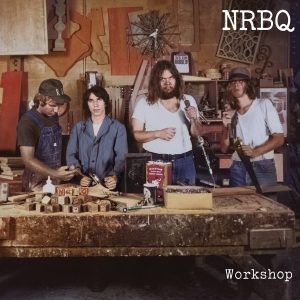
NRBQ, Workshop. The Omnivore label, which released a five-CD NRBQ retrospective called High Noon in 2016, has since been issuing a steady stream of the group’s old albums. The latest is Workshop, a1973 LP that the label has remastered and expanded.
As this column has previously noted, it’s good that the band became known as NRBQ rather than by its full name, which was originally New Rhythm and Blues Quintet. That moniker is misleading because the group’s music extends way beyond R&B to embrace pop, jazz, rock, and more. The use of initials also came in handy when Frank Gadler, NRBQ’s lead vocalist from 1967 to 1972, left the group shortly before it recorded Workshop. Instead of having to change its name, the band just had to update the meaning of “Q,” from quintet to quartet.
Here, the foursome offers spirited covers of Sonny Terry and Brownie McGhee’s “C’mon If You’re Comin’,” the Delmore Brothers’ “Blues Stay Away from Me,” and “Hearts of Stone,” by Eddie Ray and Rudy Jackson of the Jewels, a1950s R&B group from California. Also featured are excellent band originals such as Joey Spampinato’s “Mona” and Terry Adams’s “RC Cola and a Moon Pie.” Among five bonus numbers are singles versions of two of the album’s songs and three performances from the Workshop sessions that didn’t make it onto the original 12-track LP.
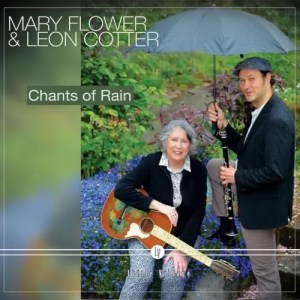
Mary Flower & Leon Cotter, Chants of Rain. You can thank happenstance for the existence of Chants of Rain, an instrumental set that finds fingerpicking guitarist Mary Flower collaborating with clarinetist Leon Cotter. The pair, both of whom are based in Portland, Oregon, met on an airplane a few years ago and got to talking about music. They subsequently ran into each other at a jazz festival and a backyard fundraiser and wound up playing together.
That led to this delightful self-produced acoustic album, which includes five numbers composed by Cotter and six by Flower (one with a co-writer). It’s a lively, playful, and frequently inspired collection that draws on jazz, blues, ragtime, and New Orleans music. Cotter and Flower are masters of their instruments, and their interplay on Chants of Rain will make you hope they continue to collaborate.
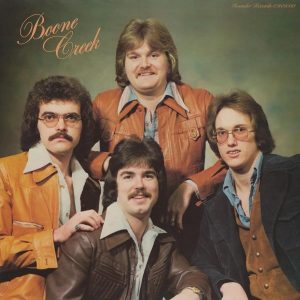
Boone Creek, Boone Creek. Boone Creek, a short-lived, late-1970s quartet that released only two albums, is remembered for its blend of traditional bluegrass and progressive country and for showcasing early work by its luminous members, particularly Ricky Skaggs and Jerry Douglas. A singer, mandolinist, and fiddler, Skaggs has since enjoyed an illustrious solo career and won 15 Grammys. Douglas, who has become one of America’s preeminent dobro players, has contributed to more than 1,500 albums and received 16 Grammys.
When Boone Creek formed, however, Skaggs was just 23, Douglas was about 21, and they were relatively unknown. Nevertheless, both had already been members of the influential Country Gentlemen and J.D. Crowe and the New South. Skaggs had also played with Lester Flatt, Earl Scruggs, and Ralph Stanley’s Clinch Mountain Boys.
Boone Creek’s eponymous debut album, which first appeared in 1977, has recently been reissued after being out of print for many years. The CD mixes traditional bluegrass numbers such as “Drifting Too Far from the Shore,” Flatt’s “I’m Gonna Settle Down,” and Bill Monroe’s “Dark as the Night, Blue as the Day” with more modern-sounding material written by the group’s guitarist, Wes Golding. Augmenting the original album’s tracks are four recently unearthed outtakes from its sessions.
If you didn’t know anything about the group’s lineup, you’d almost certainly guess that Boone Creek was the work of well-established virtuosos, not a first album from a bunch of guys in their early 20s.
______________________
Jeff Burger’s website, byjeffburger.com, contains more than four decades’ worth of music reviews and commentary. His books include Dylan on Dylan: Interviews and Encounters, Lennon on Lennon: Conversations with John Lennon, Leonard Cohen on Leonard Cohen: Interviews and Encounters, and Springsteen on Springsteen: Interviews, Speeches, and Encounters.