





From Busker to Believer: The Hard-Earned Songs of Slaid Cleaves
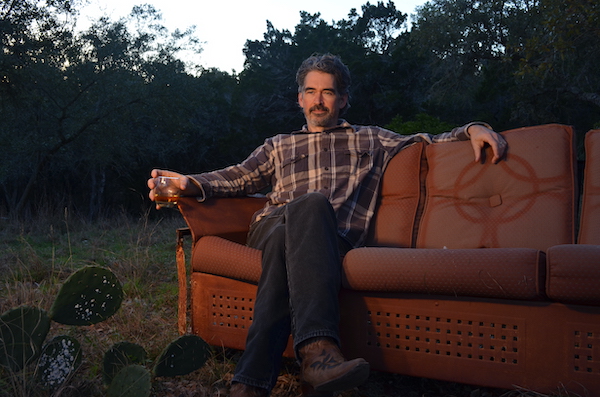
Slaid Cleaves lives in Wimberley now, tucked into the folds of the Texas Hill Country, playing closer to home, keeping the circle small. The road that once stretched from Maine to Cork to Austin has narrowed. The songs, though, are still wide open
There was a time when he measured success in dollars and survival.
“The first time I felt successful,” he said, “is when I quit my minimum wage job.”
He slept in his car, couch-surfed, played three-hour bar gigs from nine to midnight beside a television blaring ballgames. Six or eight gigs a month, $600 total. “I could live on that back then in my 20s.” That was success: escape velocity.
Now he defines it differently.
“A, I get to make a living making music. That’s huge. That’s every musician’s dream. I haven’t had a day job in 20 years.”
But the deeper measure lingers in his voice.
“Hearing from people whose lives were impacted by my music… hearing from people who told me how much my music helped them through a bad time or resonated with them. That’s just the best feeling in the world.”
To make a living connecting with people — that’s the whole deal.
Cleaves grew up in South Berwick, Maine, a town of 3,000 wedged between Portland and Boston. Dairy farms. A shoe factory. A Navy Yard and an air base. Fathers worked on submarines. Kids went into carpentry or the plant. “Pretty blue collar,” he said.
While he and his childhood friend Rod Picott listened to Bruce Springsteen and Tom Petty, the factories were closing and the dairy farms were turning into trailer parks and golf courses. “We definitely saw a little bit of the Rust Belt thing happen on a small town scale.”
They had their first band together in high school. After graduation, each led separate cover bands playing transient hotel lounges and bowling alleys. It was rough-and-tumble work in a rough-and-tumble town. The place has since grown polished — almost a suburb of Boston now — but the songs Cleaves writes still carry the grit of that earlier Maine.
He was a keyboard player then. Guitar came later, and it came because of one record.
When he first heard “State Trooper” from the album Nebraska, it showed him another way.
For nearly 20 years — from the early ’80s until the release of his own album Broke Down in 2001 — he was chasing the feeling that record gave him. “I was basically trying to reproduce the effect of Nebraska,” he said.
When he finished Broke Down, he believed he’d done it.
“I think I’ve finally done all that I can to achieve the goal of creating a record that would touch people like Nebraska touched me.”
And then came the fear.
“Well, if this is true, then what am I going to do next?”
Before Austin, before record deals, before Austin songwriting honors, there was Cork, Ireland.
In 1985, studying abroad, thousands of miles from Maine, Cleaves found himself alone with a suitcase of cassettes — Hank Williams, Buddy Holly, Johnny Cash — and a little bedsit apartment.
No car. No job. No friends.
He saw buskers lining the pedestrian streets and made a decision.
“This is how I’m going to become a singer-songwriter. I’m going to learn a song in a day, I’m going to go out on the street, I’m going to play kind of out of the way so people can walk by if I’m no good.”
He wasn’t very good at first. That was the point.
Busking became his apprenticeship — developing his voice, his guitar playing, his nerve. A fellow student, Richard Hennessy, became an informal mentor, modeling projection and presence. Hennessy planned to leave music after graduation. Cleaves chose the opposite path.
Back in Maine, he formed The Moxie Men in Portland, then eventually headed south with his wife Karen in search of a music town. Austin was the right move, but it meant starting from scratch again.
He passed out cassettes to bars and all-you-can-eat-barbecue joints. No one called back.
So he returned to the street. Open mics. Months of anonymity. Gradually, connections formed. Allies emerged. A producer in Gurf Morlix. Record label interest. Eight years after arriving, he had gone from anonymous street singer to one of Austin’s most respected songwriters.
The work, though, has never gotten easier.
“It’s a fraught process,” he said of songwriting. “In the beginning there is nothing there, only aspiration. It has promise but it’s not working yet.”
He describes hammering at songs for years, setting them aside like crossword puzzles. “If you feel like you have writer’s block, you have to write a few bad songs and realize that they are bad to get to the good ones.”
In the late ’90s, he learned to turn his gaze outward. Early on, he wrote to satisfy himself. After years of audiences not flocking, he recalibrated.
“I needed to write music that resonated with somebody else. Put myself in my listener’s shoes. Is this going to catch their attention? Is this going to pull on their heartstrings? Not just mine?”
That shift coincided with deeper collaboration with Rod Picott. “He’s really smart,” Cleaves said. “He can explain to me why a line that I present isn’t going to work.” They share a background, a shorthand. Picott will talk him out of a line Cleaves thinks is fine — and usually be right.
Co-writing toughened him. Made him more self-critical. Every line must earn its keep.
Today, Cleaves calls himself “truly indie.” The last two records have been independent affairs, which means he handles not only the songs but the codes, the files, the royalties, the social media churn. It eats into writing time.
So he creates his own retreats.
He packs a suitcase and a cooler, moves into the guest house in Wimberley, and says goodbye to Karen “as if I’m traveling to some other state.” No chores. No bills. Sometimes dinner appears at the doorstep.
“I just totally devote myself to taking these little nascent ideas… and trying to flesh them out into songs.”
The ideas can come from anywhere: a local mechanic profiled in a community paper (the source of “Little Guys”), an escaped prisoner in the Bangor Daily News, the inspiration of “Arnold Nash.” He keeps “his ear cocked,” he said for characters and phrases. The cycle repeats: tour, doubt, write, doubt again — and then suddenly, a dozen songs emerge. Some rocking storytelling adventures.
Some contemplative tearjerkers. Some philosophical reckonings.
He first heard the term “Americana” around the time he got a record deal. To him, it’s partly marketing, partly lineage — country, bluegrass, rock, blues, soul. “Americana might be the artisanal version of that music,” he said.
In Wimberley, he doesn’t chase the mass market. He chases relevance. He chases that feeling he first felt listening to Nebraska — a voice in the dark, telling the truth plainly.
The scrappy street singer who once counted $600 as a fortune now measures wealth in connection.
The road has narrowed. The songs have deepened.
And by his own definition, Slaid Cleaves has already made it.
REVIEW: Slaid Cleaves “Together Through the Dark”
For story ideas and pitches, Brian D’Ambrosio may be reached at dambrosiobrian@hotmail.com