




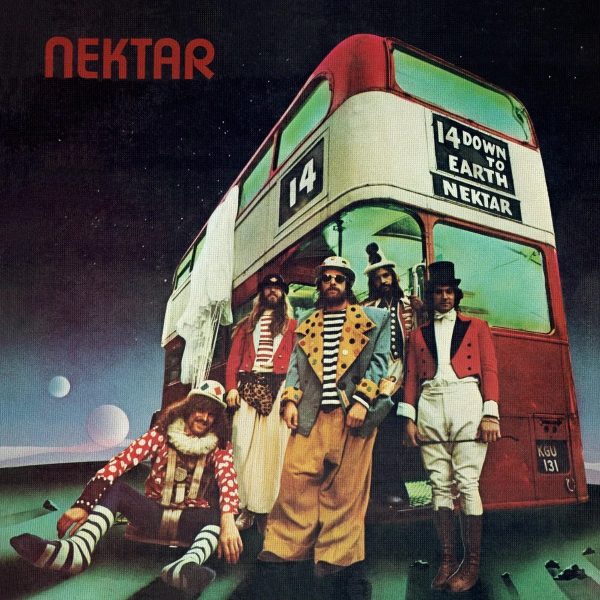
The progressive rock band Nektar consisted entirely of Britons, but it achieved its greatest commercial successes in Germany (where it formed) and America.
The group’s fan base burgeoned after the late-1973 release of Remember the Future, its fourth LP and the first to be issued in the U.S. The album, whose title track filled both sides of a vinyl record, set the band apart from such other prog-rock acts as Yes and Emerson, Lake & Palmer. Compared with the work of those groups, the music on Remember the Future and subsequent releases was typically less classically influenced, more emotional, and more melodic, and evidenced more of a rock and roll sensibility. You could even dance to some of it.
Stateside audiences responded. Remember the Future received lots of FM radio exposure and made the Top 20 on U.S. pop charts by July 1974. An American tour in support of the record attracted large, enthusiastic crowds, especially in New York and the Midwest. As bassist Derek “Mo” Moore told me at a sold-out St. Louis show during that concert series, “The reaction has been fantastic.” Added drummer Ron Howden, “We haven’t done a night with less than two encores.”
The fan base remained strong with the arrival of Down to Earth, the group’s fifth studio LP, which appeared in October 1974. This follow-up to Remember the Future reached No. 32 on U.S. charts and produced the group’s only U.S. chart single, “Astral Man.” But subsequent releases garnered less attention, and the group broke up in 1982.
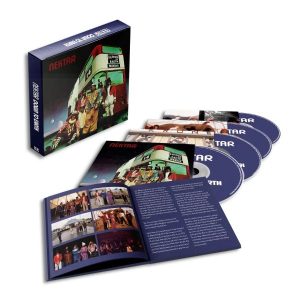
The story doesn’t end there, however. Several outfits with one or more original Nektar members have been performing under that name since 2000, and expanded versions of some of the early albums have been issued recently, exposing new generations to their contents. Remember the Future and 1976’s Recycled, for example, have resurfaced in 50th-anniversary five-CD editions. And now comes a four-CD clamshell-boxed version of Down to Earth, which will be released on March 6.
Like Remember the Future, the original Down to Earth is a concept album (in this case, with a circus theme), but musically, it’s a departure from previous efforts. As guitarist and lead vocalist Roye Albrighton once stated, the LP “was a more lighthearted concept, which attempted to combine memorable songs with the circus theme. The album title really had a double meaning. Up to that time, we had been known for constructing albums of a spacey nature, which consisted of long pieces of music. We decided that we wanted to make an album of shorter and concise songs.”
That’s what you’ll find on Down to Earth, a mostly excellent record that features a seven-piece horn section and contributions from American-born soul singer P.P. Arnold. Granted, the few spoken bits from former Hawkwind vocalist Robert Calvert (in the role of circus ringmaster) can get old after a few listens, and the album’s lyrics are often less than profound. But most of the tracks on this record deliver hummable melodies, likably surprising chord and tempo changes, and compelling vocal work.
Disc One of the new edition features a remaster of the original LP, plus alternate mixes of several of its tracks. The second CD, meanwhile, preserves a late-night, live-in-the-studio session that finds the group reverting to longer compositions with satisfying results. The remaining discs present a previously unreleased, nearly two-and-a-half-hour St. Louis concert from April 1975. It includes high-spirited readings of “Remember the Future,” plus “Astral Man” and 10 other tracks. A 20-page illustrated booklet contains reminiscences from Mick Brockett, who created light shows for Nektar’s concerts, and bassist Moore. There are also notes from Mark Powell, who compiled and produced the reissue.
Fans will welcome this expanded edition of Down to Earth, and newcomers will find that it offers an ideal way to start getting acquainted with Nektar.
Also Noteworthy
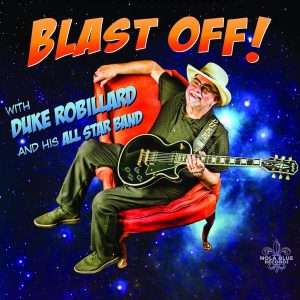
Duke Robillard and His All-Star Band, Blast Off!. Guitarist and singer Duke Robillard, whose credits include co-founding Roomful of Blues and membership in the Fabulous Thunderbirds, has had a long and fruitful solo career. This self-produced latest release incorporates most of his influences, such as jump blues, swing, jazz, and R&B.
The band, which features such seasoned musicians as Billy Novick and Chris Cote, delivers a previously unrecorded number that Robillard composed at age 17 and two songs that he co-wrote, among them the guitar-dominated instrumental title cut. Filling out the 12-track set are such numbers as Count Basie’s “The King,” Allen Toussaint’s “Confusion,” and Tom Waits and Kathleen Brennan’s “Lowdown.” Also here is a lively, nearly six-minute rendition of Sam Theard’s often-covered 1929 composition, “I’ll Be Glad When You’re Dead (You Rascal You),” which features baritone and tenor sax, clarinet, and trumpet.

Paul McCandless Quintet, Live at Kimball’s East 1992. A co-founder of Oregon, the innovative jazz and world music quartet, Paul McCandless recorded with that outfit for nearly half a century. However, the now 78-year-old performer has also found time to contribute to albums by dozens of other artists and create a long list of LPs under his own name. A veteran of Paul Winter Consort, as were Oregon’s other original members, McCandless is known primarily as an oboist, but he also plays saxophone, bass clarinet, penny whistle, flute, and English horn.
This consistently satisfying instrumental recording, recently discovered in McCandless’s garage, features the highlights of a three-night concert series at Kimball’s East, a jazz venue in Oakland, California. McCandless is joined by four of the musicians who played on his then newly released studio album, Premonition (see video below): bassist Steve Rodby, keyboardist Fred Simon, drummer Mark Walker, and pianist Lyle Mays, the longtime Pat Metheny group member who died in 2020.
______________________
Jeff Burger’s website, byjeffburger.com, contains more than four decades’ worth of music reviews and commentary. His books include Dylan on Dylan: Interviews and Encounters, Lennon on Lennon: Conversations with John Lennon, Leonard Cohen on Leonard Cohen: Interviews and Encounters, and Springsteen on Springsteen: Interviews, Speeches, and Encounters.