




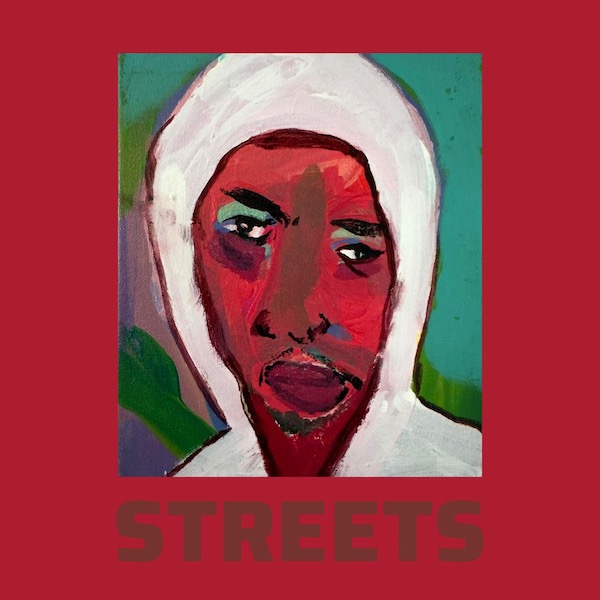
David Aaron Greenberg “Streets”
Americana Highways is hosting this video premiere of David Aaron Greenberg’s spoken word musical performance of “Streets,” from his forthcoming album Trap Poems, which is set for release on April 3. Trap Poems was produced, recorded, mixed and mastered by David Sisko (Min Max Studios, NYC).
The words and performance are by David Aaron Greenberg. The video was filmed in the East Village, NYC and created by Disco Pusher.
We had a brief chat with David about the song and the album. You can find the premiere just beneath the interview.
Americana Highways: You are one of the last protégés of legendary Beat poet Allen Ginsberg. How did your creative partnership with Ginsberg shape you as an artist, and how does his influence continue to show up in your work today?
David Aaron Ginsberg: Above all Ginsberg was a profound example to me of an artist dedicated to his craft. He was known to say: “When the Muse calls, answer—even if you have to get up in the middle of the night.” I saw how hard he worked, writing in his journal every morning, editing poems, creating original hand-written captions for his photographs, preparing for performances. He also was a great source for practical advice. One of the first things he told me was: “don’t try to write a poem, just write. Write down whatever it is you’re thinking or feeling or imagining and then figure it out later.” Also, he once told me: “If you’re unsure of something you’ve written, put it in a desk drawer and don’t look at it for a year.” Of course, there’s an inherent need for discipline to follow such good advice. And Allen Ginsberg certainly possessed an enduring discipline. He was writing right up until the very end of his life. It was the last thing he did before he slipped into a coma. His influence on me as a poet and artist is elemental. He remains a guiding force in both my creative life and my daily existence. Perhaps most importantly, he taught me how to meditate. The whole world could certainly benefit from a little bit of meditation right about now.
AH: Where did the inspiration for the project, Trap Poems, come from and how did your producer and longtime collaborator David Sisko become involved in bringing it to life?
DAG: Trap Poems as a concept was primarily influenced by the history of spoken word and music collaborations: from Jack Kerouac’s Blues and Haikus album to Patti Smith’s early poetry readings with guitarist Lenny Kaye to the Nuyorican Poets Cafe in the early 90s embracing both hip hop and salsa rhythms. I am also a fan of the Wu Tang Clan and their lyrical gymnastics.
On a practical level, I was drawn back into performing poetry live by the former Poet Laureate of Asbury Park Gregory Schwartz, who introduced me to a new generation of young poets in New Jersey making some noise organizing readings during the height of COVID in 2020. I started checking out some of these events.
Personally, I often felt conflicted reading poems to an audience. It never felt as authentic as performing songs. At some point while collaborating in the studio with David Sisko, my longtime partner in Disco Pusher, I started reciting part of a poem spontaneously to a fresh beat. It freed me up so much that I actually enjoyed reading my own poems. Sisko started sending me new “trap” inspired beats and I started experimenting with poems I had recently written. Some of these poems worked miraculously well with the beats. Then it evolved from there. Sometimes I’d recite a poem into my phone and send the voice memo to Sisko and he’d either write something new or find something he’d been working on and adjust it to fit the specific poem.
For over two years, I read most of the works that appear on the album Trap Poems in a live setting. I was able to adjust them and find certain rhythmic nuances.
I published Trap Poems & Lit Drawings at the end of 2023 with Trops Publishing. This was a representation of the poems as written works, further illuminated by drawings I had been making for almost a decade. That version of Trap Poems is actually an art book posing as a chap book. It is a quality product, beautifully designed and printed. It also serves as a kind of pro-to deluxe edition of the lyrics and liner notes to the forthcoming Trap Poems album. In essence, I perform the entire book in the same order, but now the poems have evolved and are slightly different than their printed versions. I always used to love how Morrissey’s printed lyrics were sometimes slightly different than what he actually sang on the actual album when he was with the Smiths. It made me acutely aware of the process of lyric writing and how a recorded performance could remain fresh and spontaneous. I hope people who have a copy of Trap Poems & Lit Drawings will also listen to the album version and see the subtle differences. Likewise, I hope people who vibe out to Trap Poems the album find themselves a copy of the book. The two products together are a unique audio, visual and tactile experience.
AH: “Streets” has a triumphant, seize-the-day energy and feels strongly narrative-driven. Can you talk about the time, place, and people that inspired the song?
DAG: The East Village, Brooklyn, Asbury Park, New Brunswick, NJ…all these particular places have their “streets” culture. These are places where I have lived and worked and played and continue to exist. I have friends and acquaintances in all these spots. And I’m always open to meeting new people. “Streets” is a celebration of the present. Recognizing that you are in fact alive on this planet is vital. Regardless the hardships and horrors, life is a gift. And every day is an opportunity to learn something new, create something extraordinary or even fall in love.
Thanks for chatting with us, David Aaron Greenberg. Intellectually complex and simultaneously both Moderna and timeless, this shows a sparkling talent.
You can find more details and information here on his website: https://www.davidaarongreenberg.com/