






Tim Easton Finds Light on fIREHORSE
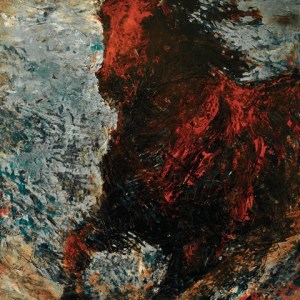
At nearly 60, Nashville-based singer-songwriter Tim Easton is still chasing songs the way he did as a restless young troubadour roaming Europe with a guitar case open on cobblestones. His 14th studio album, fIREHORSE, feels both hard-earned and freshly struck — a record that balances revolution and romance, one-chord blues and desert highways, personal reckoning and communal uplift.
Easton was born in 1966 — the Year of the Fire Horse — in Lewiston, New York, just downstream from Niagara Falls. The youngest of seven children in a frequently relocating family, he grew up on the move. His father’s job with Goodyear took them to Japan for three formative childhood years before they eventually settled in Akron, Ohio — a city that would quietly shape his musical sensibilities.
“Akron was kind of a hotbed,” he recalled, noting that members of Devo attended his high school, along with future rock figures like Chrissie Hynde and, later, The Black Keys. At home, he absorbed the eclectic record collections of his older siblings. In the car, 8-track tapes spun albums like The Stranger by Billy Joel and Rumours by Fleetwood Mac. Later, in his own Volkswagen bus, he kept the format alive with Carole King, Phoebe Snow, Devo, and Elvis Costello blasting through clunky cartridge transitions.
His first guitar arrived around age 12 — a cheap nylon-string flamenco model from a teacher offering “10 lessons and a guitar for 50 bucks.” He learned the hits of the day: Bob Seger’s “Against the Wind,” Queen’s “We Are the Champions,” and eventually more intricate pieces like “Blackbird.” By the time he stepped onto early stages in San Diego and Columbus, Ohio, he was already writing his own songs. “I don’t even know if money was the object,” he said. “I still don’t think it is. It helps.”
What he did want was experience.
“I need to learn how to write songs,” he told himself as a poetry major at Ohio State. So he went to Europe. Throughout the late 1980s, Easton busked across England, Ireland, Holland, Belgium, France, Spain, Italy, and eventually Eastern Europe. He arrived in Prague in the aftermath of the Velvet Revolution and visited Yugoslavia before its civil war. He remembers young people predicting conflict in bars, beer costing 25 cents, and the uneasy awareness that regimes could collapse overnight.
The fall of Romanian dictator Nicolae Ceaușescu particularly lingered in his mind — the speed of it, the brutality, the idea that a leader could be in power one day and executed the next. Decades later, that memory would spark the song “Hallelujah” on fIREHORSE, which begins in revolution and gradually bends toward sensual longing — a structural nod to Leonard Cohen’s lyrical contrasts between politics and intimacy.
Europe sharpened his craft quickly. Beatles covers brought in more coins than originals, but writing his own material proved more satisfying. By then he was deeply immersed in the work of folk masters — Sonny Terry and Brownie McGhee, Mississippi John Hurt, Hank Williams, John Prine, Townes Van Zandt — as well as Van Morrison’s Astral Weeks and Joni Mitchell’s Blue, albums he calls pivotal to his path.
Back in the States, Easton’s career unfolded steadily, marked by mentorship and grit. He once shared a bill with Townes Van Zandt during the songwriter’s final year — “a disaster,” he admitted, though the songs had already sunk deep into him. Lucinda Williams proved far more formative. She invited him to stay at her house, helped him make an album, and took him on tour. “She showed me what it meant to be a consummate songwriter,” he said — someone who documents both personal life and the wider world with unflinching clarity.
That ethos runs through fIREHORSE.
The album opens with “Don’t Let Your Mind Go Dark,” a one-chord folk-blues built almost entirely around the key of E. “It’s just folk music,” he said. “That whole song is one chord.” The track arrived in a rush — written and recorded within days — and retains what he calls a completely fresh feeling. Lyrically, it doubles as a pep talk to himself. “When I’m talking to you, I’m also talking to me,” he sings, sidestepping the finger-pointing that often creeps into songwriting. Instead of blame, the song offers uplift. “Part of my role now is to try to uplift people who are feeling challenges,” he said. “It helps me deal with my own problems.”
Other songs took longer roads. “Heaven and Hell” began with a line spoken by his three-year-old daughter: “You hold me and I’ll hold you.” Years later, after a divorce and a friend’s hardship, the phrase found deeper resonance. The song stretched across nearly eight years of life before settling into its final form.
“Cottonfields” emerged quickly, written while driving through southern Alabama after a songwriting festival. Words spilled into his phone as voice memos, later matched with a simple melody. In contrast, “HWY 62 Love Song” predates the pandemic and harkens back to his years living in Joshua Tree from 2003 to 2010. Highway 62, the desert artery cutting through town, becomes both literal road and invitation — a call to Angelenos stuck in the city to seek open space.
That push and pull between rootedness and restlessness defines Easton’s career. He’s played house concerts, libraries, art galleries, listening rooms in Alaska, Spain, and across Europe — part of what he calls the folk circuit, where community matters more than marquee lights. He’s also held down house-band duties at Pappy & Harriet’s in Joshua Tree. The venues vary, but the ethic remains.
Perseverance, he insists, is non-negotiable.
“When you’re young, it’s easy,” he said. “As you get older, it’s harder to pull a full Woody Guthrie and disappear down the highways.” Still, he urges young writers to travel, to see the world through other cultures, to learn “how they break bread.” Discipline matters more than dreaming. “You’re not going to get anything done if you just dream about it and watch what other people are doing.”
He also rejects the notion that music has run out of room. In an airport, a pianist once told him no one ever gets halfway with music — it’s infinite. The same 12 notes Mozart used still contain boundless possibility. To believe otherwise is to surrender creativity before it begins.
Today, living in Nashville but remaining outside the commercial country establishment, Easton sees himself as a folky on his own path. He collaborates with trusted musicians, resists being overly precious about control, and strives to remain teachable. Therapy, sobriety from ego-driven habits, and a willingness to serve the song have broadened his creative bandwidth.
“Everyone knows that feeling when you’ve made something new in your brain,” he said. “It might not be new to the rest of the world, but it’s new for you. That’s what’s important.”
On fIREHORSE that feeling burns bright — a veteran songwriter still roaming, still listening, still urging himself, and anyone within earshot, not to let their minds go dark.
Find more information on Tim Easton’s current happenings here: https://www.timeaston.com
Enjoy our review of fIREHORSE here: REVIEW: Tim Easton “fIREHORSE”
For story ideas and suggestions, Brian D’Ambrosio may be reached at dambrosiobrian@hotmail.com