





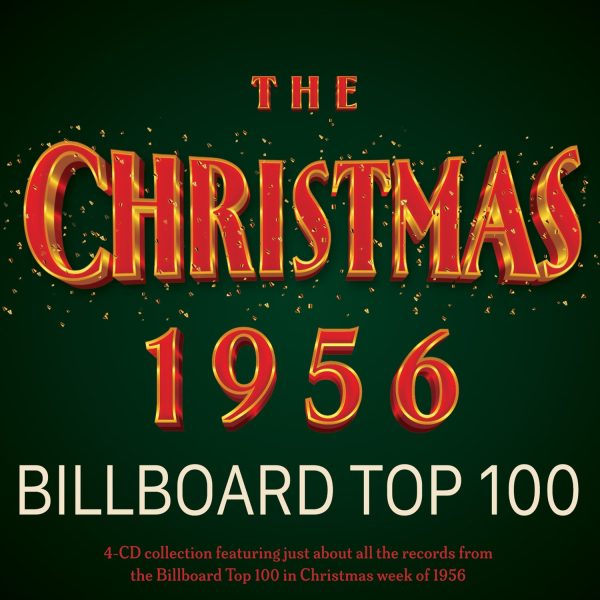
99 Hits from 1956 and Two Blasts from the Blasters’ Past
Most multi-artist anthologies have a musical theme, such as a genre or subgenre (The Bakersfield Sound 1940–1974, for example) or the work of a particular artist (Ladies Sing Lightfoot, for instance). One exception is a series of box sets from Acrobat, a reissue label, that simply collects all the songs that made Billboard’s Top 100 chart in a particular week, no matter whether they’re pop, rock, novelties, or whatever.
Previous releases in this long-running series have included titles such as The 20th Anniversary Billboard Chart (from July 20, 1960), The JFK Inauguration Hot 100 (from Jan. 20, 1961), and American Bandstand: US Top 100 (from Aug. 5, 1957, when the popular TV show first aired nationally). And now we have The Christmas 1956 Billboard Top 100, which presents 99 tracks from the chart for the week of Dec. 22, 1956. (Because of a tie, the magazine’s list embraced 101 songs, two of which are not featured due to copyright issues.) The four-CD box comes with an illustrated 32-page booklet that offers detailed information on every track and performer.
Like its predecessors, this latest compendium inevitably sounds as if it were designed for someone with multiple personalities. While anything but musically cohesive, however, it paints a clear picture of the state of the pop world in 1956.
Surprisingly, the collection contains only one Christmas song, Harry Belafonte’s “Mary’s Boy Child.” But much of the rest of the program might surprise you for a different reason.
Rock and roll is widely and correctly said to have burgeoned in the early 1950s and to have fully blossomed by 1955, when the charts began to feature songs like Bill Haley & His Comets’ “Rock Around the Clock,” Fats Domino’s “Ain’t That a Shame,” and the Platters’ “The Great Pretender.” You might assume, therefore, that by the end of the following year, the genre would be dominating the charts. But it wasn’t—not by a long shot.
Granted, Elvis Presley placed seven songs—way more than anyone else—on the Dec. 22, 1956, chart, including such smashes as “Love Me Tender,” “Hound Dog,” and “Don’t Be Cruel.” And a coterie of other rock-oriented acts also made the list, among them Haley (“Rudy’s Rock”) and Domino (“Blueberry Hill”). The chart additionally features a bit of doo-wop, such as the Five Satins’ “In the Still of the Night” and the Heartbeats’ “Thousand Miles Away.” It also includes a few non-rockers that the rock world understandably embraced, among them “I Walk the Line” from the country-rooted Johnny Cash and R&B numbers such as “Since I Met You Baby,” from Ivory Joe Hunter, and “Let the Good Times Roll” and “I Feel Good,” from Shirley & Lee.
But most of 1956’s Christmastime Top 100 has nothing whatsoever to do with rock. A handful of those tracks come from singers whose work has stood the test of time, such as Frank Sinatra (“Hey! Jealous Lover”), Nat King Cole (“Night Lights,” “To the Ends of the Earth”), and Bing Crosby (“True Love”). But many of the other numbers sound insubstantial and decidedly dated.
Jerry Lee Lewis isn’t here, but comedian and actor Jerry Lewis is, with a histrionic “Rock-a-Bye Your Baby (with a Dixie Melody).” Also featured is a Muzak-like instrumental called “Armen’s Theme,” from Ross Bagdasarian (aka “The Music of David Seville”), who would later strike gold with inane novelties such as “The Witch Doctor.” Longtime hit maker Patti Page delivers the syrupy “Mama from the Train,” and traditional pop singer Margaret Whiting serves up a forgettable cover of “Money Tree,” an equally forgettable minor hit for Patience & Prudence. That duo, consisting of 14- and 11-year-old sisters, is here, too, with the original version of “Money Tree” as well as the saccharine “Tonight You Belong to Me” and “Gonna Get Along without You Now.”
Incidentally, the competing versions of “Money Tree” represent nothing unusual for the 1950s, when multiple recordings of a song frequently vied for chart dominance. This set includes two renditions of 13 of its selections, which in some cases means a laudable track plus a watered-down reading and other times means a double dose of mediocrity.
All told, by this writer’s count, about a quarter of the numbers in the box are memorable and musically substantive, while the other 75 percent have minor or major shortcomings. That said, anyone with an interest in how popular music evolved in the 1950s will likely find this collection as fascinating as it is uneven. Many of its tracks sound positively ancient, and it’s hard to believe that they dominated the charts only a few years before acts like Bob Dylan, the Beatles, Jefferson Airplane, and Jimi Hendrix emerged. Not only was the music world changing dramatically, but it was doing so at breakneck speed.
Two Blasts from the Blasters’ Past
The Southern California-based Blasters, led by brothers Dave and Phil Alvin, produced some first-rate roots-rock albums in their heyday. Two of these punk-influenced LPs have just been reissued, and both do a good job of showing off Dave’s songwriting prowess and Phil’s expressive, enthusiastically delivered vocals.
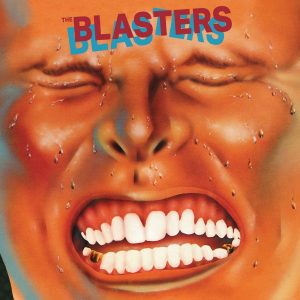
One is the group’s eponymous sophomore album, which first appeared in 1981. Its program includes five well-executed covers, alongside seven of Dave’s creations. Guests include Los Lobos’s Steve Berlin on baritone sax and New Orleans’s Lee Allen (best known for his 1958 instrumental hit “Walkin’ with Mr. Lee”) on tenor sax. Allen is featured prominently on “So Long Baby Goodbye” and “Hollywood Bed,” both of which were reportedly written with his sax in mind.
Highlights among the tracks penned by Dave include the explosive “Marie Marie,” which produced a Top 20 UK hit in 1980 for rockabilly singer Shakin’ Stevens, and “Border Radio,” which conjures up 50,000-watt Mexican station XERB, home of the inimitable Wolfman Jack.
The cover choices say a lot about the band’s influences. They include Bo Diddley’s “I Love You So,” Rudy Toombs’s “I’m Shakin,’” which R&B singer Little Willie John memorably recorded, ”Stop the Clock” from rockabilly singer Bob Ehret, “Never No More Blues,” from country music giant Jimmie Rodgers, and “Highway 61,” which is associated with blues pianist and singer Sunnyland Slim.
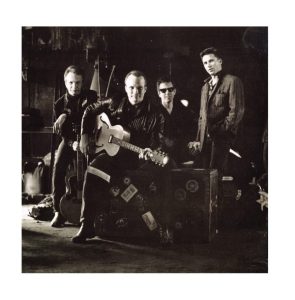
Hard Line, the other newly reissued set, is the group’s fourth album and the last of its LPs with the original lineup. First released in 1985, shortly before Dave left the band, it was produced by Jeff Eyrich, who also worked on the Plimsouls’ Everywhere at Once. Guests include Tom Petty drummer Stan Lynch and Elvis Presley’s backup singers, the Jordanaires. The album features eight of Dave’s compositions, plus the traditional “Samson and Delilah” and a cover of “Colored Lights” by Blasters fan John Mellencamp, who executive-produced the track.
Several of Dave’s tunes on this disc have topical themes. “Dark Night” describes a lynching, possibly in response to an interracial romance, while, in “Common Man,” the lyrics take aim at then-President Ronald Reagan: “He wasn’t born in a cabin, he never fought in a war / But he learned to smile and quote Abe Lincoln and get his foot in the door.” Other standouts include two songs Dave wrote with John Doe, his former bandmate in the punk rock group X. They include the acoustic “Little Honey” and “Just Another Sunday,” whose protagonist is spending his third long week in motel hell after a romantic breakup.
______________________
Jeff Burger’s website, byjeffburger.com, contains more than four decades’ worth of music reviews and commentary. His books include Dylan on Dylan: Interviews and Encounters, Lennon on Lennon: Conversations with John Lennon, Leonard Cohen on Leonard Cohen: Interviews and Encounters, and Springsteen on Springsteen: Interviews, Speeches, and Encounters.