


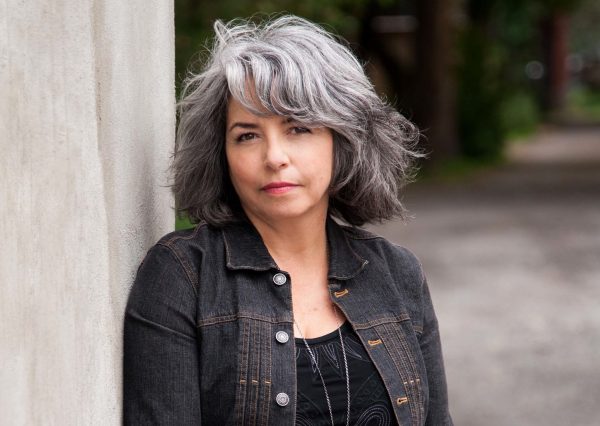
Yielding to the Song: Lynn Miles and the Discipline of Emotional Balance
By any commercial metric, Lynn Miles has never chased the idea of dominance. Instead, over a career that now spans decades, the Canadian singer-songwriter has practiced something rarer and more exacting: submission. Not to trend, or industry pressure, or even audience expectation—but to songwriting itself. For Miles, the song is the authority. Her job is to listen closely, obey carefully, and trust that this discipline—this yielding—will steady her in a world that rarely does.
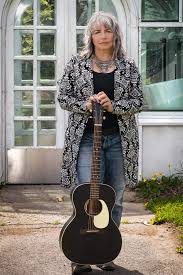
That posture helps explain why Miles occupies such a singular place in Canadian music, particularly among women songwriters. She speaks reverently of predecessors and peers—Kathleen Edwards, Catherine MacLellan, Amelia Curran, Sarah Harmer, and, hovering above them all, Joni Mitchell, “the queen of us all.” Miles traces this lineage not just to talent, but to geography. Canada’s winters, she suggests, foster a particular interior life. Isolation becomes introspection. Silence sharpens listening.
“There’s something in the water here,” she said. “The isolation, the history of women in the craft—it shapes how we write.”
That inwardness runs through her catalog, often openly. Songs like “The World Is Spinning” confront anxiety and inner turbulence without apology. Others, like “Moody” (2023), acknowledge emotional inconsistency with wry self-awareness. “Moodiness is why I’ve never gotten a tattoo,” Miles joked. “It’s probably why I’ve never gotten married either. How could I possibly make a decision like that when I know my mood is going to change?”
The line lands lightly, but it carries a deeper truth: Miles distrusts permanence unless it has been earned honestly. Songwriting, paradoxically, provides that permanence. It changes her without demanding she be consistent.
Music was present from the beginning. Her father, damaged by PTSD after serving in the Korean War, might have been a jazz drummer under different circumstances. Instead, he listened. He played harmonica quietly in the kitchen, often in the dark. Her mother loved country music. Her older brother blasted Jethro Tull and Jeff Beck. Growing up in southern Ontario, close enough to Detroit to receive American television, Miles absorbed Motown, rock, opera, jazz—everything. Music was not genre-bound; it was atmospheric.
“The day I was born,” she recalled, “my father said I had a singer’s nose.” As an infant, her mother sensed it too. For Miles, singing has always been physical—a vibration moving through the body. Songwriting, then, is an extension of breath and pulse, not a cerebral exercise. “If I can express through the voice which goes through my body,” she said, “it’s a form of therapy.”
That idea—art as regulated descent into feeling—lies at the heart of her philosophy. Not everyone, Miles said, can access deep emotional states safely. Art creates a bridge. It allows people to go somewhere dark without getting lost there. “It might be dark,” she said, “but it’s still a beautiful place. There’s longing, and there’s beauty in it. It’s possible.”
Her song “Lesson in Everything” (2013) articulates this worldview explicitly. The song recognizes grief and pain not as detours from life, but as instructors. Meaning often arrives late, Miles said—long after the wound—but songwriting helps her stay open to the lesson. Yielding to the song means accepting that clarity comes on its own schedule.
Restlessness has also shaped her life. By age 64, Miles had moved 48 times. She never developed a sense of home as a place. “I was never about a house,” she said. Even now, she lives alone and values solitude. Loneliness is not a familiar condition. “My home is just myself.”
Touring helps regulate that restlessness. The road exhausts her in the best way—movement, faces, conversations with strangers. “I really like talking to strangers,” she said. “I need to learn something from somebody.” Performance, too, plays its role. Songs are not meant to stay private. Sharing them—watching them land—brings equilibrium.
She measures success by quality, not scale. Ten attentive listeners matter as much as a thousand. What matters is presence. “The audience is with me,” she said. “That’s all I need.”
That sense of responsibility runs deep. Miles prefers venues where listeners have chosen to be there—where a meaningful cover charge signals commitment. “The fact that people will pay to hear me sing is such a compliment,” she said. “It’s also a huge responsibility.” Her goal is not entertainment alone, but healing. Even—especially—when the material hurts.
Professionally, she has gravitated toward collaborators who understand this ethos. Early in her career, a Los Angeles publisher told her simply, “I love what you do. Just keep doing what you do.” That permission shaped her boundaries. She avoids environments that require self-distortion. The result, she admits, is a smaller career—but a truer one. “I’ve seen the big stuff,” she said. “You have to be a very specific kind of person for that. I’m not.”
Her loyalty to craft is evident in her process. Miles wrote her first song around age ten. Some songs arrive in half an hour; others take a decade. Both are equally satisfying. She loves editing—friends call her “the song doctor”—but she also reveres the mystery of songs that seem to write themselves. Lyrics lead everything. Tracks are built around them, never over them.
At 67, Miles is still chasing better songs. Not hits. Not closure. Just better songs. “It doesn’t feel like work,” she said. “It’s such a joy. It makes me feel young.”
Yielding to songwriting, for Lynn Miles, is not passivity. It is discipline. Attention. Trust. In giving authority to the song, she has found a way to steady herself—emotionally, mentally—while leaving room for motion, doubt, and change. The balance is fragile, but it holds.
Find more information here on her website: https://lynnmiles.ca
Enjoy our previous coverage here: REVIEW: Lynn Miles “TumbleWeedyWorld”
Brian D’Ambrosio may reached and pitched at dambrosiobrian@hotmail.com