





Music Reviews: Doc Pomus Demos, plus Lindsey Buckingham & Stevie Nicks, the Third Mind, and the Brothers Comatose
Back in the so-called Brill Building era, before acts like Bob Dylan and the Beatles rewrote the rules and started penning their own material, a large percentage of the hits on Billboard’s charts were composed not by their performers but by professional songwriters. Many of these tunes were the work of a handful of New York–based teams, such as Gerry Goffin and Carole King, Jerry Leiber and Mike Stoller, Jeff Barry and Ellie Greenwich, Neil Sedaka and Howie Greenfield, and, last but not least, Doc Pomus and Mort Shuman.
Pomus—who also wrote on his own and with other collaborators—was among the most prolific of the bunch. Unlike King and Sedaka, who achieved success as songwriters before becoming well-known performers, he began his musical career by spending 10 years as a blues singer before turning his focus to songwriting. When he did, he wrote, or in many cases, co-wrote, lots of classic early rock and pop hits, including “Lonely Avenue” (Ray Charles, 1956), “A Teenager in Love” (Dion & the Belmonts, 1959), “This Magic Moment” (The Drifters, 1960), and “Suspicion” (Elvis Presley, 1961), to name a few.
The strength of Pomus’s work has a lot to do with the extent to which it rings true for listeners. And that, in turn, probably has something to do with the degree to which much of it reflects his personal experience. For instance, “A Teenager in Love” began life as a sunny tune called “It’s Great to Be Young and in Love,” but Pomus’s own teen years taught him that romance can often be more painful than satisfying, so he re-wrote the number to include lines like, “Each time we have a quarrel, it almost breaks my heart, ’cause I am so afraid that we will have to part.”
A more poignant example is “Save the Last Dance for Me.” Pomus, who was confined to a wheelchair due to childhood polio, composed that Drifters classic after watching his bride dance with other men at their 1957 wedding. “You can dance…,” he sang, “but don’t forget who’s taking you home, and in whose arms you’re gonna be.”
The hit versions of Pomus’s songs are widely available on many albums. What has not been accessible are the original demos of these tunes, nearly all of which date from the mid-1950s through the 1960s. That changes with the release of a fascinating six-CD set called You Can’t Hip a Square: The Doc Pomus Songwriting Demos. The anthology, whose compilers include Pomus’s daughter, Sharyn Felder, comes with a copiously illustrated, LP-sized hardcover book that includes an introduction from her as well as essays by producer/writer Eddie Gorodefsky and critics Geoffrey Himes and Peter Guralnick.
As Himes notes in his piece, Pomus’s “roll call of triumphs” prompts two questions: “What did these songs sound like before they were handed over to [the performers]? And if these are just the iceberg tip of a massive catalog of hundreds of songs—and they are—what do the others sound like? This collection…is an effort to answer both inquiries.”
It does just that. Issued to commemorate the 100th anniversary of Pomus’s birth, the box features 165 demos, most of which were previously unreleased. More than half feature Shuman on vocals and piano. Other performers include fellow Bill Building–era composers Greenwich and Sedaka, singer Kenny Rankin, blues and R&B artist Titus Turner, and, on about two dozen tracks, Pomus himself.
Unfortunately, “Save the Last Dance for Me” isn’t in the program, but all the other songs mentioned above are here, along with some more that became hits. The anthology devotes a full disc to tunes Pomus co-wrote for Elvis, including such numbers as “A Mess of Blues,” “Kiss Me Quick,” “Viva Las Vegas,” and “Kissin’ Cousins.” Equally interesting, though, are obscurities such as “It’s a Nothing World,” “Destination Heartbreak,” “It’s a Man’s World,” and “Silly Boy,” all of which sound as if they could have been hits.
If you’re just a casual fan of the musical era that produced these songs, you might be satisfied with owning just some of the original chart tunes. But especially if you’ve seen the 2013 film A.K.A. Doc Pomus or have read Alex Halberstadt’s Lonely Avenue, a 2007 biography, you’re bound to want to further explore the work of this fascinating and idiosyncratic songwriter. There’s no better place to start than with this box.
Buckingham & Nicks, Before the Fame
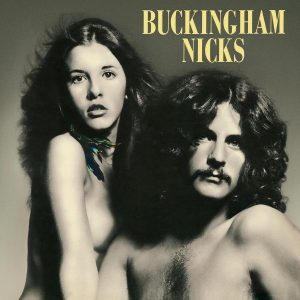
Almost no one heard Buckingham Nicks, the debut LP by Lindsey Buckingham and Stevie Nicks, when it first appeared in 1973. One person who did pay attention to it, however, was Mick Fleetwood, who liked the record enough to arrange a meeting with Buckingham. That led to the duo joining Fleetwood Mac at the end of 1974, and the rest, as the saying goes, is history.
Listening now to the album, which has just been reissued, is a bit like hearing the Beatles’ 1962 audition tape for Decca, which failed to win them a record contract. You look to see whether this music embraces hints of greatness that almost everyone missed. The hints are there, though it took a union with Fleetwood, Christine McVie, and John McVie to fully showcase the duo’s strengths.
Buckingham and Nicks’s album isn’t as polished or powerful as subsequent Fleetwood Mac LPs, but it suggests that both of them were talented singers and songwriters, and it even includes two numbers that became part of their future band’s story: Buckingham’s “Don’t Let Me Down Again,” which Fleetwood Mac frequently performed in concert, and Nicks’s “Crystal,” which in a rerecorded version became a highlight of the group’s massively successful eponymous 1975 LP.
(Click here to read about this writer’s pre-fame lunch meeting with Buckingham and Nicks.)
The Third Mind Is First-rate
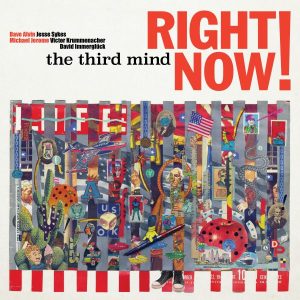
Right Now! is the latest album from the Third Mind, a superlative psychedelic rock quintet that leans heavily on improvisation and looks to the 1960s for the bulk of its material. Grammy-winning singer/songwriter Dave Alvin and Camper Van Beethoven bassist Victor Krummenacher co-founded the group. Filling out the lineup are Counting Crows guitarist David Immergluck; drummer Michael Jerome, who has toured with John Cale and Richard Thompson; and singer/songwriter Jesse Sykes.
The band recorded this CD the same way it made its previous albums: quickly, and without preconceptions, discussions, or rehearsals. The songs, each the result of only a few takes, include Jesse Colin Young’s “Darkness Darkness”; Richard Farina’s “Reno, Nevada”; Elizabeth Cotton’s “Shake Sugaree,” in a version that recalls Fred Neil’s cover; Pharoah Sanders’s “The Creator Has a Master Plan”; the traditional “Pretty Polly,” in a reading based on Judy Collins’s rendition; and Michael Bloomfield and Nick Gravenites’s “Reap What You Sow.” You’ll also find one new original, a dreamy Sykes/Alvin co-write called “Before We Said Goodbye.”
Sykes’s quavering, captivating vocals enrich the entire album, as does the instrumentation, which often sounds redolent of the work of outfits such as Jefferson Airplane and the Grateful Dead. Like the Third Mind’s two previous studio LPs and a live set that came out earlier this year, Right Now! is a must-hear release.
Also Noteworthy
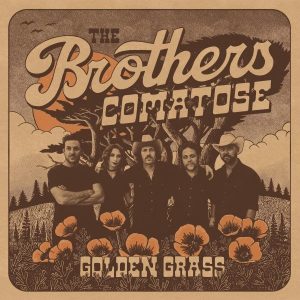
The Brothers Comatose, Golden Grass. Their name notwithstanding, this quintet is anything but comatose on its latest album, whose name references its home base (California, the Golden State) and bluegrass, a key element in its music. Rock is another component and, as the title cut’s lyrics note, “Way out west we do it differently, untraditionally.”
The best tracks include the lively “Blue Mountain,” which was written and is sung by the group’s auspicious newest member, 23-year-old mandolinist and fiddler Addie Levy; the harmony-rich “Huckleberry Wine”; and “Home Again,” a ballad featuring guest vocalist Lindsay Lou that concerns the wildfires that have devastated California communities.
______________________
Jeff Burger’s website, byjeffburger.com, contains more than four decades’ worth of music reviews and commentary. His books include Dylan on Dylan: Interviews and Encounters, Lennon on Lennon: Conversations with John Lennon, Leonard Cohen on Leonard Cohen: Interviews and Encounters, and Springsteen on Springsteen: Interviews, Speeches, and Encounters.