







Book & Music Reviews: A Biography of Joe Meek, England’s Counterpart to Phil Spector, plus Bobby Lee Trammell, the Rain Parade, and Brian Wilson
In the intro to a new biography of Joe Meek, author Darryl W. Bullock notes that recent years have witnessed heightened interest in the career of the music producer and songwriter. A 2005 stage play about Meek led to a film version, for example, and his 1960s work has recently been anthologized in such box sets as Too Far Out, Do the Strum!, and From Taboo to Telstar.
This focus on Meek, who has been called a British counterpart to Phil Spector, is understandable and overdue. As Bullock writes in Love and Fury: The Extraordinary Life, Death and Legacy of Joe Meek, he was a “pioneer, genius, maniac, naif…all of those things…and more.”
Often working 16 hours a day in his cluttered London studio, Meek masterminded about 40 innovatively crafted and influential UK hits during the 1960s. Among them are the Tornados’ instrumental “Telstar,” which in 1962 became the first record by a British band to top American charts; the Honeycombs’ exhilarating “Have I the Right?,” an international smash hit in 1964; and the Cryin’ Shames’ classic 1966 cover of the Drifters’ “Please Stay.” In addition, he was an unorthodox recording engineer, an artist manager, and the head of an early independent label.
As Tornados drummer Clem Cattini says, “He was a moody guy…a real mixed-up guy, but he was a genius for sound.” Well, not always. Meek said of the Beatles, “There’s nothing new about their sound…I don’t really understand all the fuss about the Liverpool sound.” He also told Rod Stewart: “You’re ugly, you’re short, you sound terrible.”
Occasional misjudgments about music paled alongside Meek’s other problems and challenges. He suffered from persistent financial difficulties and was gay when homosexuality was illegal in England. He also had a mercurial personality and could be gentle one moment and bursting with nonsensical anger in the next. After songwriter Geoff Goddard gifted Meek an expensive gold watch, reports Bullock, the producer screamed at him that it should have been engraved, then “smashed it to pieces.”
Moreover, Meek’s emotional issues worsened over time until he exhibited full-blown bipolar disorder. He regularly claimed to communicate with the spirit of the late Buddy Holly. And in the end, he shot and killed his landlady, then turned his gun on himself—on Feb. 3, 1967, the eighth anniversary of the plane crash that ended Holly’s life.
In what will almost certainly stand as the definitive Meek biography, Bullock does an excellent job of limning both the madness and the ingenuity that characterized the producer’s career. The author’s research, which included interviews with many of Meek’s associates, is impressive. The result is an exhaustive life history that includes details about the producer’s childhood and upbringing, his rise in the music industry, his studio wizardry, his relationships with the artists he recorded and the men he loved, and the making of his many hits.
In fact, Bullock’s tome will probably prove too exhaustive for some readers. If you’re not familiar with the long parade of characters and songs that crop up in this bio, you might find it hard to get through and would be better served by Meek’s Wikipedia entry or a magazine article or two. However, if you want a deep dive into his life and work, this book—which includes 16 pages of previously unseen photos from the Meek family archives—is the place to go.
A few quibbles. First, the index is of limited use because it omits some of the people and many of the songs mentioned in the book. Second, there’s no discography, which would have helped readers keep track of the umpteen tunes, artists, and studio sessions that Bullock discusses.
More importantly, the book would have benefited from better editing. There are all sorts of mistakes here, such as a reference to “the young men he took a fancy too [sic].” But Bullock’s most consistent problem is with sentence structure, resulting in lamentable lines like this: “A stomping R&B number, the group had come to Meek via their friends the Puppets…” Elsewhere, he writes: “A dramatic and emotional account of lost love, Leyton was none too impressed when he first heard Goddard thump out the song…”
Those aren’t anomalies. Bullock also writes, for example, “Issued on 17 August 1962, the British press did not know what to make of ‘Telstar.’” And: “Previously inhabited by singer Petula Clark, Shanks had encouraged Meek to spend a few days at the flat…” Also: “The son of a chef who worked at an Italian restaurant in Holloway, Meek was immediately struck with the young man’s good looks.” And: “Recorded in October 1964 but not issued until the following January, rhythm guitarist Bryan Irwin wrote a rare vocal for the flip side.”
Such lines will surely make grammarians wince, but anyone with a strong interest in Meek’s musical creations will likely find the writing’s shortcomings outshone by the wealth of information that Bullock has assembled.
Also Noteworthy

Bobby Lee Trammell, Rocks. The latest album in the Bear Family label’s long-running Rocks series focuses on the late Bobby Lee Trammell, an Arkansas native who never achieved nationwide fame but recorded several rockabilly classics. Trammell once claimed to be “much wilder” on stage than Little Richard or Jerry Lee Lewis. That might or might not be true, but as this high-octane compendium demonstrates, he was pretty wild in the studio.
Trammell wrote nearly all the material on the 32-track anthology, whose accompanying booklet includes extensive liner notes and discographic information. Among the CD’s songs, which mostly come from the late 1950s and early 1960s, are the sax-spiced “Hi Ho Silver”; “Shirley Lee,” the singer’s 1957 debut single, which Rick Nelson covered; “You’re the Mostest Girl,” which sounds redolent of Elvis Presley; and “Carolyn,” which recalls the Rolling Stones’ early blues covers.
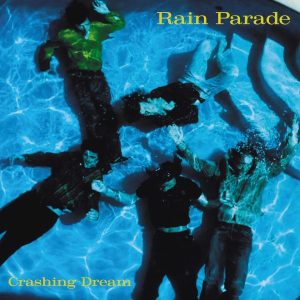
The Rain Parade, Crashing Dream. The L.A.-based Rain Parade garnered attention in the early and mid-1980s as part of the Paisley Underground movement, which also gave us such outfits as the Three O’clock and the Dream Syndicate. The group, whose apparent influences include the Byrds, the Velvet Underground, and the Syd Barrett–era Pink Floyd, broke up later in that decade but reformed about a dozen years ago.
Now, the Rain Parade is not only releasing new material and touring but issuing expanded editions of its early work. A deluxe edition of its 1983 debut album, Emergency Third Rail Power Trip, showed up last year, and now we have an expanded, two-CD version of the group’s sophomore release, Crashing Dream, a record that first appeared in 1985.
The first disc in this set features a remaster of the original LP with a slightly tweaked setlist: a song called “Fertile Crescent” has been remixed, while one called “Sad Eyes Kill” appears in its earliest version. Live renditions of “Crashing Dream” and “Nightshade,” neither of which were on the 1985 release, are here, too.
The second disc adds eight demos, including ones of several of the songs on the original album, as well as six live tracks, among them a cover of Television’s “Ain’t That Nothin’” and a reading of “White Room” that ventures even further into psychedelic territory than Cream’s original. Also featured is a demo of “The Sniper,” one of several numbers that might remind you of the Jesus & Mary Chain.
R.I.P., Brian Wilson
Like many rock fans, you might still be trying to adjust to a world that does not include the Beach Boys’ Brian Wilson, who died a few weeks ago at age 82. The group’s music—from early classics like “Don’t Worry, Baby” and “In My Room” to the masterful Pet Sounds and beyond—was in a class of its own. Wilson’s solo albums contain many great moments, as well.
If you love those records, incidentally, you ought to check out Love & Mercy, an emotionally powerful film about Wilson’s music and personal struggles. Also, listen to Jem Records Celebrates Brian Wilson, a 2021 tribute album that features excellent interpretations of some of his best-known songs by such power-pop outfits as the Weeklings, the Grip Weeds, the Midnight Callers, and the Anderson Council. Their performances preserve the spirit of the originals while adding something fresh.
______________________
Jeff Burger’s website, byjeffburger.com, contains more than four decades’ worth of music reviews and commentary. His books include Dylan on Dylan: Interviews and Encounters, Lennon on Lennon: Conversations with John Lennon, Leonard Cohen on Leonard Cohen: Interviews and Encounters, and Springsteen on Springsteen: Interviews, Speeches, and Encounters.