




Miles Davis Miles In France 1963 & 1964 Miles Davis Quintet The Bootleg Series Vol. 8
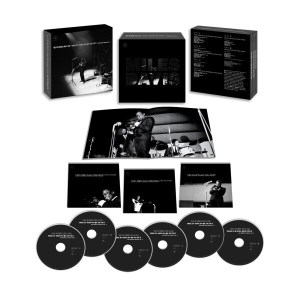
Just released on November 8th from Sony/Legacy is Miles Davis Quintet Miles In France 1963 & 1964 The Bootleg Series Vol. 8. This newest edition highlights the beginnings of the legendary Second Great Quintet with five individual performances recorded in France, capturing the beginnings of what would be a pivotal period in Davis’ musical evolution. Here, we see evidence of the propitious beginnings of the Second Great Quintet which had just been hired in the Spring of ’63, featuring George Coleman, Tenor Saxophone (on the 1963 recordings), Wayne Shorter, Tenor Saxophone (1964 recordings), Herbie Hancock, Piano, Ron Carter, Bass, Tony Williams, drums and of course, Miles Davis, Trumpet.
As indicated, Miles In France 1963 & 1964 is the eighth installment in the celebrated Miles Davis Bootleg Series, which has delved into years as early as 1955 (At Newport Vol. 4), and as late as 1985 )(That’s What Happened Vol. 7). Yet this is the first time the series has released music from the Second Great Quintet. Collected within is, five performances spread across either 6 CDs or 8 LPs as well as digital, equalling nearly six hours (more than four hours of which is unreleased) of riveting live performances capturing all the music made at the 1963 Festival Mondial Du Jazz in Antibes (July 26-28 of that year), which in his autobiography Davis says of these three concerts, “Man, we just killed them over there.” Davis’ Second Great Quintet would return to France again in October of 1964, this time with Wayne Shorter having replaced George Coleman on tenor sax, for two sets at the Paris Jazz Festival, both of which are also included here and round out this magnificent box set. There’s also a 2 LP stand-alone set of the previously unreleased 10/01/64 performance.
The music comprising this set, is simply put transcendental. Davis’ new quintet had just completed final recordings for Seven Steps To Heaven, and Davis’ trumpet playing had just won another Down Beat poll, with his brand new band having just placed second to Thelonious Monk’s band in the group poll as well. The band is hot, and as much as Davis is pushing them, they’re equally pushing him to other levels as well. Tony Williams in particular, is on a whole other level throughout these performances. The maturity in his playing seems incredulous considering he’s a mere 18 years old here, but as Davis describes Williams in his autobiography, “He (Williams) just lit a big fire under everyone in the group” and “He’s (Williams) the center that the band’s sound revolves around.” It’s true. The proof is in the recordings.
As for the recordings themselves, they’re stunning considering the known sources. I’ve long had copies of the French Radio broadcasts of the July 26th and 28th performances and even lower generations had a noticeable hiss. Here, the recordings are crisp and hiss-free. In his autobiography, Davis indicates Sony had recorded these shows, so perhaps these are new sources which would make more sense. There are moments you can hear a pin drop and that only serves to enhance the significance of each performance. The archival music within was produced by the multi-Grammy winning team of Steve Berkowitz, Richard Seidel and Michael Cuscuna (marking one of the last productions for Cuscuna, who passed away earlier this year) and mastered by multi-Grammy winning Sony Music engineer Vic Anesini at Battery Studios in NYC. The CD box set comes in a standard CD size slip case, with six CDs spread across three cardboard sleeves. There’s also a 32 page booklet that accompanies the set, featuring extensive photos and liner notes from Marcus J. Moore, and featuring recollections of the performances from Ron Carter as well as George Coleman. Noticeably absent though, is any involvement from the Quintet’s only other surviving member, Herbie Hancock. Overall,while still compelling, I found the presentation a tad anemic. Almost bare bones, it has somewhat of a “budget” feel, particularly when compared to earlier editions of the Miles Davis Bootleg Series. Perhaps the LP version of the release, with it’s larger booklet and colored vinyl makes a more flashy presentation.
Ultimately though, it comes down the music, and with that, Sony/Legacy has hit it out of the park. To have these five performances of the legendary Second Great Quintet compiled and readily available at a moments notice is special for archival music fans like me. I’m constantly in awe that so many people over the years that have gone to so much time and trouble ensuring recordings such as these even exist in the first place, much less in this exemplary quality. All the tapers and archivists over the years, we owe them so much, and in the end, they’re simply fans just like us. The Miles Davis Quintet Miles In France 1963 & 1964 The Bootleg Series Vol. 8 is available now and you can find out additional information as well as order your copy today by visiting the Miles Davis official website here: https://www.milesdavis.com
MILES IN FRANCE SET LISTS
MILES DAVIS QUINTET
The Bootleg Series, Vol. 8
Festival Mondial Du Jazz, Antibes/Juan-Les-Pins, July 26, 1963
1. Introduction by André Francis (:46)
2. So What (9:46)
3. All Blues (11:59)
4. Stella By Starlight (14:13)
5. Seven Steps To Heaven (11:01)
6. Walkin’ (10:43)
7. My Funny Valentine (9:55)
8. Joshua (11:02)
9. The Theme (2:59)
10. Closing announcement by André Francis (0:37)
Festival Mondial Du Jazz, Antibes/Juan-Les-Pins July 27, 1963
1. Introduction by André Francis (:52)
2. Autumn Leaves (13:55)
3. Milestones (9:23)
4. I Thought About You (11:47)
5. Joshua (11:31)
6. All Of You (16:44)
7. Walkin’ (16:16)
8. Bye Bye Blackbird (16:49)
9. The Theme (6:06)
Festival Mondial Du Jazz, Antibes/Juan-Les-Pins July 28, 1963
1. Introduction by André Francis (1:21)
2. If I Were A Bell (12:46)
3. So What (12:41)
4. Stella By Starlight (15:47)
5. Walkin’ (18:19)
6. The Theme (:28)
Paris Jazz Festival, Salle Pleyel, October 1, 1964 (1st concert)
1. Autumn Leaves (12:49)
2. So What (9:39)
3. Stella By Starlight (11:05)
4. Walkin’ (9:07)
5. The Theme (0:38)
Paris Jazz Festival, Salle Pleyel, October 1, 1964 (2nd concert)
1. All Of You (16:05)
2. Joshua (12:35)
3. My Funny Valentine (12:18)
4. No Blues (13:13)
5. The Theme (1:05)