



Barrence Whitfield and Michael Dinallo photo from their podcast press
Barrence Whitfield and Michael Dinallo Reflect On The European Story Behind ‘Live On Long Distance’
The Mercy Brothers, consisting of Barrence Whitfield and Michael Dinallo, have been collaborators for many years, along with the many projects they’ve each worked on. When working together, their music is an energetic mixture of blues, roots, and singer/songwriter influences, something that’s captured on their recent digital release of Live on Long Distance. The live performance was captured during a 2006 radio show in the Netherlands that they took part in that has always seemed like a special performance to them, but until now, had never been made available to fans.
The context for the recording is that The Mercy Brothers were playing several songs live during a promotional tour for their latest record at the time, Strange Adventure, so the set derives from album highlights and other requests. Part of the context for The Mercy Brothers making the decision to release these recordings is that they performed together this past summer at The Country Music Hall of Fame for the expanded version of the box-set From Where I Stand: The Black Experience in Country Music concert celebration. That sparked new collaborations between them and also brought these previous recordings to mind. I spoke with Barrence Whitfield and Michael Dinallo about the 2006 trip, their music at the time, and also about the role of travel in their lives and the inception of their new podcast together.

Americana Highways: The context for these initial recordings is very interesting. I gather that you were on tour at the time?
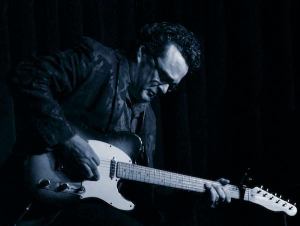
Michael Dinallo: It was right in the middle of a tour that we were promoting for our Strange Adventure record. Videos were made and have been floating around now for 18 years. The whole tour was nothing but radio and TV, and we played maybe two shows. It was in the middle of this run, after we were in the UK for five days, mostly in London, then the Beneluxe for five days, Germany for five days, then we came back and one more show in the Netherlands. I’ve always thought they were really great performances on this radio show that captured the magic that the two of us have.
You wouldn’t even know that it was two different people, if you didn’t see the video! We’re pretty in tune with each other, and have known each other for a really long time. I always wanted to do something with these recordings, and when we got together earlier this year, doing things with the Country Music Hall of Fame, it just seemed natural to reach out to the people who had the videos and the audio and ask if they wanted to do a digital, internet release. I think, Barry, the whole thing came together in about a week, right?
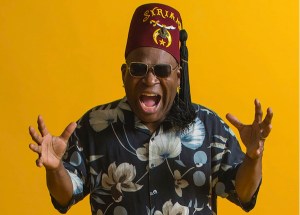
Barrence Whitfield: Yeah, it was pretty much one of these things that was like running on a freight train with Wylie Coyote on the back of the train! It grew. It grew interest. I didn’t expect it to be that quick, but that’s what happens when you have such a good project and a good idea. People start to say, “That’s very interesting. This is fabulous!”
The Country Music Hall of Fame was a wonderful experience, too, to be in the museum and see the history of it. To know that no matter how you see it, or how you hear it, Blacks do have a little part in the country music genre, whether some people like it or not.
Michael: A big part! Hank Williams learned how to play guitar from a Black guy.
Barrence: A lot of things point our way when it comes to roots music. I’ve always said that if it wasn’t for R&B, gospel, and even country music, and blues, there’d be no Elvis, Beatles, or The Rolling Stones.
AH: I absolutely agree with you on that. I grew up partly in Memphis, and I feel like I would not understand rock music at all if I did not have a blues background. When I wanted to start writing more about rock and pop music, I didn’t know if I had enough understanding, but I found that because of the blues, I was able to do it.
Michael: I used to spend a lot of time in Memphis! I got signed for my first record with the Phillips family, and Barry made a record in Memphis with Jim Dickinson.
Barrence: There was a studio called 3 Alarm, which was an old fire house. When we were doing our fifth Savages record, there were only a few guys who I wanted to work with on the next record, and he was one of them. We got him! I was very fascinated by Memphis. One day we took a trip from Memphis to Clarksdale, Mississippi. I planned this trip to drive through the middle of Mississippi to find that one spot that Robert Johnson always talks about in his songs!
Whether we found it or not, we drove right through it, playing old blues songs. We got to Clarksdale and went to the library before they made it the blues museum. It had at least ten of those old record players that they used back in the 60s and 70s that also played 78s, and I said, “I’m going to buy one!” They sold it to be for ten dollars. I was walking around with this big old player and found a way to get it back home.
AH: That’s dedication! I’m also very interested by the way in which Europe perceives and receives this music, and the fact that you were on this European trip when you did these recordings is another angle to it.
Michael: We had put out this record in 2003 called Strange Adventure, then we started working with a Dutch label, Corazon Records, and there were some live tracks that we’d recorded in Oslo with a full band. Since they wanted to release it in Europe, when it had already been out in America, they wanted some extra tracks, so we added the live tracks for the new version. We were solely there to promote the record, so we were doing a lot of interviews at radio stations. We did do a live recording at BBC Three.
Barrence: Oh yes, we went to Maida Vale Studios to record for my friend, Andy Kershaw, who was one of the top DJs in England at the time.
Michael: In Germany, we even taped some kind of TV thing. What happened was that during this particular radio show, somebody videoed it, and each song has a corresponding video on Youtube. We were super relaxed during those performances.
AH: Given that you hadn’t been playing a lot on that trip, how were you able to sound so good?
Michael: At that point, we’d been playing together so much that it didn’t matter. We just did it. It was the same with us this summer. I reached out to the person who had the radio show and he got in touch with the videographer to see if we could strip the audio, and we did. I have all the gear, since I produce and record records. It only took me a couple of hours, because I didn’t want things to sound artificial.
AH: They sound live but the sound quality is very good.
Michael: There were microphones everywhere. But they were just for being live on the radio.
AH: I know that the songs that you played for this performance were from the record Strange Adventure in order to promote it, but was there reasoning behind which ones you choose for that radio show? Do you recall?
Michael: Yes. We did “Stop Twisting My Arm” because Nico [Druijf], the host, was a huge Savages fan. The song is originally full-blown rock ‘n roll, but we worked up a version with the two of us. That was the kind of stuff that we were playing at the time. All those songs, aside from that one, were on the record. I picked one, Barry picked one, and I think the interviewer asked us to do one of the other ones. It was 18 years ago, but I wish I could give you some insight!
AH: I think that they make a nice little set, that’s why I was wondering.
Michael: We didn’t play them in that order. That’s where the producer in me comes out. I got them all in one big long stream, and then cut them up. I put them in an order that would feel like a little set.
AH: When you hear this now, do you think it speaks to your work at a certain time, or is this still very much contemporary to you, like it says “This is us.”
Barrence: I’ve done so much stuff between then and now, that it does bring back a lot of memories and passions of playing what I loved to do. It actually started with me doing two CDs in the 90s with singer/songwriter Tom Russell. I was familiarized with a lot of stuff that Mike [Michael Dinallo] was writing, and it fit into what I had been schooled at, if you wanted to call it that, with Tom Russell. Playing with him, I was introduced to singer/songwriters Guy Clark, Joe Ely, and Steve Young.
I fused the music that I knew with that, and that’s where we got Cowboy Mambo and Hillbilly Voodoo. When Mike started showing me the stuff that he did with his writing, it just fell into place. I thought, “Wow! This is something I’ve always wanted to do, and I’ve done some of this before. Now I’m back in the saddle!”
Michael: It just slid into place for us. We didn’t talk about it a lot, though we talked about songs. We picked songs, and we’d rearrange them. The set was wildly eclectic back then. We’d do stuff from our record, but we’d also do Woody Guthrie, and Tampa Red. We did Dave Alvin songs.
Barrence: You can get the gist of what we were going after. It was guys that we admired, and loved, and mixing it in with stuff that Mike wrote. It was one of those things where you put it in the pot, you cook it, you open it up, and here it comes! The aroma.
Michael: We originally called this band Hillbilly Voodoo, and then we changed it to The Mercy Brothers. Our very first gig was opening up for Dave Alvin. Our second gig was a radio show with live members who came in. We were off and running. There was a time when the two of us spent a lot of time in Europe.
Barrence: Especially in a place called Bergen, in Norway, with is supposedly the birth place of Death Metal! You’ve got all these Death Metal and Hardcore kids who we were hanging out with.
AH: Were they into you?
Michael: Oh yes! [Laughs]
AH: That’s awesome.
Barrence: That’s how it was up in Bergen. We spent a lot of time there.
Michael: We even wrote some stuff there. Bergen was our home away from Boston.
AH: Do you think that being somewhere away from where you come from is helpful creatively, to get perspective?
Michael: Not necessarily for me. I keep a notebook, or use my phone, and I’m constantly scribbling. I think creativity hits you whenever it hits you. If you go on a writing retreat, then it seems forced.
Barrence: I’ll tell you, all the experiences that you get from travelling abroad, sometimes going places that you never thought you end up in, you find inspiration. You find it either from being there, or from the people, or the situations you get into, whether that’s in a restaurant, a bar, or a van. Sometimes inspiration comes out that way. I think it’s very important to know that when you go somewhere, you need to be accepted and you need to be respected.
Once you’ve gone to a lot of these places over the years, you get a lot of inspiration. There are times when I was inspired by things, like being on the top of Mount Fuji, or being in a shop full of chocolate candy, or being at a railroad station waiting for the train. These are all things that come up and inspire you to do things. It’s a wonderful thing to travel and to experience the world, it really is.
Michael: If you went through my songwriting briefcase, you’d see all kinds of foreign stationary with scribbles on it! There are notepads from here, there, and everywhere with five words, or two stanzas. It hits you whenever it hits you.
AH: Can you also tell me more about the podcast that you two are doing?
Michael: It just kind of fell together. I have MS, so I go through bouts of relapses. When I was first diagnosed, it took 18 months for me to teach myself how to play again. This July, after I had fallen into another relapse, Barrence and I got together to rehearse, and it was pretty obvious that my hands weren’t going to work.
So we just sat there and started talking, and I turned my phone on. We had a conversation about all kinds things, and then we went upstairs and started listening to record, and I started recording again. So those are our first two episodes. If you listen to it, you can really see the passion that we have for the music, between us. People are amazed that the two of us can sit there and talk about music for hours! We’re both fanatical record collectors.
Thanks very much for chatting with us, Barrence Whitfield and Michael Dinallo aka the Mercy Brothers! Find more information here on their BandCamp page: https://michaeldinallo1.bandcamp.com/
Follow their podcast here: https://the-crooked-road-of-songs-and-stories.simplecast.com/episodes/the-mercy-brothers-talking
Enjoy our previous coverage here: REVIEW: Barrence Whitfield “Soul Flowers of Titan” is Radiant and Larger Than Life