



Erik Vincent Huey photos by Michael Aarons
Erik Vincent Huey has a place among the energetic roots rock performers and songwriters, solidifying with he recently released album Fort Defiance, produced by Eric “Roscoe” Ambel. The songs are anthemic with bits of punk and even Celtic punk mixed in, and the energy is always turned up to 11. Especially if you get to see his live show, which is a full throttle good time all the way through – no breaks. We had a chance to chat with Erik briefly about the album’s process and folks that worked with him along the way, and more.
Americana Highways: Eric Ambel produced both this new album Fort Defiance, and your last album Appalachian Gothic. How did you start working with him?
Erik Vincent Huey: After the first Surreal McCoys record came out, my friend Tommy Evans said “you should find the guy who produced ‘The Brooklyn Side’ by The Bottle Rockets, and get him to produce the next McCoys record.” That record was one of my favorite albums of the 90s.
As it turns out, Tim Smith (aka Elvis McCoy) was in an online chat group about Dr. Z Amplifiers with Eric. He introduced us and within a week, we were having burgers and red wine for lunch in Manhattan, and he agreed to produce the second Surreal McCoys record The Howl & The Growl. And then he and I co-wrote a bunch of songs for a TV series about the West Virginia mine wars, and these were so autobiographical that they turned into my first solo LP Appalachian Gothic.
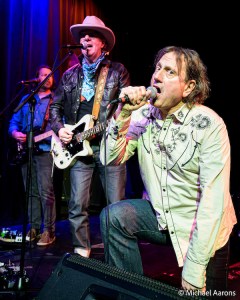
AH: What’s it like working with him as producer? What’s his approach and how does it mesh with your vision?
EVH: On Fort Defiance, we really hit a groove creatively. We’ve been writing and working together for a decade now. Being in Cowboy Technical Services, his studio in Greenpoint Brooklyn, is my happy place.
As Brian Hennemen of the Bottle Rockets has said, “a song’s not done until Eric Ambel says it is.” He starts early in the process—on some songs as co-writer, building the songs from the ground up. Otherwise, he asks for songs he’s not yet heard to be submitted to him as acoustic “campfire” demos, well in advance of the studio session, so he can perform surgery on their structure. Inserting a bridge here, building in a breakdown before the final chorus there, etc. He uses these skeletal versions as “maps” for the guide tracks the musicians will follow in the studio, so it is a very efficient process.
Plus, he is a master at the mixing board. He has an uncanny ability to know exactly what a song needs… and doesn’t need. He never wants to clutter a track with unnecessary instrumentation; the song needs to have air and space to showcase the songwriting. The word “genius” gets thrown around a lot, but there’s no denying that Roscoe is a musical and a producing genius.
AH: Can you share a couple of anecdotes from working with him?
EVH: The first day that Starbelly and I were at Cowboy Technical for this record, Eric told us a story about Mojo Nixon kidding him that eventually Eric will turn any song into a Neil Young song. We were playing “All Out of Angels,” the leadoff track on the record, and we were getting stumped on the bridge. So Eric picked up the guitar and nailed the bridge with an emphatic Neil-worthy riff. We all just looked at each other like “Mojo was SO right!”
And he takes lunchtime VERY seriously. It’s a thing. Whether you’re ordering kabobs into the studio, or going around the corner for an incredible sandwich, you never have a bad meal with Roscoe. And you never talk about the record at lunch.
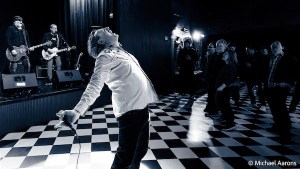
AH: Does he play with you live, and if so, how are those shows? And when are some upcoming live shows with him?
EVH: Yes, and those shows are always a blast. He just adds so much to the sonic footprint onstage. Starbelly and I are doing four shows with Eric around the Release Day for Fort Defiance—two in my home state of WV (Morgantown and Charleston), one in DC, one at Lucinda’s in the East Village NYC.
AH: Can you tell us more about the meaning, and the inspiration, of your song “The Hatfield Action”?
EVH: The title refers to the fact that the Surreal McCoys had been idle for so long, that I came up for a term that was the opposite of “McCoys Inaction.” The next challenge was figuring out precisely WHAT the hell the term ‘Hatfield Action’ actually means. Was it a dance move like The Locomotion? Was it a backwoods drug reference? Then I wrote this Chuck Berry/Jerry Lee riff that really cooked, and I stopped worrying about meaning and went with feel.
AH: Who is your live backing band “Starbelly,” and in what ways would you say they are an undiscovered gem?
EVH: I say onstage that they are the Best Band in America, and I truly believe that. They’re this incredible power pop group that sounds like The Beatles and Cheap Trick had a baby. They played 25 dates with me all over the country and in Ireland on the Appalachian Gothic tour, so we came into the studio hot for this record.
They can play any song you can name. Literally. I once asked Dennis Schocket, Starbelly’s bassist, how many songs he could stand up and play without looking at chords or lyrics, and he said “two thousand. I know two thousand songs.” And he does. So they’re great practitioners of the Rock Cannon, so we all can talk shorthand.
And they have angelic voices, all four, and they do three-part harmonies, so for me I always know that I’m covered and they’re never going to leave me naked on a chorus. I was so fortunate to have Dennis(bass) and Cliff Hillis (guitar) as writing partners on two songs for the new album.
AH: What is it like playing with bass player Keith Christopher? What’s his background?
EVH: Keith is like everyone’s older, wiser brother. He’s very chill, and it’s hard to believe the things he’s done over his career. On the last tour, Starbelly couldn’t play certain dates, and Keith was on a brief Sabbatical from Skynyrd, so he sat in on bass and it was so incredible.
AH: How is it playing with Tommy Stinson (Replacements) and Sarah Borges?
EVH: I got to play with some incredible musicians on this record. Tommy Stinson, whose work I’ve loved since he was in the Replacements, does this incredible vocal performance on a duet called “Grievous Angels.” I wanted to do a tribute, a kind of a love letter to the musicians out there on the road, risking it all for Rock ‘n’ Roll. It’s really a song about him, and the Bottle Rockets, and Eric Ambel and Sarah Borges— hard working musicians who bring a real blue collar work ethic to their craft. Tommy brought so much soul to the performance.
And Sarah Borges does this great “Gimme Shelter” wailing, belting thing on “The Gutter & The Stars” that adds so much.
AH: Which songs on your new album Fort Defiance would you say are the most Appalachian, and why?
EVH: I’d say three songs, really: the title track, “Fort Defiance,” “40 Tons of Speed,” and “Cutlass Supreme.” The title track is based upon Defiance Ohio, which is Appalachia-adjacent, and the latter two took place in Appalachia, and are about my two uncles who were both larger than life characters.
I used to spend childhood summers with relatives in Defiance, Ohio, which is on the site of the former Fort Defiance. But this song is less about a place and more about the concept of any “proving ground” or crucible that you have to navigate to show the world what you’re made of. When you’re from Appalachia and you grew up in a trailer and your dad is a coal miner, you start out with your back against the wall. You’ve got a lot to prove.
Speaking of Defiance, that’s where my Aunt Rita lived. She always called her husband by his full name—Jack Green—and he really was a truck driving man, back in the 70s during the height of the CB Radio craze. “40 Tons of Speed” is a tribute to him. My Mom and I used to hitch rides with him from WV to Ohio to visit family, and I would be mesmerized by his command of the CB radio.
On one trip, we made an “unauthorized” stop in Pittsburgh to conduct some secretive off-book commerce. This song is a reimagining of what this detour might have involved, and it is a nod to that golden era of classic country truckin’ songs in the vein of Dave Dudley, Red Sovine, and CW McCaw.
For “Cutlass Supreme,” I was thinking about my Uncle Joey, who was larger than life and utterly magnetic—one of the smartest, funniest, wiliest people I’ve ever known.
He was also, according to the Commonwealth of Pennsylvania, a convicted contract killer.
He maintained his innocence until he died in prison last year. When I would visit him in the State Correctional Institute Fayette (where The Surreal McCoys once played) he would swear, “I may be a criminal, but I’m no hitman. I don’t ‘paint houses.’ It’s below me.” He would, however, boast on occasion about his need to “reach out and touch someone” who had gotten out of line.
Whoever pulled the trigger that on that dark night in the Monongahela Valley back in 1981, this song is written from his perspective.
So, to paraphrase David Alan Coe— “if that ain’t Appalachian, I’ll kiss your ass!”
AH: (laughs) If someone was brand new to your music, which songs would you direct them to listen to, and why?
EVH: I always want my songs to have a timeless feel to them; sort of what Tarantino does in “Pulp Fiction” or “Reservoir Dogs”—you’re never really sure in which decade they’re set. There’s a lot of 70s FM Rock in my stuff, but also classic 60s/early 70s golden era country, and 80s/90s cowpunk, so I hope any song in my catalogue wouldn’t sound out of place on records from those times.
“Fort Defiance” captures that ethos, kind of a Byrds, Petty, CCR, Springsteen feel, I think. And “All Out of Angels, the leadoff track on the new LP, has that 70s/80s Waylon/Don Williams “cocaine country” feel (with a little Neil Young mixed in). And “You Can’t Drink All Day (if You Don’t Drink in the Morning”) SHOULD have been a George Jones song, but I wrote it too damn late.
AH: We see you recently moved to Austin from DC. What do you observe to be the key differences between the two cities?
EVH: They’ve both got great music scenes. DC had 80s harDCore punk with Henry Rollins, Bad Brains and Minor Threat, and Go-Go with the mighty Chuck Brown, but Austin is “the live music capitol of the world.” The key difference is the sheer volume of music in Austin—you can’t swing a dead cat without hitting one of the best guitar pickers you’ve ever heard, and there’s music going all day and night, spilling into the streets on South Congress, East Sixth, and East Austin. I was at “chicken shit bingo” at C-Boys on South Congress one Sunday before Christmas and there was this cowboy band ripping the shit out of a Waylon classic, and a dude dressed head to hat as Santa rides into the bar on a horse, very nonchalantly, to catch the set. That’s, shall we say, is a little less common in DC.
AH: What’s on the horizon for you in the next 3-4 months?
EVH: I’m going to be playing live. I can’t wait to play these new songs live for audiences. The Album Release shows in WV, DC and NYC, plus I’ve got a gig in Austin in April, and in May I’m opening for Marshall Crenshaw with Eric Ambel. Then in August, Starbelly and I are going on a West Coast swing with Wille & The Bandits through Denver, Salt Lake, and the coast of California. And I’m already writing a follow-up record to Fort Defiance, which will definitely have some fist-raising folk-punk protest songs on it.
Thanks very much for chatting with us, Erik Vincent Huey. Find his music here: http://www.linktr.ee/erikvincenthuey
Enjoy our review of the album release show here: Show Review: Erik Vincent Huey at Pearl Street w/ Starbelly and Eric Ambel