Smitti Supab of Captain Buckles On Welcoming Magical Moments and Making Hurry Up
Captain Buckles are a configuration of experienced New Orleans-based sidemen who have gotten together to work on original music in an experimental atmosphere and will be releasing their debut full-length album, Hurry Up, on November 14th, 2025. The album was recorded at Dockside Studio with Justin Tocket, and arrives on cassette, streaming, and digitally. Captain Buckles has meandered through lineups over recent years before solidifying in the bands of Alex Mallet (guitar, songwriter), Smitti Supab (bass), Phil Breen (keys), Rob Davis (keys), and Ezell EZ Smith Jr. (drums).
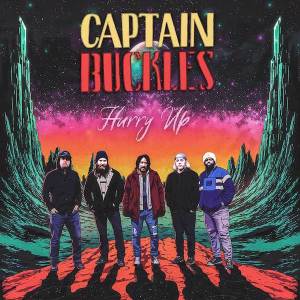
Working with original songs by Alex Mallet, the group finds new ways into the compositions and creates both instrumental songs and songs with lyrics. Since all the members have multiple gigs and a ton of experience playing across genres, this configuration is a welcome outlet for their personal creativity. It’s not so much that anything can happen in a jam session, as it is about creating an environment where new and unexpected things should be encouraged. This welcoming atmosphere is one that shaped the energy and upbeat tone of the album, even when it touches on heavier themes. I spoke with Smitti Supab about creating the space for these magical moments among the band members, and also about their shared history which led to recording Hurry Up.
Americana Highways: What was your approach to recording this album? Did it take much planning to make it happen?
Smitti Supab: With Captain Buckles, we decided to go to Dockside Studio, about three hours away from New Orleans. We did three days there. I’ve experimented a lot in my life, and this band has been an experiment. Rob Davis, one of our keyboard players, has two kids, so he has to take them to school and pick them up. Sometimes we’ve done rehearsals at 11:00 AM or so. Everything’s kind of an experiment. We’re all in different places in our lives at the moment. It’s an interesting variable to consider, what is productive and what is inspiring. I tend to lean more on the inspiration side than the idea of productivity.
HMS: I can understand that. Not all time spent is time well spent.
SS: Yes, it’s about how to be present, and available, and full of ideas. How to bring that out of people without shutting them down, or pressuring them, including ourselves. It’s been quite revelatory and exploratory, and I’ve made a lot of great discoveries alone, and together with the band, in the process of defining what we should be doing in the band, when we should play shows, when and how we should rehearse.
One of the ways I’ve experimented in that vein is by reading the autobiography of Pops Foster, the bassist for Louis Armstrong. People used to fight to have the rehearsals at their house, because even though they would play the same songs over and over, the neighbors would be dancing outside, because people didn’t have spotify back then! The hosts of the rehearsal would have a big cookout, so I started cooking for the band, for the rehearsals. I was thinking, “It’s more of a sense of community and we can hang out a little bit longer.” It gave us a chance to talk a bit, instead of that eating into rehearsal time. It’s been interesting.
AH: I hear things like this from other artists, even in other genres, that they have hang-out time scheduled around their rehearsals, because of how valuable that community feeling it. Once you do start playing, it must feel less like jumping into things cold. It builds things up.
SS: Yes. Everything builds on the previous history, and moments. Something as simple as being on a set-break or between gigs, having conversations. Our drummer, EZ, told me that once during a gig, someone looked at him, and he thought he was messing up, and he went through the entire gig completely worried. Then, during the break, someone said, “That was great! I was looking at you because we were really vibing!” That got him to completely change his perception of band members looking at him while he was playing on stage. I’ve had a gazillion moments like that, where having a conversation helps clarify what’s actually happening.
All those people on stage have completely different backgrounds, and that’s true of us, for sure, since none of us even grew up in the same city, except for Rob and EZ. We’ve grown up in different circumstances, and we have different opinions. It’s so complex, and yet here we are playing the same song, doing different parts. There are so many different factors. The idea that we are all having the same experience is really crazy, but what we share, in my opinion, is nothing short of a miracle. If there are even things that we can agree on, it’s a miracle. The fact that we notice that something particular has happened on stage, and some of us might think it’s cool, is miraculous!
[Laughs] That’s been a vehicle for experiment.
AH: What do you think leads to good communication between band members?
SS: I’ve verbalized, and I’ve affirmed in many conversations with the band, to the point that it’s just understood now, that we don’t have to have expectations. If there’s a moment that happens, and everyone in the band notices it, and someone thinks it’s cool, not everyone has to think that it was cool. Just the fact that we are listening, and noticed that moment, is already a miracle. Hopefully, we can make moments where everybody likes it. To that end, those moments and what this band is capable of doing more and more often, which I’ve been calling the “eargasm,” is what fuels me. That’s why I’m so stoked that this album is coming out, and I have opportunities to talk about it, and the band. It’s great to finally have something that I can broadcast about it. I think it’s all about fine-tuning our expectations of music and ourselves.
AH: That’s right, because this band has been going on behind the scenes, but the music hasn’t been this public thing yet that you could talk too much about until now. I know that you got a grant from the Threadhead Cultural Foundation to help with this album. Did you have to explain what your goals were with the album ahead of time to get that?
SS: I had to go through a pretty lengthy process, writing the grant to get the funding. They were very helpful. What had happened was that we played a music festival, one of our first, The Wild Things Family Reunion, which is coming up in November, two years ago. And when we played, a lot of the members of the Threadheads were in the audience. They really dug our sound, and they were really instrumental and inspiring. They encouraged us to apply. Alex Mallet, our guitar player and primary songwriter, and Phil Breen, one of our keyboard players, have played and still do play in tons of bands that have been favorites of the Threadheads.
So having them in the band, and being encouraged to apply, felt like a positive thing. I’d never applied for a grant before, but I steamed ahead, and did it. When I asked how to write it, the members were very forthcoming with advice. One of them helped us take some pictures at one of our recording sessions, and we submitted those for the grant, and used them on our website. It’s been an adventure. The band has actually been a band called Captain Buckles for eight or nine years, though.
AH: Wow, I didn’t realize that! So did you have a live-play existence, you just hadn’t recorded together yet?
SS: It’s been a side-project of mine, and the only band that I’ve been the leader in. It became more of a full band a few years ago, and now I really feel like it’s a band. It’s been an outlet. I envision it as a band of sidemen doing what we love, outside of all the other projects we’re all in, heavily inspired by The Meters, and Booker T. and the BMGs, The Band, The Neville Brothers, and The Allman Brothers. Those bands are pretty different, but even though the singers of those bands were pretty great, it wasn’t like a Bob Dylan situation. There was no focus on any one person, it was a group thing.
AH: Those bands were more like collectives, for sure. I think that the term “collective” tends to be used when there’s a rotation of musicians, and though you all have solidified your lineup, I do feel like the songwriting and the collaboration on this album sounds more like a collective.
SS: Nice! I’m glad you feel that way. It’s certainly shaped up that way over the years. We’ve played Alex’s songs with a lot of people, which actually started with me playing in Alex’s band, Chops. Back then, he had a rotating case of characters, too. When he started allowing Captain Buckles to play his originals, and later to record them, we played them for years with different people.
It was pretty cool to see the songs take shape and evolve with the different players that we had. But it was cool to see Alex be open to other peoples’ interpretations of his songs. It’s the first time I’d experienced that. Other band leaders I’d played with either didn’t have an idea, so were willing to go with anything, or they had an idea, so they wanted the players to do certain things. Alex is the first songwriter I’ve worked with who said, “I’m listening to how it sounds like this, and I might want to change the song so that it goes like this.” That was when I started becoming a little more interested, and maybe invested, in original songs handled in this way.
AH: So, is it that there’s a framework of the original concept of the song, but he’s open to change, and therefore the song is open to become a new thing when you find developments when you’re jamming together?
SS: Absolutely. And it’s not just the improvised solos in it, since those are always improvised, otherwise things get stale real fast. I feel strongly about that, as a listener even. Especially when we’re playing so much, as working musicians, and we’re doing five hours of gigs. Within that format, there are so many great things that can happen, but it can get really stifling and formulaic. With Alex’s songs, one of us might even forget a part, or miss it, and so we do something else, so just by circumstance, things change. It’s fun to see things evolve. At this point, I believe that a lot of us in the band have the ability to keep track of what’s supposed to happen when, so that when somebody improvises a section, it doesn’t throw anybody off.
We’re actually able to keep track of it, individually, or as a band, when we’re throwing in something different. That part’s really “eargasm” inducing as much as possible. Somebody will be soloing, and in the middle, they might interject a lick from James Brown’s “Ain’t It Funky.” A few months, or a year ago, if that happened, maybe the band wouldn’t know how to follow or what to do, but now, we can do that, and go there, but still have the capacity to feel when we want to resume the song. That kind of stuff is really fun. That’s something that you can’t really manufacture. I can’t really get that playing with any other bands.
AH: With the breadth of knowledge and experience that everyone has from their performance histories, that must be foundational for then being able to go “off-script” when you want.
SS: The palette with which we can paint the musical canvas is big, since most of us have played many years of covers of American popular music from the 1920s to now, so it’s pretty cool, and really exciting. It’s fun to be able to create a space and set the stage for something like that to happen, rather than try to force it. It’s cool to not put pressure on that, but at the same time, create a situation in which it is likely to happen.
Thanks very much for the lively chat, Smitti Supab! More information about the collective is available here on their website: https://captainbucklesband.com/