





Springsteen: Deliver Me from Nowhere, plus Pavlov’s Dog and the Dream Syndicate
Like the recent A Complete Unknown, which limns only the first chapter of Bob Dylan’s career, a new film about Bruce Springsteen doesn’t try to tell its subject’s entire life story. Instead, it zeroes in on one pivotal period, which it uses to shed light on the artist’s character and artistic development.
Called Springsteen: Deliver Me from Nowhere, the movie draws its title from a line that appears in two songs on 1982’s Nebraska, “Open All Night” and “State Trooper.” Playing the lead role is Jeremy Allen White, whose credits include the TV series Shameless and The Bear.
This atypical biopic focuses on the early 1980s, when Bruce had achieved fame with three consecutively released classic rock albums: Born to Run, Darkness on the Edge of Town, and The River. Now, Columbia Records was looking for him to build on those successes by serving up another blockbuster. Springsteen composed the music that would ultimately provide exactly that on 1984’s Born in the U.S.A. At the time, though, he wasn’t primarily concerned with making that record, and he didn’t care a bit about scoring more hits or climbing a ladder to superstardom.
Instead, he was grappling with demons from his childhood and his troubled relationship with his mentally ill, alcoholic father, Doug (played by English actor Stephen Graham). As Deliver Me from Nowhere demonstrates with the help of frequently disturbing black-and-white flashbacks, that relationship led to emotional problems that linger to this day.
It also prompted Springsteen to put his Born in the U.S.A. tracks aside and concentrate on producing a powerful but much darker set of songs. As the film shows, at least a few of them—such as “Mansion on the Hill” and “My Father’s House”—relate directly to his childhood memories. All of them reflect his mood at the time.
Bruce initially recorded these numbers in a bedroom on a four-track cassette tape machine, with his vocals accompanied only by his own guitar and harmonica work. Those recordings were to be demos that would serve as building blocks for rock performances by his E Street Band. But Springsteen quickly concluded that such performances would be a bad fit for this music. Instead, he wanted to release the demos just as they were. Moreover, he didn’t want to promote them with interviews or a tour, and he didn’t want any singles to be released from the LP.
Columbia’s executives were predictably unhappy, but as we see in the film, Springsteen stuck to his guns. His manager, co-producer, and confidante, Jon Landau—well played by Succession’s Jeremy Strong—backed him up. The album, Nebraska, came out just as Bruce wanted it to. It rose to No. 3 on the charts and remains not only a standout in Springsteen’s catalog but a testament to his artistic integrity. So is this film.
Scott Cooper, whose past movies include Crazy Heart and The Pale Blue Eye, was its writer and director. He based his script on Warren Zanes’s 2023 book, Deliver Me from Nowhere, and also appears to have drawn raw material from Born to Run, Springsteen’s excellent 2016 memoir. Bruce’s love interest in the movie, “Faye Romano” (Australian actress Odessa Young) is a composite character who represents his multiple failed affairs of the time, and some scenes in the film vary slightly from what really happened. For the most part, though, what you see on the screen mirrors the reality of Springsteen’s remarkable story.
It’s far from the exhilarating, upbeat tale that some fans might expect. Though we see a few snippets of Bruce in concert, rocking out in front of adoring fans, the lion’s share of this movie captures a very different offstage persona. This is a man adrift, trying to remain true to his art while simultaneously seeking to find the peace that keeps eluding him.
The cast is excellent, especially White, who does his own singing and captures enough of his character’s essence and vocal style to make you forget that he doesn’t look much like Bruce. If you’re a fan of Springsteen—and especially if you’re interested in the creative impulses and personal challenges that gave birth to Nebraska—you won’t want to miss this film.
New Music from Pavlov’s Dog
Pavlov’s Dog are regularly labeled “prog-rock,” but if you associate that genre with outfits like Emerson, Lake & Palmer, Yes, and Genesis, you’ll get the wrong impression of this group.
The band, which formed in St. Louis in 1972 and has been making great records on and off ever since, doesn’t sound much like anyone else. Its music, which draws on rock, classical, and folk, emphasizes the distinctive, high-pitched vocals of co-founder and principal songwriter David Surkamp as well as violin and other stringed instruments.
Though the group’s lineup has changed over the past 50-plus years, with the number of former members now approaching two dozen, its sound has remained remarkably consistent. That’s largely because Surkamp’s vocals and songwriting have stayed front and center throughout Pavlov’s Dog’s career, as has the instrumental mix that characterized its early albums.
Granted, Surkamp’s idiosyncratic vocals offer a love-’em-or-hate-’em proposition, and there are probably enough people in the latter camp to explain why the group never developed more than a cult following. But this writer considers his work ideally suited to the band’s music, which is majestic and emotional.
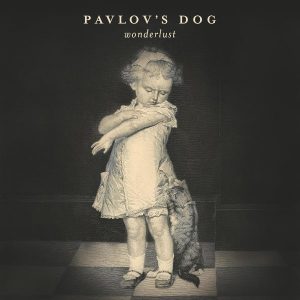
Wonderlust, Pavlov’s Dog’s first album in seven years, finds the singer backed by a crew that includes his wife and violin virtuoso Abbie Steiling. Among the program’s highlights are the passionate “Long Black Cadillac,” the CD’s first single; “Calling Sigfried,” an instrumental written by Stirling that pays tribute to original Pavlov’s Dog violinist Sigfried Carver, who died in 2009; and “Canadian Rain,” one of three numbers that Surkamp wrote with group co-founder Douglas Rayburn, who died three years after Carver. The album is as good as anything in Pavlov’s Dog’s catalog, which is saying plenty.

Dream Syndicate’s Second LP, Expanded
Steve Wynn’s The Dream Syndicate was one of the best exponents of the so-called Paisley Underground musical movement that burgeoned in California in the 1980s. The group, which formed in 1981, disbanded in 1989, and has been reunited since 2012, should appeal to fans of 1960s psychedelia and groups like Television, Galaxie 500, and the Velvet Underground.
Several expanded versions of the band’s 1982 first album, The Days of Wine and Roses, have been issued, most recently on a 2015 CD that includes six bonus tracks. Much more expansive is a new 40th-anniversary edition of Medicine Show, the group’s sophomore LP. This set, which fills four discs, weds a remaster of the original 1984 album to a wealth of bonus tracks, nearly all of which the Dream Syndicate recorded in concert in the early 1980s.
While the group made The Days of Wine and Roses in two days for tiny Ruby Records, it spent months and considerably more money crafting Medicine Show, its major-label debut on A&M. The record garnered lackluster sales and reviews when it first appeared, but, listening to it today, one senses that it deserved a better reception.
Moreover, the live material in the expanded edition is mostly excellent. It includes versions of numbers from the first and second studio LPs, plus covers of Derek & the Dominos’ “Let It Rain,” Creedence Clearwater’s “Born on the Bayou” and “Suzie Q,” Bonnie Dobson’s “Morning Dew,” Santana’s “Evil Ways,” and Blue Oyster Cult’s “Don’t Fear the Reaper.”
Note that while the new edition of Medicine Show contains 42 tracks, it features only 18 songs, because many appear in multiple versions. True, you have to be a Dream Syndicate obsessive to want, for example, five renditions of “Bullet with My Name on It” or seven of “John Coltrane Stereo Blues.” On the other hand, you might well become a Dream Syndicate obsessive after listening to this album.
______________________
Jeff Burger’s website, byjeffburger.com, contains more than four decades’ worth of music reviews and commentary. His books include Dylan on Dylan: Interviews and Encounters, Lennon on Lennon: Conversations with John Lennon, Leonard Cohen on Leonard Cohen: Interviews and Encounters, and Springsteen on Springsteen: Interviews, Speeches, and Encounters.