




Jeremy Garrett photo by Nancy Isaac
Jeremy Garrett Digs Deep and Brings a Timeless Touch To Storm Mountain
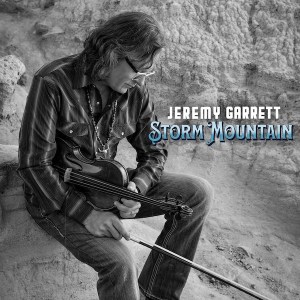
Jeremy Garrett is a fiddle player and vocalist with the long-running modern bluegrass group The Infamous Stringdusters, and has also previously released eight solo albums of his own. On top of that, he’s produced many records, and also spends time on meaningful co-writes and collaborations. It’s a busy life, but one which Garrett manages while living with his family in a remote spot in Colorado, aided by a small home studio.
You wouldn’t know that Garrett lives at such a distance from listening to his new solo album, Storm Mountain, out now from Americana Vibes, which is full of collaborations and little touches that suggest a wide world of thought and music. His goal on bringing these tracks to life was to “dig deep” in order to bring both a modern edge to his bluegrass and a timeless touch of tradition to his songwriting. I spoke with Jeremy Garrett about pursuing his solo work and what his thoughts were in bringing this collection to life.
Americana Highways: I know that a lot of what you do is very self-motivated, and that played a role in your creation and release of River Wild. Has it been pretty similar for Storm Mountain, or are you more in the groove now, so it’s easier?
Jeremy Garrett: It’s definitely easier for me now. I love making music, and I cover many aspects of it, for sure, but my favorite part of it all is recording. When I get a chance to record my own songs, especially, or a project that comes from my own personal interesting, recording is just what I love the most and put the most passion into. And I have a little, personal recording studio at my place where I can do what I want to do.
I can take my time at it, and do it any time of the day or night. That’s always a nice thing to have as a music producer. I’ve done it so much because of that. I’m 8 records in, and how many have the Dusters done? I lose count! Many before that, I guarantee you, throughout the ether of my career. I’d like to do a record a year. That doesn’t always work out for me, but that’s kind of what I’m always shooting for.
AH: Does that mean there’s always a cache of tracks in process that you’re always working on?
JG: That tends to be how I do it. I co-write with a lot of people, and I create a kind of stash of things that I think will work good. Honestly, I’ve tried to pitch stuff around, and I’ve had a little success pitching my songs to other artists, but I feel that my songs fit me the best. I’m always interested in doing them myself if they are good songs, and I even ask people not to show them to anyone else until I have a chance to do a record. Then I put a record together and see if I can come up with a collection of songs that really complement each other. If there are any left over, there are so many other applications for me to throw songs into, like The Stringdusters, or making my own stuff, or the records that I produce, as well. There’s always a use for a good song.
I ran myself into a little bit of a corner now since the Dusters just released a record, and my solo record just came out, and I’ve used up a lot of really good songs! I need to get back into the fold and get some work done.
AH: Somehow, I have no fear about that. That’s better than the heavy feeling of having a bunch of songs that you’ve never put out, and worrying about the backlog, I think.
JG: I do have that sort of anxiety, and a lot of artists do. I’m at this point in my career where I want to make sure that I put every song I have out into the world. You could be gone tomorrow, so I live that way when I’m making my music. I really feel good about the songs that I write, and for me they mean a lot, so I think they can mean a lot in the world. Feeling a sense of completion with that kind of thing is definitely a drive for me. I try not to keep songs around too long. If they’ve been around a long time, it’s probably because I don’t like them!
AH: You live in a pretty remote place now, and my family comes from remote mountain territory, so I know that can be inspiring for getting creative work done. Is that part of the draw for living there? It probably means a lot of driving.
JG: It can definitely inspire your vibe. I’m kind of an introvert, so I enjoy alone time, but I don’t really get a lot of it. When I’m with the Dusters, there are people around constantly, and it’s the same when I’m at home, I’m with my little family, which is great. But it’s also great to have some alone time. Sometimes the only time I get is in the truck where I’m driving to the airport, or the next show, and I cherish that time, honestly.
AH: Do you ever come up with lyrics or music while you’re driving?
JG: Oh, yes, I keep a log going on my phone, whether it’s voice memos, or lines, and stuff like that, for lyrics. On River Wild, I have this song called “Blink of an Eye” and that was totally inspired by a drive that I made from Colorado clear out to Asheville. I ended up meeting with one of my main co-writers, Jon Weisberger, and we’ve written over a hundred songs together, by now, and that was one that we came up with that was totally inspired by the long drive I had.
AH: I’ve listened to Storm Mountain, and I’ve really enjoyed it. I feel like every song has got something in it that I’ve never heard before. There’s something unique, original, weird, or different that stays with me about each song. Is that something you’re aware of? Have you been digging for those unusual elements?
JG: I had to really dig deep for this record. I had some songs that I dug out of the past, you could say, or things that I knew were going to work together. I recorded some of the songs on this record in an RV session. That was a record that I recorded all in my RV as I was driving around the country, and it was always more of a song demo record. I always wanted to treat some of the songs with a full Bluegrass band treatment. So, I broke those out on this record.
But I definitely wanted to dig deep for content. I’m a middle-aged dude, and I wanted to find things that I felt people could identify with. I think about a lot of things myself, and those are the things I tend to write about. And when I do, I feel like other people have got to be feeling those things, too. And a lot of times I’m right. A lot of people who come to see my shows identify with the songs. I also try to serve the songs as best as they can be served, and to me that means a timeless and classic touch, as much as I can. It’s Bluegrass, and it’s traditional, and it’s old-school, but I also try to make everything be on that modern cusp of that traditional sound, while digging deep for that traditionalism, if that makes sense. That’s in the hopes that this music will last forever. Who knows if it will?
I definitely went deep on the treatment for these songs. A lot of times when people are doing solo projects, they have a little less money to deal with. Sometimes you have to cut a few corners. A lot of times I’m my own harmony singer. I wanted to have a big mix of harmony singers on this record, though, so I went for that. Every single song, I picked a part, and got my harmony singers on the song. I had some female energy going there with Lindsay Lou, which I thought was a nice touch. I hadn’t really done that a ton in the past for the voices, and I think it brings a nice soft, progressive touch, but you still get that rootsy sound on the music.
AH: That’s interesting because I did feel that some of that surprising stuff was in choices on the vocal lines of the songs. “Son of Perdition” might, in some ways, feel like a very traditional song because of the subject, talking about a downtrodden state. But then you have the female vocals coming in, and I think the change in the subject from being about one person to being about the next generation feels more modern. You get a generational feeling, like it could be about now.
JG: I love that you say that, because sometimes when you write a song, you have a subject in mind, that you’re writing about, but if you’re too specific about it, it doesn’t work. I’m very much someone who likes to write in ways that work across a broad stream, so people can find their own meaning in songs. I remember listening to Rock songs growing up that had a lesson for me somehow, even though I could barely understand the words.
That song, “Son of Perdition,” is kind of special. I’ve had that melody with me since I was probably a teenager! I’ve carried that song around forever. Then I decided, when I got together with a very good friend of mine called Daniel Walker, who is a really great songwriter, to work on this song. I’ve often thought about what we’re talking about, a song being its own message. Though, in my mind, there was a story going on at the time about a young kid who had been bullied in his apartment complex. It was really terrible circumstances, where he was set on fire by his buddies, and jumped into a swimming pool. He barely survived. He was traumatized by it, but a lot of peoples’ lives were, since kids went to jail for a long time and a young boy’s life was changed forever. It was just really heavy, and was swirling around in my mind, so that’s what spurred that song on.
I grew up in sort of a religious situation, so sometimes my lyrics kind of pop out, generated from that viewpoint. It’s not necessarily that I’m a religious person anymore, but those words are still sometimes how I would describe something. The words “son of perdition” and “children of perdition” are really a meaning for what’s going on in our country right now, and how we’re treating each other, so you’re right. It’s about how we have really got to turn things around. I’m just trying to provoke thought. I’m a poet. I don’t like to be political, but I do like to get down to the nitty gritty and do what I can to have people thinking about what they are doing.
AH: That totally fits with the feeling of the song. There’s a feeling of the weight we pass on, year to year, to each other, to kids. The song kind of has that heavy feeling, like wondering “What is the future going to be like?” And I think a lot of people feel that way right now. It is thought-provoking in that way.
JG: It’s a tough call to make when you’re an artist, and you’re thinking, “Do I really want to get that heavy on a song?” It’s a lot to ask with today’s attention spans. Everybody’s looking for a good vibe, and that’s what the world needs. But sometimes you’ve got to just feel the feels, and I felt like this was the time for that song, for sure.
Website: https://www.garrettgrass.com/
Enjoy our previous coverage here: Interview: Jeremy Garrett Follows His Heart Into The “River Wild”