




Rooster Blackspur Jumped At New Opportunities To Record Nashville (The Cinderella Sessions)
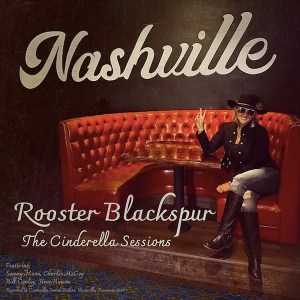
Formerly New Mexico-based, and now Nashville-based Americana artist Rooster Blackspur’s album Nashville (The Cinderella Sessions) arrived in late 2024 with a tremendous personal story behind it, one that took her to the sacred ground of Cinderella Sound Studio in Nashville to record when an unexpected opportunity came up. Given the chance to record there by the generous support of friends and colleagues, Blackspur crafted the album in two trips to Nashville, allowing songs that she felt fit the venue to take flight.
Blackspur’s ability to jump at these opportunities, however, was based on more than a decade of hard work as a performer, songwriter, and studio vocalist, giving her the tools and determination that she needed to see it through. Buoyed by these experiences, Blackspur also made the leap of moving to Nashville, seeing it as a community of songwriting and original music that she’d been looking for. I spoke with Rooster Blackspur about the very human and personal side of reacting to these opportunities, how her previous experience in music prepared her to move ahead, and why hearing live music every night would be fine by her.
Americana Highways: I understand that you recorded The Cinderella Sessions live in Nashville, which was a change-up for you, because you had been living in New Mexico. How did that come about?
Rooster Blackspur: There’s a person who I know, who wants to remain anonymous, who suggested I go to record in Nashville and set that up. It was not a person who I thought in any way had any connection to the music industry. It was someone who I knew who you just wouldn’t guess that. We’d had conversations before about my music, but one morning, they had this on their mind, and said, “I just really feel like you need to go to Nashville, and I want you to work with my good friends.”
I came to find out that they knew the owners of Cinderella Studios. When you’re a musician putting your music out there in the world, you never know who might be sitting next to you on a bus, serving you coffee, who you’re going to run into who might know somebody. You hear that sort of thing all the time, but it really happened to me. I had no idea that this person had connections to one of the oldest working studios in Nashville! They felt so strongly about it that they wanted to cover and pay for the studio time. It was up to me to get there and pay for a hotel, but they covered the musicians, and the studio time that we worked with.
AH: That’s unbelievable. The world is so big, but there are some ways in which it continues to be small, and that makes for surprising moments.
Rooster: I think that’s why, as artists, it’s okay that we have conversations with everyone who we encounter about what we do, and why we do it. I think it’s good to be honest, too, sometimes, about what we struggle with. We struggle to come up with the money to pay for recording. All of us would have more recordings if we had more money. Musicians are making a lot less money these days, so we can’t afford to record what we want to.
AH: That experience has led to you now relocate to Nashville, right?
Rooster: That’s right. I think I realized, once I came here, that Nashville is about songwriters. A lot of people think it’s country, or it’s a certain genre, but when I go out and see live music, it’s about the songs. That’s what my whole life has been about, the songs. It seemed silly that I wouldn’t spend some portion of my life here among people who honor songs.
AH: It’s important as a songwriting hub for many people I’ve spoken to, and for them, there’s a geographical factor of having friendships and collaborations nearby so they can get together in person. Not that you have to live in Nashville to be a songwriter.
Rooster: Right, and I think that before this, I wasn’t ready to come here, either. I’m glad that this opportunity came to me at this time in life, at this time as an artist. I’ve had 15 years of playing in front of audiences, and making albums, and being an independent artist. I had that time to figure out who I am and what my crowd is like. I have that sense of who I am as an artist, and when I first started music, I didn’t know any of that. I’m really glad I didn’t come here first! I got to cut my teeth other places.
You show up with some road miles under your feet. As a young songwriter, you just run into so many opinions, and that knocks you off your rocker a little more than when you’re older. Here, you’re asking for the feedback, you’re looking for that iron-sharpens-iron type of experience. That takes a certain amount of trust in yourself, and trust in other people, and I think you have to work through that.
AH: Can you tell us a little bit about Cinderella Studios?
Rooster: I hope I can do it justice, since it’s kind of like a historic document. It was founded in 1961 by a guy called Wayne Moss. Wayne Moss and Charlie McCoy are two names that everyone in Nashville knows. They are the “Nashville Cats.” There was a group of musicians like this in Muscle Shoals and in Laurel Canyon, session musicians who were always called in on major albums. For instance, on Roy Orbison’s “Pretty Woman,” that’s Wayne Moss on the guitar. He’s on all these hits.
The list of people they’ve played for goes on, anywhere from Dolly Parton to Hank Williams. Linda Ronstadt also recorded in Cinderella Sound Studios. Not only did they work with all these people, but they had a lot of them people in Cinderella Sound. The grand piano that I play on the album was Ray Charles’ piano. The carpet and microphones are the same. You’re stepping into this time capsule. The back of my CD is a picture of the carpet in the studio, the same since the 60s! Nothing there has changed, and no one wants it to.
AH: Did the older vibe feel conducive to your work? If nothing else, that affects the sound on a practical level.
Rooster: That’s right. Well, we actually originally went down and made four tracks, and after a few of days in the studio, we were having a magical Nashville experience. We got the mixes straight off the board, and we were driving the two days home across Kansas. I’m listening to this board mix, and I’ve listened to a lot of board mixes in ten years in the studio, but this sounded really good.
AH: Like, it sounded unusually good?
Rooster: This wasn’t even mixed or mastered. This was a straight board mix, and it was unbelievable. We stopped at a friend’s house in New Mexico, and they listened to the four tracks. They said, “You know what, I want you to go back and make three more, so that makes it a record.” So, that second person gave us the money for it! [Laughs] This didn’t just happen to me once, it happened to me twice!
A month later, we were driving back to Nashville, having our second experience in Cinderella Studios, and that’s when I decided, “I’m moving here.” I needed to be around this essence, and this history, and going out every night and hearing original songs, hearing someone’s thoughts and outlook on life. That is medicine to me. There’s something so powerful about hearing original music, and I wish the rest of the world would catch onto that. It makes for such a different energy in a bar or a club, too.
AH: I think a big part of that is the human factor, experiencing each other, and so much of that is breaking down these days.
Rooster: I agree. I think original music asks us to be listeners in a two-way conversation. Listening is becoming a lost art form as well. Original music asks you to participate and be part of what’s created in one moment in time. It’s so powerful, and we’re really missing out.
AH: I think the album speaks to some of what you’re saying, because it’s very direct, as if engaging with the audience, and has that more spare live feel, but there are also little bits of magic added in to reward listeners.
Rooster: We took our time with the crown molding, so to speak! There are a lot of little things that I add to my recordings, because I worked out of studios for so long. I’m doing a lot of things that I call “vocal treatments” in the background. I do all my own background harmonies, but I also do what I call “vocal webbing.” There are a lot of vocal trails in the background that are me creating a whole little web. They are sounds that you might not necessarily realize are vocals. I usually do an entire day of those things on my albums because I hear it that way. I hear an invisible symphony.
AH: That’s interesting to hear because I think the lead vocals are very powerful, and very much the emotional focus of the tracks. That’s front and center, so the background stuff doesn’t take away from that. There’s an interesting foregrounding and that gives you room to do backgrounds. That’s another thing you’ve learned in the past and can bring to this new work.
Rooster: It came to me in a lot of the times when I didn’t have much money for records, where I didn’t have the money to hire a violin player, or a cellist, or a steel player, but I wanted some of those bendy undertones that are in music so often. Then I started doing it for other peoples’ records, when they came into the studio. I saw that it had a way of making this beautiful, ethereal thing. It’s in there, but you’re not sure how or why!
AH: It’s very much a mood-effecting thing. It’s almost psychedelic!
Rooster: That’s right! It’s a little sparkle.
AH: I appreciate that these songs are all fairly different from each other and show some variety. Was that something that you were thinking about?
Rooster: Yes, I still make records with the idea that someone might put this record on, and listen to it from the first song, all the way to the end. I know most people don’t do it that way. I’m still constructing my albums that way. I’m not necessarily a “Let’s put out a single” kind of artist. I want one song that sets you up emotionally, and that leads to the next song, that gives you a breather before it goes into creating something bigger. It’s almost like creating a set-list. The same energy goes into creating an album, but even more so, because you only get one shot with people sometimes. It’s about how all the songs work together.
AH: I do think the song order makes an emotional sense, too, with an interesting movement to them. A song like “New Mexico” is about setting off. Then we get things like “Hard Road,” which is about the middle work that’s done when you know that you could give up, but you also know that something’s there. So you make the harder choices. The more contemplative tracks, like “Lonely Angels” speaks to an aftermath, when things maybe haven’t gone the way that you thought they would. But then there’s the question: “What’s left?” What follows that? I think there’s an affirmation even in that, saying, “I’m still here.”
Rooster: I love that you picked up on all that. I had a transformational experience. I think a lot of us have had that in the past seven years of our lives or so. 2019 had a lot of highs and excitement for a lot of people, 2020 knocked us all flat and levelled us as musicians. A lot of us had to start different careers or jobs. I had to reinvent myself.
Then we started to come back to music, and we had to start a whole way to do new life. Now, everything is so centered on numbers and Instagram followers. Now, all of the sudden, the rules are different. Meanwhile, our personal lives are reflecting all of our changes, wondering what it looks like to get back on the horse again. It’s been a tumultuous transformation. You feel things a little deeper. Maybe I’m more willing to say how it really is.
Thanks very mush for chatting with is, Rooster. Fans can find more information on her website here: https://www.roosterblackspur.com/
Check out our previous coverage here: Video Premiere: Rooster Blackspur “Lonely Angels”