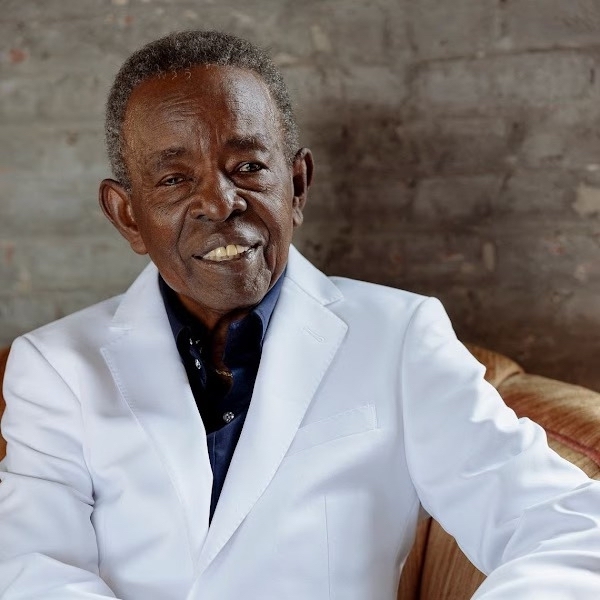
Wigg Walker photo by David McClister
Charles “Wigg” Walker Finds The Positive Lessons of Love for This Love Is Gonna Last

Lifelong vocalist and songwriter Charles “Wigg” Walker released the album, This Love Is Gonna Last, in late January 2025, the culmination of many years of careful collaboration with friend, organist, and creative partner, Charles Treadway. The title of the album is more than simply a positive declaration or a reflection of the title track, it’s a statement of theme since all of the songs on the album deal with relationships, but each takes on a different situation or mood. Wigg Walker drew inspiration from his relationship with his wife, who has since passed away, and this album is dedicated to her memory.
The 84-year-old has many reflections on life and romantic love to share, but also has a personal ethos of seeking to uplift those who hear his music. Still continuing to write, perform, and record regularly, Walker feels that the creative life is still integral to his well-being. I spoke to him about the meaningfulness of the songs on This Love Is Gonna Last and his approach to creating and sharing music with the world.
Americana Highways: I’m so glad that you’ve been able to share these songs with the world. Can you tell me a little bit about when you and Charles Treadway started thinking about this album? How far back in time were you talking about it?
Charles “Wigg” Walker: Quite awhile. I think we started talking about it and thinking about it around eight to ten years ago. Then we got all the material together, and wrote the songs, and he did the arrangements and everything. But I guess we weren’t in a hurry, so we kept hanging around, and then we started putting it all together.
AH: Were you playing these songs at all before recording them? I know you’ve continued to perform.
WW: No. We didn’t attempt to do that! As a matter of fact, we’ve got to get on the case with learning them again!
AH: I see that you do a live “Soul Brunch” residency. Is that right?
WW: Yep! Every week.
AH: Are you going to play these songs at the Brunch?
WW: Eventually. But we’re trying to see what kind of traction we can get out of these. But Charles and I were here, today, running over the songs, and then the rest of the guys are coming a little later. I hope that it works out good.
AH: That’s wonderful! These are some powerful vocals from you on this album. I think it would be amazing to hear them alive, but I know that’s a lot to do. If you were to do the whole album live, that would be quite an intense experience for you!
WW: I’m telling you! [Laughs]
HMS: Because they are all really emotional, and a lot of them are about relationships.
WW: Yes, they are mainly about my relationship with my wife. She just passed not too long ago.
AH: I’m sorry to hear that.
WW: But it’s okay. Things happen, and you’ve got to deal with it.
AH: I guess since these songs were written over a long period of time, when you wrote some of them, she was still with you.
WW: Oh, yes, she was still with me. Just like any other married couple, we went through the changes of life, and when you write songs about a situation, sometimes you go overboard!
AH: That’s true!
WW: But I’m happy with them, so that’s mainly what counts.
AH: Did your wife hear these songs? Did she know about them?
WW: Yes, she got to hear them before she passed. She liked them! [Laughs] She didn’t have a problem with them at all. There’s nothing really to have a problem with. It’s just about romance, situations, love.
AH: They are very romantic songs. What I think that people can respond to is that you’re looking for the positive side of things, even when there are difficulties.
WW: That’s right! Yes ma’am!
AH: That gives people hope and makes them want to try harder, I think. I suppose you could write songs about relationship fights and bitterness, which some people do write about.
WW: No, I don’t want to do anything like that. I want to try to lift people up if I can do it.
AH: I imagine if you had written about those kinds of things, your wife might not have so easily given her approval.
WW: Yes, it might have been me in the grave! [Laughs]
AH: When you and Charles write together, how does that usually go? Do you write at home or go to a studio?
WW: We have a little set up where we have all the instruments and everything we need to write songs and get some kind of idea what it’s going to be like. It’s not a complicated thing, we just get in there and work hard.
AH: I like that idea that it’s not complicated, but you have to work hard. I think people find that hard to understand since there’s a mythology that inspiration just strikes and songs come out of nowhere.
WW: That might be true, but not with me so much.
AH: You’re a life-long musician, so you should know.
WW: Yes, I’ve had a lot of situations. I’ve even been married three times. I should have about 100,000 songs! But you don’t want to tell everything.
AH: Do you feel responsible to try to influence people positively with your music, generally? Not everyone does.
WW: Yes, I do, as a matter of fact. That’s one of the things that I definitely try to do. Most of the time that works because it’s about, not only singing the song, but when people look right in your face, they can tell if it’s sincere. I get a lot of questions when I sing.
AH: Do you think that your songs are more vocally-driven than other peoples’ songs? Or if the voice more of an instrument, among others?
WW: I think it’s an instrument. I just try hard to perform on a song, any song I sing, by putting my all into it.
AH: If you’re not in the mood for recording songs, do you try to get yourself into the right mindset?
WW: I’ve never had that problem yet. [Laughs] Once you “get” a song, you “get” it, and I’ve had songs from other people, too. Me and Charles have been together for years, and we played together in a band for ten years before we started writing together.
AH: What do you think makes it a good partnership between you two? Is is about personality, or musical tastes?
WW: It’s a good thing. One thing is that I live across town! [Laughs] No, we just understand each other. He has his other things, and he plays with other people, and I sing with other bands sometimes. Mostly, I’ve had this band for quite awhile, for the last ten years or more.
AH: You can’t buy that level of experience with each other. A lot of people don’t have that and need it.
WW: No, you can’t. And they are good musicians, too. You don’t have to explain everything. You can just fit right on in and they know what to do. That’s how it stands with us.
AH: Was it helpful for you to spend as much time as you wanted on this record, rather than working with a shorter schedule?
WW: We weren’t in that situation because we didn’t have a record deal. I’ve been in that kind of situation before where you have to produce, and get it together quick. But this time, we just took our time and did it! I prefer to take time with the songs. If I just turn up at the studio just to do a song, it usually doesn’t work out too well. I don’t usually do that many multiple takes, only if I miss some words, or something like that. Most of the time, I pretty much know the songs when I get in there. It’s been a good project, and I hope that people like it.
AH: I think the album is quite powerful and has a big mood to it. This is evergreen, too. People need to think about their relationships and think about what keeps them going, what holds them back.
WW: That’s true, and if you can, write about it one way or another, write or sing it, express it, get it out, and it might help someone else.
AH: Do you find that you feel better when you’ve managed to write about something, and express it, and you feel that you’ve gotten it down?
WW: I definitely do. You never know how people are going to take things, but you just write it, and sing it, and do the best you can. Then you just hope that it can help a situation. Of course, a lot of these songs are about me, and my wife, and our situations, and I’m sure everyone has that. That’s where it is.
AH: I appreciated that the album has various different situations and ideas that are very real. One of the quieter songs on the album, “It’s About Trust,” is placed towards the end, and it’s a sweet song, but it’s actually quite real, because it suggests that you have to do this groundwork with each other.
WW: That’s the first one that I started writing, because we were going through a thing then, and I was trying to tell her, “Talk to me. Tell me what’s on your mind.” So that was the one that I started off writing.
AH: That’s so interesting. Did it get the ball rolling, and make you start thinking about more relationship songs? Or do you feel that you usually write about this kind of thing?
WW: Most of the time, I guess I’m kind of sentimental! [Laughs]
AH: I think you’re kind of philosophical about life.
WW: [Laughs] Anyhow, I try to get the best out of the song, and not hurt anyone, not bringing anyone down. It’s just like, “Let’s talk about it.”
AH: I think “It’s About Trust” is quite a logical song, in many ways, but there’s room in most of the songs on these albums to admit that when you know something, you know something. That’s more of the role of intuition in relationships.
WW: Right.
AH: With your title track, “This Love Is Gonna Last,” the phrase “I know” is quite important. But you also have the song “Serendipity” which suggests that circumstances play a part. Mysterious circumstances.
WW: [Laughs] You’re right! Wow, you’re down with this. You’ve studied it, haven’t you?
AH: I’ve enjoyed this album.
WW: I hope a lot of other people enjoy it, too.
AH: Do you think you have any more plans for recording? I know that this was a very lengthy project for you, so I understand if you don’t.
WW: We have plans. As a matter of fact, we have started talking about songs. Charles has already written a few songs, so I just have to get started with it. We’ll probably come up with something pretty fast, but if it takes time, it takes time. You know, I’m 84! [Laughs]
AH: You’re just getting started!
WW: [Laughs] Aw, yeah!
AH: It is really great to hear that you’re still writing songs and that is important to you, because creativity is for your whole life. I really believe that.
WW: Yes, it is. And especially, being a singer, or a writer, you’ve got to be thinking about things, and doing stuff.
Thanks very much for chatting with us, Wigg Walker! More details are available here on his website: https://charleswiggwalker.com/