





JD Clayton photo by David McClister
JD Clayton Takes The Road Into The Studio For Blue Sky Sundays
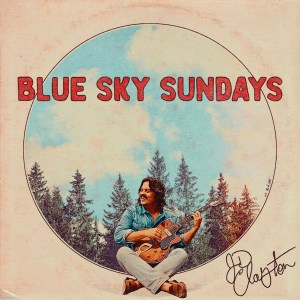
JD Clayton worked with his touring band on upcoming album Blue Sky Sundays, which arrives on February 28th, 2025, via Rounder Records. The record marks Clayton’s first time producing his own album, and that came with a specific goal in mind, to bring the many lessons from the road gleaned on his first wide-ranging tour into the studio.
The sound of the album was partly chosen and constructed via location and equipment, taking in the vibe of Sound Emporium Studios in Nashville. It builds on 70s accents, ranging from Country Rock to singer/songwriter fare. Clayton built on his experiences working on debut album, Long Way From Home (2023) to help shape the outcome on this new collection of songs, whose singles so far include “Dirt Roads of Red,” “Let You Down,” and “Dance Another Dance.” I spoke with JD Clayton about the impact of his first major tour on Blue Sky Sundays, the flavors of music that have been most impactful for him during his journey as a songwriter, and how he navigates the songwriting process.
Americana Highways: I know that you have been playing these at shows. I know that your intention was to also record with a live feeling. How do those two things relate? Was it just taking the live show into the studio?
JD Clayton: When we went into the studio about a year and a half ago now, we had a five piece that we’d been working with consistently, but in Nashville, bands change. We lost one of our guys. So the only struggle was that we had to relearn the songs. I’ve been playing piano a little bit more, which actually, has been great, because I really found music by playing piano when I was a little bit younger. It’s been cool to be able to play at shows and experience that side of my musicality again.
AH: I noticed that keys are really important on some of these songs.
JDC: They are super-important. Hank Long, who is a good friend of mine, played the keys and did a great job. It is a keys-heavy record, and I think that stems from me loving the piano and keys in general, so in the Production, I just wanted them to stand out.
AH: I think the way the songs are written gives room for both guitars and keys as part of the composition. I feel like you were thinking about that.
JDC: Yes. When you go into a studio with your session guys, you have no idea what they may do, so I left room for anything. We’d get into the studio that morning, and I’d show them the basic chords for the songs. A lot of times, I was just finishing up those songs as I was driving into the studio. Then, they’d sit down and play what came to them. It was really great. I had been playing on the road with these guys for a year and a half, and we’d played close to 70 or 80 shows. So I knew what each of them could do, and what they were capable of. It was really cool to share that journey with them.
AH: I can imagine that the vibe of those live shows was carried over into the recordings. There’s an unhurried feeling to the songs, and I appreciate that. I can understand why people often condense and make songs briefer, but here it feels like everything breathes a bit, and there’s time for the audience to think about the lyrics and appreciate the mood. Was that something you were going for?
JDC: Yes. I get really tired of the Nashville tendency to say, “We need to make this song three minutes long so it can be played on the radio. You need to get to the chorus ASAP.” We’re free to make the music we want. We can always cut a song short if the radio station needs that, but this is how they made music in the 60s and the 70s. Sometimes there’s a five minute song, and that’s okay!
AH: Since you were thinking of the 70s with this album, did your experiences making your previous EP and album affect your choices with this one?
JDC: For my first album, Long Way From Home, we had a similar approach, but the difference was that I wanted to try out producing this album myself, and take everything I had learned from my previous years of being in Nashville and see if I could do it. That’s a big difference because I was playing the songwriter, the singer, and being something of a coach. I had to pick songs, pick when we were doing overdubs, be on the mic in the booth. You have to constantly be able to zoom in and zoom out, and think big picture. It’s very difficult to self-produce, but it’s something that I wanted to try, and it was a lot of fun.
AH: Since you all had been out playing together, did you have many conversations about sound, or was that pretty clear?
JDC: We approached it in a very macro way. We knew that we were going to work at Sound Emporium, which sounds a certain way. We knew that we were going to use Studio B, which sounds a certain way. We knew we weren’t going to use a ton of plug-ins and keep it the way the player played. We leaned into the natural sound. It’s a rock record played by a band. The sounds that you’re listening to are the sounds that we got from my band players. That was the whole goal, to capture it. I had never toured before that tour, so to do 80 shows with the same group of guys meant that I grew a lot, and my sound changed and matured. I wanted to capture that sound with these guys.
It’s kind of like magic, when you go in, and turn on all the mics, and sound starts coming through the console room. You had a song that was written on acoustic guitar, and then, the next thing you know, your record is coming through the speakers. It’s pretty amazing!
AH: I appreciate you saying that this is a rock album because I agree based on listening to it. It’s tricky what language to use sometimes but I felt the rock influence here on a lot of these songs.
JDC: Everybody’s country right now, but if rock ‘n roll is a sub-genre of country now, that’s what it is. It’s about as classic a rock band scenario as it can be. Some consider The Rolling Stones to be a country band, country-rock. It’s guitars going through tube amps, that’s what it is. [Laughs]
AH: I notice the video for “Dance Another Dance” showcases The Sound Emporium and that shows the vibe.
JDC: I really wanted that to be there, it’s such a special room. I wanted people to see what it was like when we were in there working. It has a particular feel, and a particular smell, and it’s an old room. There’s a lot of exposed wood.
AH: Is the song “Madelene” one that you’ve been playing live?
JDC: We have been playing that live, mainly because Our Vinyl put out an acoustic version of it. A few people have been singing along. That was a song that I wrote in my hotel room in Grand Junction while we were waiting for soundcheck. I felt the need to write. I hadn’t written in a long time, so I got out my notepad and guitar, and I just started strumming. It came out. It’s just a little love song. I had also always wanted to have a whistle song, so I leaned into that!
AH: I’ve had people tell me before that the time between soundcheck and performance can be taxing, because you don’t know what to do with yourself. Sometimes I interview people during that time, and they are happy to have someone to talk to!
JDC: It’s a hurry up and wait situation and, yes, it can be dry.
AH: I felt a little bit of a 70s feeling with that song, and for that reason it fits in with the 70s. Do you like the singer-songwriter stuff of the 70s as well as the Southern Rock stuff?
JDC: I like it all. It’s really what my dad loved, like James Taylor, John Denver, Jim Croce, and then Led Zeppelin. Then The Beatles. My dad had the Abbey Road CD in his car. I was hearing all this from an early age, but I never put two and two together regarding the weight of it. I guess when I finally got to Nashville, the dots in my brain started to connect. I started doing really deep dives on everybody. Covid was good in that regard, because I was working a landscape job, and I was listening to music a lot. I learned a lot just from listening. That was a good time for me.
Also, my dad was a huge fan of early 2000s singer-songwriters, like Jack Johnson, Norah Jones, and Amos Lee. If you add those two facets, 70’s music with singer-songwriters and rock ‘n roll, then the early 2000s soft pop and singer/songwriters. I was not raised on country. That was never a thing. I didn’t hear country music until I was almost a senior in high school.
AH: That’s familiar to me, because even though I grew up in Virginia, North Carolina, and Tennessee, we didn’t have country music in my family, but I’ve come back to it on my own. Fortunately, I did hear blues music when I was younger, at least.
JDC: Once I heard Chris Stapleton, that was a huge turning point for me. I thought, “If this is what Country music can be, then I’m okay with that. I can get behind that.” Later on, I found 1950s and 1960s Country, like Loretta Lynn, and I love that stuff. I love the pedal steel. That’s probably my favorite instrument. It took time to get there, but I think I finally found my way. [Laughs]
AH: Part of that, I’m sure, is the things that country music can say, can convey and carry. As a songwriter, you seem to take that very seriously. There’s nothing wrong with writing songs that are just fun, but I feel like each of these songs has a core to it of something that you’re trying to say to the audience. You hold it to that standard.
JDC: Yes, that’s right. I don’t really intend to do this, but it naturally just happens that bits of my personality and bits of things that have happened to me growing up just find their way into the songs. A lot of the time when I’m writing, it starts with me just humming, and I find a melody. Then, once I’ve found a melody, it’s all about rhythm and how I can make the words flow in a certain beat and pattern, and that influences what words I choose. So I can try all I want to say something meaningful, but if the word “nonchalant” does not fit in this pattern that I’m wanting in verse one, then I’m not going to use that word.
That means that I can’t say that I was going to say about this guy who was my character. So maybe now I’m going to change it to a song about a girl. Instead of us talking about her mom’s Mercedes, maybe it’s going to be about her dad’s Mercedes. Then, that influenced verse two, and that’s how my mind works with it. By the end of the song, it’s like with recording, it’s magic. You had nothing, now you have something. And you don’t know how you got there, but it’s typically never what you originally thought it was going to be.
Thanks you very much for chatting with us, JD. More information and details are available on his website here: https://jdclaytonofficial.com/
Enjoy our previous coverage here: REVIEW: JD Clayton “Long Way From Home”