




Slaw Shares The Life Lessons Behind His First Solo Album and New Song “Hang My Head And Cry”
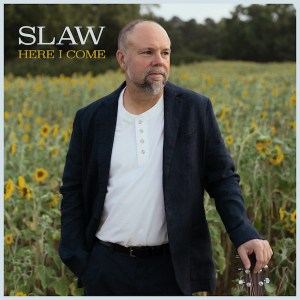
Slaw, aka Scott Colson, is releasing his first solo album Here I Come on November 1st, 2024, building on many years playing country, rock, and other music genres in various bands. With a lot of songs “percolating,” he finally decided to take the path to songwriting and recording a little later in life than some, and this came along with selling his business and devoting more time to music. Caught up in the pandemic and delayed by it, Colson nevertheless continued pursuing a creative period of songwriting that introduces him aptly with the phrase “Here I come.”
Slaw pairs a powerful and dynamic vocal approach on these songs with violins and strings, creating an operatic air that often also has a driving beat. This mixture of elements are something that expresses his wide-ranging background in music and also fits comfortably under the umbrella of Americana due to its core Country and Blues elements. I spoke with Slaw about the idea of retrospective wisdom shared through songs, and in particular, about the track “Hang My Head and Cry” which we’re premiering, alongside a video, today.
Americana Highways: We’re here, partly, to talk about the song and video for “Hang My Head and Cry,” and I feel like this is a particularly intense song to discuss. It’s the album closer, too, right?
Slaw, aka Scott Colson: Yes. I do think it’s a strong song to put at the end. The background on that song is that I wrote it during Covid, actually. Like everybody else, I was cooped up, and being told what I couldn’t do, and that really struck a chord. That song’s a lot about freedom, and what you take for granted until you can’t do those things. Hopefully, it’s a strong message for the end of the album.
AH: I can definitely see how the force of the music and the vocals would make it tricky to put in any other location than the end of the album. I can see that as the closing song of a concert, for instance. It’s very high energy.
Slaw: [Laughs] I appreciate that. I think vocally, at the end, it leaves the listener intrigued, wanting more, hopefully.
AH: I appreciate what you said about taking things for granted, and I think that was one of the big takeaways from the pandemic period. I think we often take the easier aspects of our lives for granted and it’s easier in the United States than it is in a lot of the world. We get a lot of personal freedoms. There are a lot of ways to express ourselves, and it’s useful to think about what it would be like to be unable to express ourselves. It’s almost a primal thing.
Slaw: It absolutely it, and it really hits home. My wife is actually Lithuanian, and she lived in the Soviet Union until the wall fell in the early 90s. I’ve been over there and I’ve seen where she came from. She has vivid memories of that time. It hits me personally. During that Covid time period, my business was shut down, and I wasn’t able to go out there and do anything about it. I think you can hear it in the song, the idea of being able to get back up, and get back out there, was a powerful feeling.
AH: I think the song conveys a lot of internal conflict, and not knowing what circumstances will bring. The fact that you build up to the covid experience by mentioning previous hard life experiences makes the song even more relatable, I think. Those details bring it home.
Slaw: Right, and it’s not about just wanting the freedom to do whatever you want, but it’s also about the freedom to fail. Being able to pick the pieces back up is part of the freedom that you enjoy.
AH: We learn a lot from failing in life, that’s for sure. The video for this song has a specific setting, a kind of farm location with a tractor outside. Did you choose that to reflect your personality in some specific way?
Slaw: I think so. The video took place at my family farmhouse, at our old barn. We were looking for places to shoot videos, I said that my family had an old farmhouse, and showed my manager some pictures. They said, “Wow, yes! Let’s shoot there!” It was cool for me, because it is home, and being able to shoot it around the property and family, hopefully helps the sentiments in the song come through. It’s a natural place for me.
AH: That’s wonderful and makes a lot of sense. As it happens, during the last few years, people have done a lot of soul searching and raised questions of their own identity. That’s often involved looking back at family history.
Slaw: That hits the nail on the head. I think, “Hang My Head and Cry” is my homage to that whole sentiment, and I hope people can relate to it. We’ve all been through that.
AH: When someone does a first album, often there’s a lot of choice in terms of songs because there’s so much to write about in terms of one’s life so far. In your case, though, I know that you had played with a number of bands previously. Was it still a difficult choice?
Slaw: It was definitely difficult. I have a lot of songs. It’s interesting, basically having a lifetime of stuff brewing in your head, but never having taken the time to do a solo album. When I actually made the decision to do a solo piece, I gathered songs that had been lingering forever, and I also went through a two year creative process where I wrote a lot of songs. I recorded a lot of things, and got them captured in that way. When I decided to do the album, I put a small band together, a trio, and we went out and played it together, refining it. Then I just picked the songs that I felt were the strongest and were “me.”
It’s interesting to be talking with you for the site Americana Highways, because I think Americana is what brought this album together, as a genre. I’ve been involved in everything, from blues, to rock, and across the board, but when I got into Americana, it’s a broad brush, but it felt like me. It’s a perfect, down-home type of mix for me that really resonates for me. I think that, in and of itself, is what helped create this album. It fits for me and what I’m trying to do. It’s a genre that is good for me to create through and really resonates with me.
AH: Even ten years ago, I think it would have been less common to bring these different aspects of music together, but now everything is much more accessible.
Slaw: I wouldn’t have known where to put the album 15 years ago. There are songs on here, like “When It’s Done,” which is very blues-leaning, but we did acoustically. I think when you put it all together as an album, it really is an Americana album.
AH: I hear a lot of blues rock and country rock in some of the songs. The energy and force of the songs is definitely your corner of things.
Slaw: As you mentioned, it’s my first album, but the beauty of it being my first album later in life is that I have a lot to draw on. My lengthier background comes through here in several ways.
AH: I also think it’s interesting that several of these songs convey life lessons, things you’ve reached conclusions about, because of your life experiences so far. You really own that on this album and put that out there.
Slaw: There are a couple of songs on here that I hope bring that out. There’s a song on here called “Best of Me” that’s written about a friend of mine who was an amazing person, but at the end of his life went the wrong direction in a couple of ways. That’s my message, saying, “We can all go off the rails a little bit, but let’s be remembered for what we really were, the best of us.” Having lived through that and other things, I can capture that and write songs about it, and maybe a younger person who hasn’t had an opportunity to live through, can draw from. Maybe that’s one of the advantages of getting a late start on the first album!
AH: That song made me think of the fact that in the internet age, it seems particularly hard to be forgiving of people who make mistakes. Unfortunately, their mistakes are often what they are remembered for. In our own personal lives, I think we’re more merciful.
Slaw: Absolutely, and that’s really what that song is all about, “Have mercy!”
AH: The songs “Don’t Go Down That Road” and “Lay It All Down” also convey lessons, I think. That comes from a degree of life experience. But even “If I Hadn’t Found You” is a song that requires time and reflection. It’s not a perspective that someone can have without some time involved.
Slaw: I think so. “Don’t Go Down That Road” is really a big metaphor for addiction, and I’ve also seen people going the wrong way in life in that way. The song is about a gambling addiction, in this case, but it really is about staying in the right lane for you. The song “Lay It All Down” is about the idea that when times get tough, sometimes you need to let it go, and sometimes that can be the hardest thing to do. I’ve had that experience throughout my life, and I’m sure that we all have. Sometimes you have to move on.
“If I Hadn’t Found You” is a very personal song about my wife and finding her when I did, back when I was younger, meandering around in life. It’s really about finding that special person that makes all the difference. Hopefully, people can relate to that experience of finding the right person who sends your life in the right direction. All three of those songs are drawn from life experiences that I, for better or worse, have lived through.
AH: Something interesting about “Lay It Down” is that it’s kind of vulnerable. I grew up in North Carolina and Tennessee, and the cultural ideal was fairly heroic. It was best to suffer in silence, get through it, and push through problems. But that song is a different approach, it’s saying, “No matter how great you think you are, or want to be, there are things that no one can carry indefinitely.”
Slaw: Absolutely. We get caught in our own lives, and our own paradigms, and we think that nothing else is out there. We think the only world is right in front of us. The reality is, there is a gigantic universe beyond whatever you’re doing. Whatever you’re doing that’s bringing you down is probably, at the end of the day, a small thing. I’ve had some experiences in life that felt like devastating things, and looking back, even a year later, I’ve wondered, “Wow, why did I let that consume me?” It was important, but it literally wasn’t the end of the world. I had other opportunities. All of us are guilty of that.
We think this thing that is happening right now is the most important, even if it’s just taking the wrong exit! [Laughs] I was just driving around in Boston the other day, and nobody can drive in Boston. I took a wrong exit and it added six minutes to my route. Six minutes! I came around to this way of thinking. It was six minutes, why was I letting this bother me? That’s kind of this song. Sometimes you just gotta to say, “It’s all good. Let’s move on to something bigger and better.” But don’t go to Boston! You will get pissed off! [Laughs]
AH: With “If I Hadn’t Found You,” I was thinking about transformational love songs, songs about people who help you change as a person, or turn your life around. For instance, Tom Petty’s “Angel Dream,” which relates to his heroine addiction, and meeting his second wife, who helped him get into recovery. Looking back, we realize the difference other people have made in our lives.
Slaw: I do think that I had the opportunity to look back on things, and that’s really what this was, a retrospection. The song’s saying, “If I hadn’t found you…good Lord!” God knows where I’d be now” is the lyric. In my life, my wife has made all the difference from a lot of standpoints in my life, and I know it’s the same for a lot of people out there who have met that special person. Maybe they can look back with me, when they hear this song. Maybe it’s something for new relationship folks, too, telling them, “Hey, you’ve met this person. It’s going to make all the difference, and be thankful for that!”
Thanks very much for sit-in down with us, Slaw. You can find more information here on his website: https://slawmusic.com/home
Here I Come was produced, engineered, mixed, and mastered by Shawn Byrne; and recorded at Great Hill Productions in Nashville. Musicians on “Hang My Head and Cry” are Shawn Byrne on guitar, bass, and percussion; Brian Sutherland on cello; Andrea Young on violin and fiddle; Kaylee Hill on backing vocals; Rory Hoffman on recorder; and Scott Colson on lead vocals, backing vocals, and harmonica.