




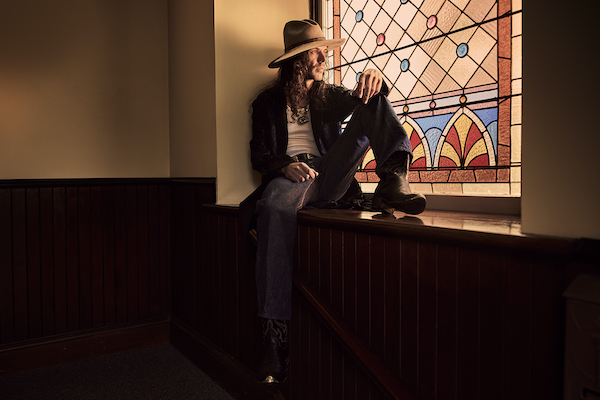
Kyle McKearney photo by Matt Barnes
Kyle McKearney On Working with Vance Powell and Cementing His Sound For His Third Album
Kyle McKearney moved into creating Americana and country rock-influenced music only a few years ago, and it has been a process of discovering his sound that has led to plenty of critical attention. His sophomore album, A Traveler’s Lament, won the 2023 CCMA for Alternative Country Album of the Year, and also won 10 other awards, among various other nominations. Most recently, he’s been working on his third album, set for early 2025, and singles have been arriving that suggest McKearney has further combined traditional, acoustic elements and more electronic rock sounds to further his distinctive storytelling.
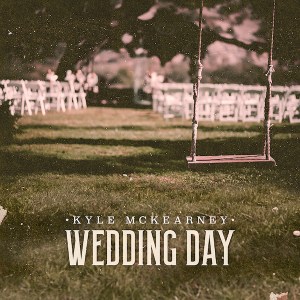
The songs already released include “Lonesome,” featuring Trey Hensley, which takes a bluegrass direction, “Broken Hearts Hide,” which leans into Southern rock, and “Wedding Day” which pulls from ballad traditions, and paints the dynamics of its story in a stark, almost gothic, light. McKearney also worked with Vance Powell to mix and master these tracks as well as the upcoming album, and Powell brings a subtle unity to McKearney’s sonic combinations. I spoke with Kyle McKearney about working with Powell, his path into Americana sounds, and about the shaping of some of these new songs.
Americana Highways: How did you come to work with Vance Powell for the mixing and mastering of your upcoming album?
Kyle McKearney: It was just a “want.” I wanted to work with Vance and I knew he’d be the right person for the job, to mix this thing and make it sound incredible. We simply reached out. What was neat is that we had reached out previously on other things, and started to forge a relationship, though we had never gotten to work on anything. Then, when we reached out this time, it wasn’t just a cold call. He took it on, and it was amazing.
AH: Something that occurred to me that made it a good idea is the breadth of the sound that Vance Powell works with. Song by song, you are often incorporating different elements in different ways, and that would be natural to him. He’s got such a handle on rock, bluegrass, and roots sounds.
KMcK: That’s why he was the perfect guy to mix this record. What he brings to the table when he’s mixing is nearly as important as the song is. He’s that good. He’s doing stuff in this analog way with racks of gear, instead of using plug-ins, and it’s perfect for what we’re doing. He does cover so much ground, and he knocked it out of the park. You’ve got to hear this thing, it’s crazy.
AH: Can you tell me anything about the album coming up?
KMcK: There’s a 12 song record coming at the end of the year, probably early next year. We’ll be releasing singles until then. It’s the best stuff I’ve ever done, I think, and I can’t wait to share it all.
AH: When I look at your music history so far, I see this incredibly intense period of making music, particularly since the pandemic. Do you feel like you had some reflective time to decide on what you wanted to do with this group of songs?
KMcK: Yes. That period was intense for everybody. But it was actually just before that, when I was running around, chasing songs, and trying to write hits. I was working in more of a pop group and a rock thing before, and it’s never suited me that well. I wasn’t whole-hearted about that. I got tired of all of that, and kind of shut it down for a while. Then I wanted to just do something to take a breath. So I got an opportunity to play guitar on the musical, Queen: We Will Rock You, tour. I was a guitar player with my friend Sam Coulson. We did 160 shows in six months across North American, playing in almost every state.
During that time, I didn’t have any pressure, or need to write songs, but I was still doing it. And I think that’s where this project was birthed. When I came home, I said, “I want to do this batch of cover songs, and do it the way I hear things, and the way that I think it should be done.” We cut 25 cover songs, and videoed them all over a couple of days. We finished them on a Saturday, and the Sunday was when everything shut down for the pandemic. So I went into the pandemic with a batch of songs that I could proudly put out and give people something to do. We did a cover song every Sunday for 8 months. It started this whole thing, and I kept with that ethos, of doing things the way that I hear them, and doing them for the joy of making music, instead of trying to create hits.
AH: This reminds me of artists I’ve known who switched between genres, and for them, they did a period of adapting cover songs, and when they did that, it’s how they started to build the architecture of their own sound. It’s a little scarier, though, than people might think, since you can take big leaps with those choices.
KMcK: There is that, for sure. I wasn’t actually doing it for other people in the beginning. I was doing it for me as a healing process, and as therapy, in a sense. Looking back, I can see that it was a risk, but it was one that obliviously took. [Laughs]
AH: When we’re looking at the goals that had when you made A Traveler’s Laments, were there things that you took away from that experience that then has impacted these new songs?
KMcK: Oh, yes, for sure. It’s always a journey that way, and a development. Doing the cover songs was the early stages. This was also the first time since I’d spent time in Nashville with my father that I’d heard a steel guitar beside me, or a banjo beside me. It really got to the core of where I come from and what I like. I changed several things between Down Home, the first record I did, and A Traveler’s Lament.
For Down Home, it was completely acoustic. There was no electric on the whole thing. I started to miss that a bit, so I brought that back for A Traveler’s Lament. I had become so burned out on rock and pop music, that on Down Home, I went completely the other way. Then, I started to bring the acoustic and electric together, and create the yin and yang of who I am, on A Traveler’s Lament. Now, with this new record, it’s like a complete locking down of who I am.
AH: It sounds like a more moderate zone where you can just explore.
KMcK: It’s a feeling of being comfortable with where I’m at. I can just be.
AH: How does this relate to your family musical background? You mentioned Nashville with your dad.
KMcK: When it’s in you, it just is. I grew up in Country and Bluegrass. My grandparents earned a living playing weddings and dances. It was all Johnny Cash and Jim & Jesse. My dad was an artist as well, and spent eight years in Nashville, trying to slog it out. It’s really part of my DNA. But I was really, truly, and always have been, a music lover, and a lover of all music. I didn’t have adolescent biases just because my parents liked something. I thought my dad was the coolest. I also loved rock music, and I still do love Southern rock. I was also a huge Beatles kid.
AH: Did your family have a reaction to learning about the path that you’re on now?
KMcK: They really did, all my cousins and aunties. I think they were just happy and relieved for me because they could feel that it was right. They shared that with me. It’s nice to have your family’s approval and validation, even when you don’t think you need it. It put me at peace, as well.
AH: You seem to veer towards storytelling, which is a very Roots thing to do. I think that kind of storytelling in music can really impact people in their life decisions, even.
KMcK: It really is true. All art is that, though. We learn things through our heroes in the movies, through songs, through plays, and paintings. It’s all about that, at the end of the day. Artists are always trying to serve and help humanity progress.
AH: We need it! Each of the new songs that I’ve heard are pretty different. If we look at “Lonesome,” it’s a very specific sonic direction, and you were working with Trey Hensley on that, who’s just outstanding. It’s got such a driving pace, and is a story-song for sure.
KMcK: It definitely is. It’s a lot different from the rest of the record because it’s a bluegrass tune. I really love bluegrass and I love Trey’s playing. I actually wrote that song with my keyboard player in the band, James, with the intention of including Trey, because we’d met him at a gig previously. It was a unique, cool, thing. It’s a different kind of thing, but it’s still me.
AH: How do you do that one live?
KMcK: We’ve done it a few times live, already. I’ve learned Trey’s guitar parts and solo. It’s not like Trey! I’m not that quick. But I convert it to something that I can pull off. It gives the essence of it. [Laughs]
AH: That song’s story has something that people can relate to, having to move on from a relationship that’s not working. Some people won’t write songs that have a little bit of sadness in them, but a huge number of fans have told me that they love sad songs. It’s more true to their lives.
KMcK: I always try to write from a place of experience and a place of real things in my stories. When things happen in your life, and some things are really hard and sad, I think it’s important to write the truth. With sad things like that, what do you do? If someone doesn’t show up at the train station, and you’re going out on your own, it’s going to be hard until it’s not anymore, right? That’s just how it is. Telling the truth about those situations is important. It can also feel contrived and commercial if you wrap up something sad with something happy, though that can happen in life, it’s true.
AH: The really hard moments often define us, so erasing them would be a problem, a bad idea.
KMcK: Exactly. I think the more things that you experience like that, too, the better you get at dealing with them. I will say, full disclosure, I have never been left at the train station! [Laughs]
AH: That’s reassuring. The song “Wedding Day,” also, is a big chunky story.
KMcK: That’s a deep one. It’s one of my favorites on the record.
AH: I was reminded a little of old folk ballads from the UK and Ireland where someone is lamenting that a wealthy person has taken away their love. But this isn’t the same story. I think the amount of emotional detail, and using the first person, makes it really powerful. The sound is actually much softer than your other single, “Broken Hearts Hide.”
KMcK: When we produced that tune, it lent itself to that. It’s almost an up-tempo ballad. It has the fiddle in it. Stuart Duncan played all the fiddle on my record. He’s so brilliant. Somehow, we got him on the record, and the sadness of the fiddle really pulls the heartstrings. That storyline almost is a modern take on an old, scary story. You sit there and imagine what that would feel like. It would be awful. I’m sure it’s happened to people. Those old songs are usually about something true. I think we experience a piece of that song when we can’t be with the person we want to be with, or they move onto someone else, and you’re not ready for that. That’s the essence of the idea.
AH: Something that’s less dramatic, but very common is going to some kind of social gathering where you see someone from your past. Maybe they made a choice, and things broke up, but now they are married, or have kids, etc. But you pick up on a vibe that they regret something when they see you again. The song reminds me of that because the bride seems uncertain of her choice.
KMcK: I’ve experienced that, too, and that’s a really great way to put it. There’s something to all of those micro-details, feelings, and instincts, that you notice when you get into a situation like that. That’s what the song is about, essentially. It’s about all of those things, wrapped into a little package of what you might feel like. I’m curious about what it will make people think of in their own lives, and what kind of memories they will have when they listen to the song.
AH: Something that seems very American to me, though maybe it’s the same in Canada, is his idea that wealth conveys status or worth, and we see that in the song. But the speaker is saying that they have qualities that are superior, actually, than wealth, or could provide a better life. It raises that question of what is worth more in life, wealth or happiness.
KMcK: That is a good point, and it’s something that I think about a lot. For me, my answer is always for living in a shoebox, and being in love, and being happy. That’s always my answer. But having wealth would be great, as well. There are lots of things to think about in the decisions that we make, as we go through life. We often chose one thing or the other.
For me, being grounded in not caring about material things, but enjoying them, is important. They don’t mean anything, at the end of the day. When you die, what do you have? You have your memories. I think a lot of the time, it’s cooler to build and struggle with someone than just have everything you want. In that story, I, too, am that guy, sitting there, burning, watching my love getting married to someone who bring more material value.
Thank you, Kyle McKearney, for chatting with us. Find more detailed information here on his website: https://imkylemckearney.com/