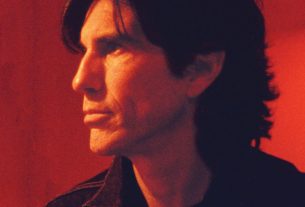
Humbird photo by Juliet Farmer
Humbird Album Right On Runs Towards The Unknown

Indie Folk project Humbird released the album Right On in April, and has been out playing since then, with many more dates to come. Unlike previous albums from Siri Undlin and her collaborators, this one was tracked live and to tape in a short period of time, and yet it has an amplified, electric approach in soundscapes and layering. Produced by Shane Leonard and featuring regular contributors Pat Keen (bass, synth, percussion), and Pete Quirsfeld (drums and percussion), the album Right On also handles heavier themes, at times addressing conflict and difficulties in interesting and empathetic ways.
Songs like the title track remind the audience that in our most embattled moments, optimism and commitment are not weaknesses, and while some songs suggest the nuances of relationships, others take lessons from the natural world or even from the expansiveness of geography. Also ever-present on the album are Undlin’s interests in folklore and the rejuvenating changeableness of traditions. I spoke with Siri Undlin about Right On, live performance, and folklore.
Americana Highways: Was your recording style for Right On different than your recording approach in the past?
Siri Undlin: I said, “Let’s go to a studio and let’s record live and to tape. Let’s really rock out! I think that’s how these songs want to live.” That was pretty obvious, even when it was just me with a guitar. There was an intensity to these songs. Some of my past recording was more experimental and reflective, in some ways. For this one, I said, “Let’s keep it simple, and have a blast doing it. Let’s let the songs be what they are.” Which was really great. I loved recording that way.
AH: Given that some of the songs are heavier, was focusing on the fun even more necessary, to keep that energy to it?
SU: I don’t know that we did that on purpose, necessarily, but it did seem like, as we were making the record, when the songs were heavy, the more fun we were having. That served the songs better. The energy of a distortion pedal and a cranked amp can, weirdly, lift things up in a cathartic way.
AH: It certainly gives focus and direction to the energy. You’ve worked with the same collaborators multiple times before. What did they think of this update to sound? Had they been asking to do this kind of thing?
SU: Totally. One bandmate in particular, Pat, has been a really big part of the Humbird project since the beginning, and he was pretty stoked when I first showed him some of these songs. He said, “We can finally do it!” It’s a long time coming, in some ways. [Laughs]
AH: What did the guys hear before the studio time?
SU: I tend to have a voice memo that preserves songs. When I bring them to a studio or band practice, I tend to be fairly hands-off. I perform with people who I am such a fan of that I want to see what they think and what they want to add. That’s exciting.
AH: You’ve been out playing, so I guess you know how these songs have been live. Have you been trying to get this bigger sound live?
SU: This is another weird album in that we’d actually been playing these songs a lot before recording them. You can kind of hear that on the album, these songs have already travelled across the country a few times with us. That’s kind of the perks of being a small indie band, you can play whatever you want, so we did! And then we finally recorded them. [Laughs] I think they feel a little more weathered and settled in as a result. They’ve already done some serious miles. It’s fun that way.
https://youtube.com/watch?v=aEOX4vtuE-o%3Fsi%3Dic5Fu01vbYsLx9eX
AH: I think the album title and title track say a lot about the album. “Right On” feels like it has two parts, wherein the first part is a story, and the speaker is focused on their experiences, then it flips, and the second part of the song addresses the audience and speaks to their lives. I think that it addresses a classic problem, that after a relationship ends, we think, “Was I stupid to have tried in the first place?” But this song changes that narrative, and is almost a banner-waving song.
SU: That’s a universal question, I think! We have joked, behind the scenes, that “Right On” is the Humbird song that occupies a similar space to Dido’s “White Flag.” It’s legendary. It’s kind of the same message, “I’m going down with this ship.” We love Dido. I appreciate what you’re saying. I think a lot of people, upon first hearing, take it as a break-up song. It kind of isn’t. It can be if you need it to be. It’s more about saying, “Shit, this is hard.”
It’s about realizing that even relationships that are healthy and long-standing can really fucking take it out of you sometimes. Even some of the good stuff is really hard and you have to show up for it. I feel like that song helped me mature. Even when things seem to be going well, there’s really heart-wrenching stuff. It’s more about saying, “Wow, I guess I’ll just have to try really hard. I guess it doesn’t get easier.” [Laughs]
AH: There’s certainly different ways of looking at the song, and I think there’s often difficulty in life with how we face disappointments and surprises. We often want to give up, when probably it’s a natural movement through challenges.
SU: Yes, it’s about how we face things. You think there’s something wrong with you if you’re steeped in this idea that life is only a progression. You feel crazy until you realize that this is just how it works.
AH: This seems like it connects a little with the song “Quickest Way.” That song really suggests that there’s a kind of destination, even if it’s hard to define. That has a progressive feeling.
SU: That’s true. I haven’t really talked about it in this way to anyone, but there’s an acceptance or surrender moment in relationships that’s similar in both songs. It’s also an acceptance of yourself. Maybe that sounds like a self-help book! But it’s there in both of them.
AH: In “Quickest Way,” I definitely also get the sense that travel and movement have been a big part of your life. Do you ever feel like you have to catch up to yourself?
SU: Yes! Oh, I feel like that pretty much every day. Sometimes I feel like that at home! Not only can we travel extremely fast in our modern existence, but there’s also the way in which we expect ourselves to move and accomplish things throughout the day, which is totally nuts. It’s hard to catch up with yourself.
AH: I notice that you put up videos of different live versions of these songs. Does that give you a sense of freedom, that these songs can continue to change and be in the moment?
SU: Totally. I think it’s also a reflection of how often we’ve been on tour the last few years. Then arrangements shift, or we get bored and say, “Let’s make this totally different somehow.” That makes the songs feel alive and like they are changing with us. I think for a lot of artists, if something is recorded, they say, “It’s done. This is the way it is.” But what if you changed it a few years later? Maybe it doesn’t have to be so static. You could play around with formats like recorded music and see how fluid you can make it.
AH: I heard about your interest in folklore and traditions, and that’s the same thing, isn’t it? With folklore, it’s all about iterations, versions, and changes that can happen over time.
SU: Yes, and I think that’s true of folk music. You could ask, “What form is it in as it relates to geography right now?” As if shifts, from person to person, or decade to decade, music, at its best is a reflection of a moment. Why would you get to stuck on the way something used to be? I think there are important conversations around preservation, but there’s so much room to play with things. It’s fun to take advantage of that, especially with your own songs.
https://youtube.com/watch?v=nz6xrxrPA18%3Fsi%3D34awwws7eWO-KHYD
AH: I think that might extend to writing songs for you. The song “Ghost on the Porch” feels like a traditional song, but it really is its own thing that you’ve created out of all of these motifs. How did that one happen for you? Were you setting out to write a traditional sounding song?
SU: No, actually. That song, in particular, is super weird, since I wrote that guitar part and noodled that guitar part for about six months as a warm-up. I also write short stories, like fairy tales. It was actually a short story first, and then I thought, “I wonder if I could turn this into a song. Maybe it wants to be a song?” Then I thought, “I should do something with that guitar part.” I’ve never written a song like that in my life.
It was weirdly contrived, since I had all these pieces lying around and thought, “Could they go together?” They did, and that track is super-different. I think that track surprised us all in the studio, and though no one was really sure how it happened, I think we were all stoked on it afterwards. As you said, it nods to traditional motifs, but there’s also a drum machine and a lot of experiments. It has one foot in two different worlds.
AH: That beat! It has a really funky feel to it in the opening.
SU: You can tell when we play it live. It gets people dancing. Especially in the upper Midwest, where people aren’t as expressive, it’s so funny to watch people reacting to that beat.
AH: It goes with the imagery of the storm, and this impending feeling, too. I have to say that as far as the story goes, it has an interesting twist. I did not expect the character to agree to leave and thereby avoid their death. In a lot of folk stories, the person refuses the sage advice they are given, and meets a bad end, so it’s a kind of example story. But this female character does take that chance.
SU: Part of why I love fairy tales and folklore so much is that you can look so many layers of something. It’s an original story that I wrote, but it pulls from tons of things, and I was sitting with heavier topics when I was writing this, like violence against women and domestic violence. I was thinking about the ripples that spread out across generations can really travel. What if you came home, and there was, essentially, a ghost that looked just like you, who said, “I can take your place. Death is coming here. I’ll stand here and do this, and you can run and be free.” It’s this idea of being in cahoots with the past.
There’s also the idea of the female body, and so often the stories are about mothers sacrificing everything for their family. But I thought, “What if she said, ‘I don’t want to die. I want to live. I’m going to run.’?” I’ve never heard a story like that. I thought, “What if she ran? And said, ‘I love my kids, but I want to live.’” That’s not a popular motif in those traditions, so it was fun to turn that on its head.
AH: I like how they don’t know where they are going at the end, either. It’s kind of like a real-world situation where someone has an event, like a very serious illness, and survives, then says, “Well, shit, what should I do with my life now?” It’s a big question.
SU: It’s such a fraught, but inspiring moment to find yourself running towards something, you don’t know what. It’s an interesting place to sit with, as a writer or an artist. So often we’re caught up in the concrete elements of a plot in a song or other writing forms. It’s cool to sit in a place where someone doesn’t know what’s happening, since that’s such a universal thing. I don’t think that people encounter ghosts on their porch all the time, but they do know the feeling of running towards something, but they don’t know what that is.
Thanks very much for chatting with us, Siri Undlin! More information and the latest tour dates and details can be found on the Humbird website here: https://www.humbirdmusic.com/
Enjoy our previous coverage here: Show Review: Humbird Alights in Milwaukee with its Atmospheric, Ethereal Music