


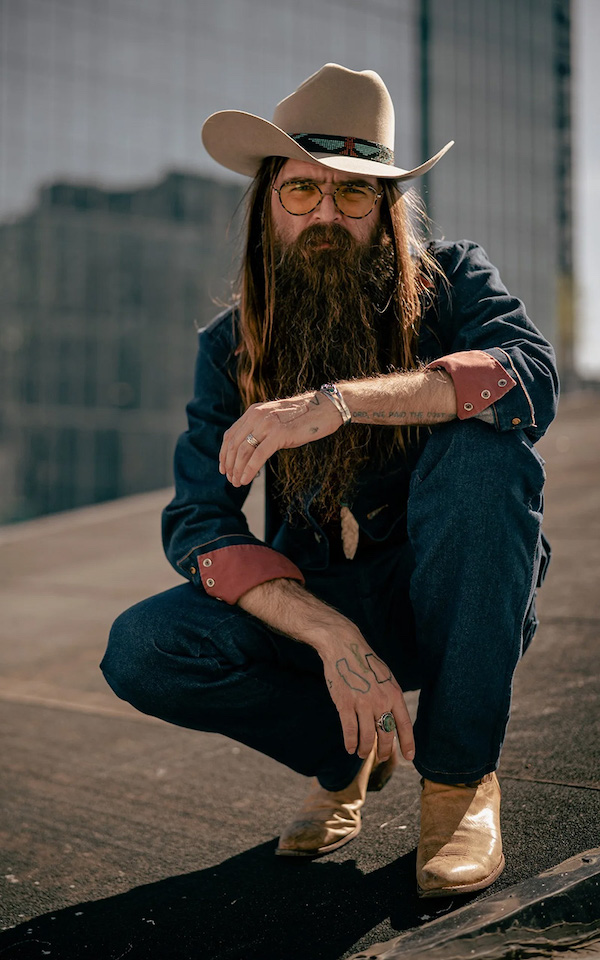
King Corduroy—Nashville’s Cosmic Troubadour of Southern Soul
Serendipity, truly, can lead to great discoveries!
My first visit to Nashville occurred a few months ago when my wife and I accompanied a family member and his wife who had tickets to a Riley Greene concert. Our visit over a long weekend was limited to the sensory overload area known as the Broadway Historic District in Nashville. Lower Broadway is loaded with shops, bars, restaurants, and venues featuring live music continuously from mid-morning through the wee hours. Broadway is an essential part of any visit to Nashville but is an area that only represents a small part of what the city has to offer to music lovers.
While in Faherty, an upscale clothing shop in Nashville’s Arcade, I heard several songs playing over the store’s speakers that were a bit unlike music I typically listen to. Distinctly blues, but with a blend of rhythm and soul, rockabilly, some New Orleans jazz and even a bit of zydeco.
Jocelyn, the store manager, told me this music was from King Corduroy, a Nashville artist who is becoming something of a local legend.
As I explored his music further, one thing led to another and resulted in my opportunity to have a conversation with this extraordinary and unique talent.
King Corduroy is the moniker under which Kurt McMahan performs. But this is more than just a stage name. King Corduroy is the day-to-day persona of this multi-talented singer-songwriter, guitarist, harmonica player, band leader, audio engineer, producer and podcaster. He can even be considered an unofficial ambassador of Nashville, which he promotes through his podcasts and his city tours.
King Corduroy’s first full length album, Austin Soul Stew, was released early in 2013. Since then, he has released 3 EPs: L.A. Skyline, Livin’ on Nashville Time, and Avalon Avenue, as well as a number of singles. Each of his releases represents distinct phases in his musical career. He is currently in the final production stages of a new single, “Not a Good Place to Be,” and his newest album, Back to the Shoals, a tribute to his Alabama roots. Both are anticipated for release later this year or early in 2027.
During our conversation, King Corduroy offered insightful observations about his musical influences, the Nashville music scene, and the challenges facing indie music artists trying to get their music out into the world.
Here is our interview, edited for clarity and length.
Americana Highways: How did you first get involved with music?
King Corduroy: Well, they call me King Corduroy, the Cosmic Troubadour of Southern Soul. I’m on a journey believing in songs and the craft. Maybe at this point, I’m a journeyman.
I’m originally from Alabama and I’ve always been into music. Began with piano lessons when I was in third grade and I joined the school choir. I still remember you had to audition for the choir, and I sang “Friends in Low Places.” (laughs) When I was ten, I found my grandfather’s guitar in a closet at my grandmother’s house. It was a 1936 Kalamazoo. I was really interested in it, so my grandmother called a cousin from Hokes Bluff, Alabama, a real small town. My cousin came over and showed me some cowboy chords. That got me started.
I started taking guitar lessons and then I started a band with some other kids at my high school when I was about 15. Did my first bar gig when I was 16. Back then everyone had a dance. You had a birthday party, and it was a dance. You played birthday parties, bar mitzvas, school and homecoming dances, and Valentine’s Day dances. We were gigging like crazy.
Then I went to college at the University of Alabama and performed the whole time I was there. I did some writing and recording of my own songs at my house on my 4-track tape recorder.
I also had a radio show on the University of Alabama student FM station, New Rock, 90.7. I created a commercial on my 4-track for my show that I played for the station manager and he really liked it. This was way before you could do it on a computer or your phone. When I played the commercial for him, he made a really big deal about it. This was like the first time anyone told me that recording this was a useful skill set.
The whole time I was in college, I really wanted to drop out and just pursue music. But nobody told me when I was growing up about career options like becoming a professional musician. There were a couple of bands in Montgomery that I admired, like Ziggy and the Zigtones. I certainly saw working musicians, but I didn’t see super successful musicians in Montgomery.
I remember a phone conversation with another cousin who was in college at the same time and I said, “Hey Liz, I’m thinking about dropping out of college and pursuing music, what do you think?” She said, “I think you should graduate from college.” So, I got a degree in political science with a minor in journalism. I knew though that I had to pursue music.
I met a fella at Willie Nelson’s studio outside Austin, Texas. He told me about this school for audio engineering called MediaTech Institute at Arlyn Studios, where students can record for free.
I then moved Austin, got some student loans, and continued writing and recording along with learning about audio engineering. I went to Austin and I never looked back.
I was in Austin for 6 years. Then I went to LA where I was for 4 years and I’ve been here in Nashville now for almost 10 years.
[Video—“Workin’ for a Living”—NPR Tiny Desk submission https://www.youtube.com/watch?v=m9WgMMpuGJk&t=22s%5D
AH: What’s the story behind “the Cosmic Troubadour of Southern Soul?”
KC: I was trying to come up with a brand. There have been a lot of troubadours. Woody Guthrie, the dustbowl troubadour. Ernest Tubbs, the Texas troubadour. How was I a troubadour?
In Austin, the unique blend of country and rock performed at the Armadillo World Headquarters auditorium became the Austin Sound, also known as Cosmic Cowboy music. I was very influenced by that and by Gram Parsons and his style of Cosmic Cowboy music.
The idea of the cosmos – elevating the mindset, opening the third eye—has always appealed to me. I thought the Cosmic Troubadour—that sounds cool. Then I thought about my most influential music, which is Southern soul music. You could also put Southern rock in there because it’s very soulful. Take the Allman Brothers as an example.
So, I put all of those ideas together. If no one else is going to brand you, you can create your own brand. I went heavy on that concept, and I have been calling myself the Cosmic Troubadour of Southern Soul for about 16-17 years.
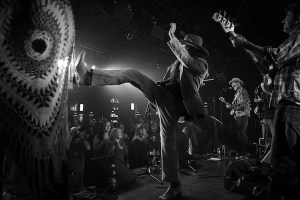

AH: You have a lot going on in your music. It’s definitely bluesy, but I can also hear the influences of New Orleans jazz, hints of zydeco and other influences, including a bit of Southern rock. All of these influences are apparent and almost feel like a cacophony of sound. Tell me about your music and your influences.
KC: I’ve been trying to make music that’s true to what I dig. To me, Cosmic Southern Soul—the southern soul elements are all of the southern forms of soul music. I’m from Alabama where the Muscle Shoals sound has been a huge influence. You might have seen Avalon Avenue, which I recorded in Muscle Shoals, Alabama. As the name suggests, Back to the Shoals, my new record was also recorded in Muscle Shoals at East Avalon Recorders studio. That’s the Alabama connection. In Nashville, the soul and R&B sounds of Stax Records have also been a huge influence on me.
New Orleans music is all its own flavor, which has influenced my music, especially the production style of Allen Toussaint. That’s what I hear when I hear what music should sound like. Dr. John and the Meters, Lee Dorsey, Professor Longhair, James Booker, and the Neville Brothers all reflect that New Orleans sound.
And then there’s the Mississippi Delta blues. I went to Austin for 6 years and that was a huge part of my sound. Texas electric blues and Western swing influenced me out there.
The idea of cosmic is just tuning into the cosmos. My lyrics are very intentional, and they are about my basic overall concept is that everyone is One—we are all one and we all affect each other. So, to me it’s about tuning into the cosmos. My lyrics are about positivity or picking a person who maybe is real or imagined and telling a story.
A lot of people brand themselves as troubadours. A troubadour is a storyteller. Yeah man, that’s what I try to do is tell stories about people I meet along the way or stories that I hear. Take the song “The Queen of New Orleans” on my album, Avelon Avenue. This is about the woman who invented the lap dance. I heard that story on NPR and there’s a book about her. I love writing a song that’s real.
[Video “The Queen of New Orleans”

AH: Talk about the challenges you have faced as an independent artist in releasing your music.
KC: Music platforms report that about 150,000 songs are released every day. For the truly independent artist, it’s a question of how do you cut through the noise, you know?
A lot of my energy has been focused on trying to get money for radio promos and working with label A&R (artist and repertoire) people I know. I haven’t found a label to work with yet, at least not one that I thought would do anything moneywise.
Mainstream success, with someone like Riley Greene, is elusive. What that takes is money. That is not as easy to come by, especially these days with a business like a record label which is really just providing a loan. To convince a record label that you deserve money to put towards your art is a challenge. It’s not the best art that rises to the top. Sometimes the best artists are not appreciated until they pass away. Really, it’s about marketability.
I’m working very hard to boost my social media presence with my Facebook, Instagram, TikTok and YouTube channels. I’ve got music out there that represents how I sound. I’ve released enough to know that releasing music independently is like a tree falling in the forest. Who hears it?
The bottom line to the answer of getting a broader presence comes down to money. Anybody that you hear nationally in a big context has had a lot of money put into them. And I just haven’t found that money person. So, the short answer now is that I’m at the mercy of trying to find promotion.
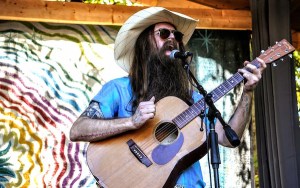

AH: Your newest song, “Not a Good Place to Be,” has an amazingly diverse sound, with brass, saxophone, instrumentals and choruses contributing to the overall mix. Tell me about the musicians supporting your music.
KC: There was a bit of serendipity on this. I was on tour with some Nashville local cats that I play with a lot. I had Al Johnson, drummer with me, James Sonnentag on keys and a bass player I’ve never used before, Lawrence Rogers. I was on tour as a quartet. We played a show in Muscle Shoals and the next day I had a show scheduled in Birmingham. However, Charles Holloman, who owns East Avalon Recorders in Muscle Shoals, came out to the show and said that he had a session that cancelled that day and that I could come record something. Despite having to travel to Birmingham, I wasn’t going to pass up on that offer. I just reviewed my song notes (I always have all of these song notes with me) for “Not a Good Place to Be” and, while that song wasn’t complete, we had enough to lay down some tracks.
I went in with those cats and I did the basic tracking at East Avalon in Muscle Shoals. I brought those tracks back to Nashville and I slowly pieced the rest together with players around town and recorded it here in my studio.
Nalani Rothrock, an outstanding singer, does the background vocals. I gig with her a lot. She was on my Joe Cocker “Mad Dogs and Englishmen” tribute. Will Hawley, who plays trombone, wrote the horns arrangement, which was recorded here. Will also wound up playing the trumpet as well. Nathan McLeod was on saxophone. There’s a guitar player I use a lot who’s a beast, Yannie Reynecke. He is a savant on the guitar. I took him over to the studio and had him track some slide guitar on a cool rhythm part on the song.
One of the other things I’ve done is make records with a lot of awesome local musical talents. I’ve got an Austin record, I have an LA record, I have a Nashville record. I’ve got this Muscle Shoals record. On all of those my vision was to use the players of the city.
People talk about music towns but one thing they overlook is the talent of the studio house band, such as Booker T and the MG’s at Stax, or the Swampers and the Fame Gang at Muscle Shoals. Someone might say “I want to get the Muscle Shoals sound,” but part of that sound is having legendary people like David Hood on bass. I got him on my Back to Muscle Shoals record along with Clayton Ivey and Ed Greene, a drummer who worked with Hall & Oates and Barry White.
That’s what I’m trying to do. The musicians make the track. Wherever the studio is, you can say there’s something in the water that led to those players getting that feel playing together. Certainly, the engineer plays a huge part and the gear. But a big part of the magic that sometimes people don’t realize is the people who play on the song.
AH: Tell me about the Nashville music scene.
KC: I feel like you can divide Nashville up into sections divided by the Cumberland River. On the downtown side of the Cumberland River, and particularly if you go to Music Row, that’s where the most money is being made. People call the music there country music, but really its pop music now. Country music is huge, but you know what’s crazy? The most music now being made in this town is with CCM, Christian Contemporary Music. That’s becoming one of the biggest money makers in town.
To me, it’s all about the song and the artist. The song and the artist don’t have to come together. It’s all about finding a marketable person and the right song. A lot of people say that when you come to Nashville, if you are pursuing the Music Row dream, you have to decide whether you are trying to become a songwriter or a recording artist. You have to work that avenue.
Co-writing is huge on Music Row. If you come to Nashville and want to be a working songwriter, then you want a publishing deal. You get an advance and a salary and it’s your job to write songs to earn that salary back, pay off the loan. Then you can start pulling in money once you split your publishing revenues. You get on a writing schedule, and your publishing company is going to team you up with writers. All day long you’re going to do co-writes. Whoever has a number one hit song, everyone is going to want to do a co-write with that person. I have friends who have had number one hits and the way they got them was to be able to co-write with someone who already had a number one hit.
For someone coming to Nashville to write, a lot of times they won’t necessarily be a singer or a performer, but they will have the gift of the pen.
When I came to Nashville, I’ve never had so many people ask me if I wanted to co-write with them—it was crazy. I would do the writers in the round sessions, and someone would say “do you want to co-write?” That never happened in Austin. I never thought about writing with anyone other than myself.
The antithesis of Music Row is on the East side of the Cumberland River—that’s the Americana scene. That’s really where the true country sound lies. For instance, pedal steel was an instrument that was invented here to serve country music but if you listen to Top 10 Country radio these days, you probably won’t hear much pedal steel. But if you pull up the Americana charts, that’s where you will hear country music that incorporates fiddle and pedal steel and has the country grooves.
To me, that’s the difference in the east. If you are in the Americana scene, usually you find fully formed artists who are writing the songs and performing them. There may be some co-writes there.
If you want to cut Nashville in the middle, you have Lower Broadway, which is a very interesting beast. I’ve been gigging a lot on Broadway. It’s the only place where I can go and do an 11:00 am shift and walk away with several hundred dollars for yourself. That’s not normal for most towns. Music is being programmed every day from about 10:30 or 11:00 am when the first shift starts at a bar on Broadway with some bars going until 2:00 am or 3:00 am on weekends. That is what’s unique about Nashville.
They say the art of mastery requires you to put in your 10,000 hours to master something. A lot of performers will come to Broadway and put in their 10,000 hours. Playing on Broadway creates a very unique skill set. The game on Broadway is about taking requests. You are watching a band learn a song on the spot to earn tips.
While not every band is great on Broadway, there are some brilliant musicians mixed in there. When I save musicians on my phone, if they are playing on Broadway, I will note that. Many players who started on Broadway have gone on to make a huge name for themselves. Just look at Daniel Donato, for example. He is developing a huge national following, and he started as a teenager at Robert’s Western World on Lower Broadway.
No doubt, Nashville has more gigs to play than any other city. If you are going to be a gigging musician, there is no town with more gigs available.
AH: You have a YouTube channel and a podcast with a bunch of episodes. Tell me about “King Corduroy Presents.”
KC: I’ve always enjoyed doing interviews since my college education in broadcasting and journalism. It’s just a skill set that I knew I had and that’s what I felt like doing. My original concept was to have conversations about the music industry with artist friends. I go in depth with music theory sometimes and then I perform with them.
Initially, I thought I would only have musicians, but that branched out. I’ve had a comedian on. I’ve had Patrick Clifford who is a legendary music label A&R (artists and repertoire) guy. Initially I was asking friends to appear but now I’m having people reach out to me to appear on my channel.
I found a co-workspace in downtown Nashville with an office that I built out into a recording studio and a set where you can see that I’m sitting. It took me about 6 months to get the room built out because of budget constraints.
I’m a one-stop shop for my podcast. I’m the director and the producer. I’m operating all the cameras, lighting, and sound from my seat while I’m giving the interview. I have been able to use all of the training I’ve taken over the years, including audio engineering, lighting, production, and video editing and use those skills for my podcast.
My podcast has helped me in a lot of ways. I realize this is a cool way to network with people as well as to show the skill sets I have to offer other musicians that go beyond being a singer-songwriter.
My YouTube channel is part of my effort to build my social media presence and to create more of a following. Advice I’ve often received from people is that everyone breaks online or builds a following online. Record labels don’t want to do artist development anymore—they want a sure thing. It doesn’t matter if you are talented or have good music. It’s like “what else?” How many people buy your album? How many followers do you have?
It’s been very validating for me to get followers and then to figure out how to monetize it with a sponsor.
AH: What other projects are you currently working on?
KC: I’ve been giving private tours of Nashville for years. I used to give them in my van, but I bought a classic car from an old friend of mine—a 1961 Cadillac Sedan DeVille. After quite a bit of work, I got the Caddy running for my tours. I have GoPros for the car and I recently posted a video on my YouTube channel where I drove around during the Country Music Awards so viewers could experience CMA. I’ve put a lot of energy into building that.
The company that sponsors my podcast, Nashville Custom Hats, opened a hat shop on Printer’s Alley. I specialize in the history of Printer’s Alley, which I’ve studied for years. It’s very small and is the least documented place in Nashville—there is so much history there.
They asked me if I would work in the hat shop and they hired me to be the face of their store and to manage their TikTok account. I post daily TikTok videos talking about the store and the history of Printer’s Alley.
I also gig on Broadway on Mondays at Redemption Bar and I pick up extra gigs from time to time. Redemption Bar is Ashley McBryde’s bar on the 5th floor of Eric Church’s Chief’s. Ashley McBryde wants working songwriters who play their own music. It’s a small listening room and it’s the quietest room on Broadway, which is great for me. They pay well and it gives me the chance to not just be a jukebox.
With all of these things going on, I feel like there is not enough time in the day for me to accomplish everything I want. But, yeah man, it’s all good and it’s keeping me busy. Good things keep happening.
It’s easy to become discouraged so it’s good for me to have other avenues in which I can be creative that correlate with my music.
[Video—“All Right”

Check out King Corduroy’s music on streaming platforms and keep an eye out for his new releases. For news about King Corduroy, visit his website: https://kingcorduroy.com/
Also please visit King Corduroy’s social media channels, give him a like and a follow.
YouTube: King Corduroy Presents
Instagram, Facebook, and TikTok: @kingcorduroy
All photographs courtesy of King Corduroy
Related articles
Song Premiere: King Corduroy’s “The Queen of New Orleans” from Avalon Ave prod. Jimbo Hart
https://americanahighways.org/2019/08/02/song-premiere-king-corduroys-the-queen-of-new-orleans-from-avalon-ave-prod-jimbo-hart/