



Sophie Gault on the Brutal Honesty and Live Rock ‘n Roll of Unhinged
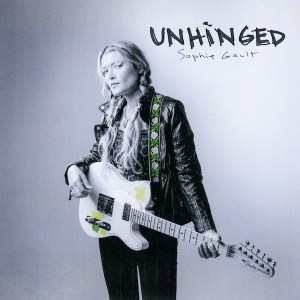
Singer/songwriter Sophie Gault’s new album, Unhinged, arrives on January 23rd, her first with a new label. It builds on years on songwriting and live playing, drawing both on songs that were written very recently, like the title track, songs that were written years ago, and songs that she’s been covering in live sets until they are deeply personal renditions. The approach was to bring her live performance into the studio with a first-class band, and to capture a defiant energy along with a rock ‘n roll sound.
The result is an album that cannot fail to move you, and inspire you to speak out and acknowledge your own frustrations and emotions. It may even inspire you to try to help build a better world where communication is key. This album acknowledges that sometimes taking those steps feels a little “unhinged,” or may seem so in a world that can be a little too staid and quiet for our own good. I spoke with Sophie Gault about the shake-ups in her life that shaped this album and the key idea of brutal honesty that plays a role throughout Unhinged.

Americana Highways: How long has the road to this album been for you? Are you someone who’s always working on music, or did you know were working towards an album?
Sophie Gault: I’m always working towards an album. I’m very album-focused. I just like listening to albums. I know the current industry isn’t like that, and people are more into singles, as really distracted listeners. But that’s how I like listening, to albums. I was going to go into the studio with my band late last year [2024], and that’s when I kind of got dropped by my label, and Alex Torrez stepped in, so I could be on his label [Torrez Music Group]. So I switched gears, and started working on a different album with him. And that is this album.
AH: I’m so glad that he was around and able to help you with this transition. I’ve known a lot of people who go through that shake up and it really sucks.
SG: It does. Once you’ve becoming doing it a certain amount of time, making albums, it becomes something you really hang onto, and it keeps you going. Then, to all of the sudden not having funding, you think, “Oh, shit, what am I going to do now?” [Laughs]
AH: Did that affect what songs you worked on? Was it a very different album after that?
SG: Yes. The album I was going to make was going to be a different vibe completely. Regarding this album, Alex had seen me play a show where I played that Robert Johnson song, “Stop Breaking Down,” which I’d been playing since high school, and it’s something I play every once in a while. And he loved the sound, and said, “You sound unhinged when you play stuff like that!” I thought, “I’m going to use that.” So I wrote a song called, “Unhinged.” It sort of became this whole other concept for an album. He wanted to explore the more Rock ‘n Roll side of what I do, so that’s what we did.
AH: I’m sorry for the difficulties, but I like the result, as both a rock and Americana person, myself. I really like the attitude of the album and something about the energy of it is very accomplished, but it’s also not overly packaged or commodified. This is not elevator music.
SG: That was the whole point and the concept. I think Alex was very smart in going that way. He heard me play in a little dive bar, and he thought, “We’re just going to do that with a great band and great songs.” We didn’t have much pre-production, we just went in there and did the songs live. We did a couple takes of each song. I was singing live with the band, and whatever came out, came out. That was it. But we had some of the most sought-after session musicians. When you play with them, you feel really safe. They are totally going to hold it down, and it empowers me, as a singer. They are just so solid.
AH: How much had they heard before the recording sessions?
SG: We just went through, and I played the scratch recordings that I had on my phone, and we’d listen through one time. The bass player would chart everything out really quick, with Nashville numbers, made copies, and then we’d get the song done in under an hour.

AH: That’s amazing. The emotion behind the vocals is so strong and important, too. There’s humor, too, but the emotion is so key. Do you have to be in a particular headspace to perform them for recording? Is that ever difficult to get to the right place at the right moment?
SG: We started out by recording the song “Unhinged,” and that was at like ten in the morning! That one was a little hard for me to get into. Because I’m trying to get into a frame of mind where I’m in a bar late at night, and so I sing late at night. I get into a different character when I’m doing that. To come into a well-lit studio, and all studios are more or less sterile, it’s hard to get vibey. Around the time it hit four or five, I had a little whisky to help me with some of the songs! [Laughs] I just have to put myself in the right place, and it has been emotional.
There have been some pent-up frustrations for me about making music, and this is my third album. You get all these people telling you what to do, and what not to do. “Don’t do this, don’t do that.” It gets so frustrating. I think on this album, I was able to just cut loose, and just have fun with it, and basically say, “Fuck you all! I can do whatever I want!”
AH: And to say, “Here’s what I have to say!” I’ve spoken to people who have gone through these transitions and then have written very personal and explosive albums. You have to be brave, I think, because you’re saying things without being sure how others will react.
SG: Oh, yeah, I don’t really care what people think. All of my heroes have not cared what people thought. Over time, you have to work out what works, and what doesn’t. You don’t really have to follow any rules. Playing it safe, I think, has never really done anyone any favors.
AH: In that way, this album feels empowering for the listener, because that attitude is infectious. I do feel like I can see what you mean about certain characters, too. These are certain characters, and certain situations. Like “Chestnut Street” has a big narrative. I really like that song a lot, and I got really emotionally caught up in it because it’s so recognizable. It’s one of the most frustrating adult situations to have a lack of clarity in a relationship.
SG: Right, it’s always about love, and about heartbreak! Unrequited love, and all this bullshit, that’s a big one. I was listening to a lot of Lydia Loveless, Indestructible Machine, when I wrote that song, who I just recently got to play a show with, and it was a kind of full-circle moment. I was in college when I was listening to it, and getting my heart broken by all these guys, and writing songs like that. It was nice to pull that one out from the vault and play it with a real band!
AH: It’s so freakin’ relevant. It made me think of that word I see on social media a lot, “situationship.” Like, “I’m in a situationship.” There’s no clear relationship status.
SG: Situationship! Exactly.
AH: It’s cool how grounded the song is in a geography, in a place, too, with people gossiping. It’s outside and inside.
SG: Absolutely. I was trying to go for that kind of imagery. I was trying to figure out how to write songs like that, and I was in American Lit class, actually, at the time, and was not paying attention at all to what the professor was saying. I don’t think I got a very good grade in that class, but I did write that song! I think that’s pretty American Lit of me! [Laughs]
AH: It is very American Lit! It’s like a kind of short-story. It’s got the same attitude as other songs on the album, because it’s calling things out.
SG: Yes, it’s being brutally honest. And I think all of these songs are. If there’s a theme, it’s just brutal honesty, whatever you might think people are thinking, no matter what people might say. It’s coming out and saying, “We need more of that.” There’s a lot of timidness now in American culture, where people are afraid to say what they feel. It’s going to hit a tipping point, I think, because we’re all on social media, and texting. Face-to-face interaction is something that needs to be more emphasized, I feel like.
AH: Absolutely. Hopefully, there will be a counter-movement. I see what you mean because you can get so polite, in life, that nothing real ever gets communicated. You start to wrap everything in bubble wrap, you’re so careful. That can come from good motives, but it can go too far. It’s particularly true that women are encouraged to be peace-makers and never rock the boat. So it’s great to see a female artist writing songs like this, saying, “This is what’s inside me! This is what people tell me not to say!”
SG: It’s so true. It’s ridiculous that industry people are not on the same page, recognizing that these are the things that we need to say now. Even back in the 1960s, look at what people were writing about! Have we not learned anything? It strikes me as so backwards-thinking, and counter-intuitive to hold back. So many successful people nowadays are writing the most detailed, emotional, revealing things. Risk-taking is what it’s all about, now, and maybe it always has been.
AH: I love looking at the 1960s and 1970s because I feel like they were out there on the edge, pushing stuff, in a way that we aren’t always doing now. One thing about all the social media stuff that there is a counter-reaction looking for authenticity. I think the live aspect of how you recorded this album and the attitude that you’re conveying fits that.
SG: I hope so. You never know what’s going to land. It’s a bit like the Wild West out there!
AH: Something about being a bit defiant is that it feels hopeful, as well. We’re living in very hard times. A song like “Love’s Gonna Live Here” is really brave, in that context, but really refreshing.
SG: That’s a good one. That’s a Buck Owens cover that I’ve been doing for a few years, and I thought the same thing. I thought, “These times, we really need a song like that.” It kind of fits in with a lot of the songs that I write, too, saying “Always go back to the love. Where’s the love? They can’t take your love away from you, from inside your soul.” No matter how bad things get, we can always be kind to each other, and try to connect. Alex sequenced the album, and I think starting with that song was a good choice.
AH: We know a lot of things in life, but we have to be reminded of them sometimes. That whole song touches base in a similar way. What are the things we need to be reminded of? It’s almost like a mantra. We leave the frustration for a minute, and come back to an affirmation about what we want. All of these songs have amazing openings, and lead-ins! The rocking opening to that song is great.
SG: Thank you! There are 15 seconds, and you have to decide how you want to start it. I think that one sounded pretty great.
AH: The idea of “love is going to live here again” and it being combined with a rocking sound is cool. It feels like a strong assertion. Was that song fun to sing, since it was on the more positive side?
SG: It was really fun to sing. It just feels so good to play music like that. Like you said, it feels defiant, especially in these times. Love’s gonna live here again, and I’m going to tell you how it’s going to be! It felt really powerful, for sure.
Thanks very much for chatting with us, Sophie Gault. More information is available here on her website: https://www.sophiegault.com/
Enjoy some of our previous coverage here: Video Premiere: Sophie and the Broken Things “Heavy Metal”