


Tom Paxton photo by Michael G. Stewart
Tom Paxton Talks Clowns, Defining Folk Music, and Bluegrass Sings Paxton
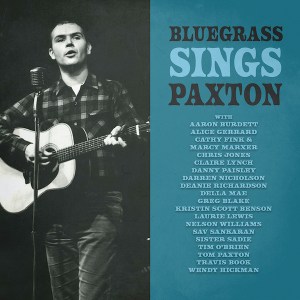

Folk artist Tom Paxton’s huge catalog of original music has only very occasionally been taken up by bluegrass musicians, finding emotive avenues to explore his compositions in new ways. But now, the new album Bluegrass Sings Paxton has begun the process of translation and engagement in a powerful way. Unsurprisingly, a host of highly accomplished musicians eagerly took part, some of whom include: Della Mae, Greg Blake, Aaron Burdett, Alice Gerrard, Laurie Lewis, Tim O’Brien, Cathy Fink & Marcy Marxer, and Chris Jones.
Co-producers Cathy Fink and Jon Weisberger were instrumental in putting the record together, bringing together the many pieces of the whole in their determination to bring Paxton’s songs to new life in bluegrass. Paxton, whose interest in bluegrass goes back many decades, was delighted by the outcome, and also performed on the track “I Can’t Help But Wonder (Where I’m Bound).” I spoke with Tom Paxton about his untold history with bluegrass, the mixed-genre scene he found typical in his early folk days, and why musical performance is much more terrifying than his original career choice of acting.

Americana Highways: What’s your personal secret history with bluegrass? I don’t think that’s well-known.
Tom Paxton: When I first started, I played for the first time ever in Washington, D.C. and I live, now in Alexandria, Virginia. I played at a club called The Shadows. The stars of the show were Ian and Silvio. I was just becoming friends with them. One night, between sets, we ran up the street, about three blocks, to a bar, and in the bar was playing The Country Gentlemen. They are absolutely classic, a foundational bluegrass group. That was my introduction to bluegrass. I just thought they were superb. What got me was the virtuosity that everyone had on their instruments. That’s what bluegrass is all about, is virtuosity. If you can’t really cut that thing, you don’t belong there. They certainly passed that test!
I hated pedal steel when I was a high schooler. I just thought it was so corny! Now I just love it. The same thing with the mandolin! For quite a while, I had a master musician playing with me, Robin Bullock. We played a date in Nashville at a music store, with vintage instruments. He came up to me before the show, and said, “I found a mandolin for $75,000.” I said, “Is it worth it?” He said, “If I had it, I’d have it.” [Laughs]
AH: Thank you for sharing that story of your first bluegrass concert. It seems like “unsung history” for you.
TP: It is. But what happened next is that in Greenwich Village, I heart Flatt & Scruggs. I got out of the army in 1960. It was September, and I heard Flatt & Scruggs, and their opening act was a bare-footed Joan Baez. My God, that was a great concert! In those days, with some of the bluegrass bands, the bass player was dressed as a clown. That was pretty common.
AH: How strange. Why is that?
TP: I don’t know! It must have been on its last legs as a tradition before someone said, “Hell, no! I’m not dressing like that!” [Laughs] Now, people kind of disbelieve that it happened, but you’ll see if you look at some pictures of the old days.
AH: That’s a whole new level of indignity for the bass players!
TP: Yes! [Laughs] “You mean I have to wear that??” “Yep! That’s the way we do it here!”
AH: You said that you didn’t like mandolin or pedal steel as a teenager, but were you coming across other types of traditional music that interested you back then?
TP: In Oklahoma, Country music was very big on the radio. People listened to country music from childhood, right on through. There were some great singers on the radio in those days. It was kind of a heyday, with Hank Williams, Ray Price, and people like that. But I didn’t care for it. I liked classics and pop music. Simultaneously, I was liking stuff that my friends liked, but I also had this little corner of my heart for Folk music. I didn’t hear much of it. I’d hear Burl Ives on the radio sometimes, and I got a few of his records. But my ears would kind of prick up when I heard something like that.
I was learning a few folk songs on the guitar, and then I went to University of Oklahoma, to become an actor. I tell people, “I started out wanting to be an actor, but I thought better of it, and went for the security of folk music!” [Laughs] I was learning Folk songs down there, and one day, I heard The Weavers at Carnegie Hall, and that did it. From then on, all I could think of was folk music. So it was kind of by the side-door that I found bluegrass. In the old days in Greenwich village, bluegrass was side-by-side with folk music.

AH: I was wondering if that was true. There’s a lot of timing overlap that made me think that might be the case.
TP: Yes! You’d have a concert in Greenwich Village, and there’d be a bluegrass group, a folk singer, someone singing Israeli songs, and everybody enjoyed that kind of stuff. You got all of it! It was later on that things began to narrow down and specialize. Then you’d have just blues, or just bluegrass. I miss the days when we’d have everything, kind of a smorgasbord.
AH: At a club like this, would it just be whoever wanted to get up to play and could play would do so? Was there no sense of trying to put together a certain musical focus for the night?
TP: In the clubs, it would be whoever was there to play. There wasn’t any thought or programming philosophy that we were going to have just Cowboy songs, or only blues tonight. That never happened. People had a talent and a style, and the style came with the talent. They’d hire this guy, or this girl, and what they did was what they did.

AH: I feel like that presupposes a certain etiquette from the audience that they will have a willingness to listen to something they might not have heard before.
TP: That presupposes, doesn’t it? Yes.
AH: That suggests that the vibe of the audience was a certain eagerness to hear new things, or just hear some energetic live performances, whatever that might be.
TP: Yes. It kind of goes along with my long worked-out definition of folk music is. You used to be able to practically get in a fist fight about what folk music was. My definition now, and that includes bluegrass, is that folk music, to me, is music made by people who mainly do something else for a living. It’s part-time music. It’s front porch music. It’s music that a truck driver picks up when he comes home from a trip. He’s got an old Gibson that his dad gave him, and he’ll play a few songs on it. Some people play more than a few songs, and some people, starting in the 20th century, go out and get paid for it. Until the 20th century, nobody got paid for playing folk songs.
AH: Right, I can definitely see how that’s true. It seems like if someone has another life of work and responsibilities, and sometimes plays folk music, the experiences that they have in one life will influence the other. That will color the music.
TP: Oh, they are bound to. It might take a musicologist to spot that. If a heart surgeon sang folk songs in his leisure time, by his choice of songs, would we be able to tell he was a heart surgeon? [Laughs]
AH: I’m sure for the people who write folk music, other parts of their lives inform it, too.
TP: I tell people, when I’m teach songwriting, to search for topics. When they come up with nothing but relationship songs, it drives me crazy. I tell them, “Look, when you leave here, today, pick up today’s newspaper. Go through it with a fine-toothed comb, and find something that moves you in any way! Then put yourself in that story and write it from the point of view of an eye witness, or from a participant in the story. That is going to do several things. It’s going to get you out of writing navel-gazing songs, and get you into the world. As Shakespeare’s Hamlet says to the players, ‘Hold the mirror up to nature.’ Then you’ll write stuff about the times you live in, and the lives going on around you, and you’ll have a chance of becoming some kind of artist.”
AH: You said that you initially wanted to be an actor. Does that mean that it was not hard for you, initially, to start standing up in front of people to play folk music?
TP: No, it was horrible! It is literally apples and oranges. The business of acting is to disappear into another life. As much as you can, you become the person you’re portraying, and to do that you have makeup, costume, words that are provided for you to say, and people to whom to say them, and it’s all about getting as far into someone else as you could possibly get. With performing [music], it’s all about remaining yourself under horrible conditions. [Laughs]
As my friend Bob Gibson once said, “They set up all the chairs facing you, the only light is on you, and they put a microphone in front of you to amplify whatever you say or sing, and then they tell you to go ahead and be yourself.” The first time I performed, I was terrified. My knees were shaking. I had nothing to hide behind! That’s the difference. You learn how to present an edited version of who you really are.
AH: What do you think of this new collection, when you see it? Are you surprised by what songs people performed or how they turned out?
TP: I want it to happen again! I like this album so much that I want to do another one.
AH: How did the songs get picked?
TP: I think that Jon [Weisberger] and Cathy [Fink} basically picked the songs, and in a few cases, the artists jumped in and got dibs. I don’t know exactly how they chose who was going to sing what.
AH: It’s no small thing to involve a lot of people in a project, so it’s impressive how many people took part.
TP: It’s like herding cats! But apparently that part went very smoothly. It didn’t take that long. It took about a year and a half until album was in hand. I might be underestimating, but it was two years at most.
AH: What did you start to hear? Did you get recordings to listen to?
TP: Well, I heard one right away, because I was on it! That was a lot of fun to do. A couple of times, they sent me rough mixes, which weren’t all that dissimilar to the final mixes, and I was knocked out. The one that I wrote with Susan Graham White, “The Same River Twice,” and I sent it to Susan, who lives along the Chesapeake, and she was thrilled! We wrote that song about twenty years ago.
AH: For you, does this feel like newborn versions of these songs?
TP: I’ll tell you what I never found myself saying, “Well, they didn’t quite understand that song, did they?” I never got that feeling. It sounded to me like they had been singing that song for some time, which is not so, of course. They had no visible problems connecting to the songs that they were singing.
AH: The album really feels like they made big emotional connections with the songs every time.
TP: You know what would tickle me the most? If one of the artists on this album started doing one of the other songs on the album in their shows. That would be fun.
AH: That could happen easily. It’s a little bit like these songs have now been translated into another language. Now bluegrass artists can take these songs and bring them into live performance. That seems like a significant idea behind this album. It opens the doors.
TP: That would be so much fun.
Thanks very much for speaking with us, Tom Paxton. Discover more here on his website: https://www.tompaxton.com/
Enjoy our previous coverage of Tom Paxton here: REVIEW: John McCutcheon & Tom Paxton “Together”