


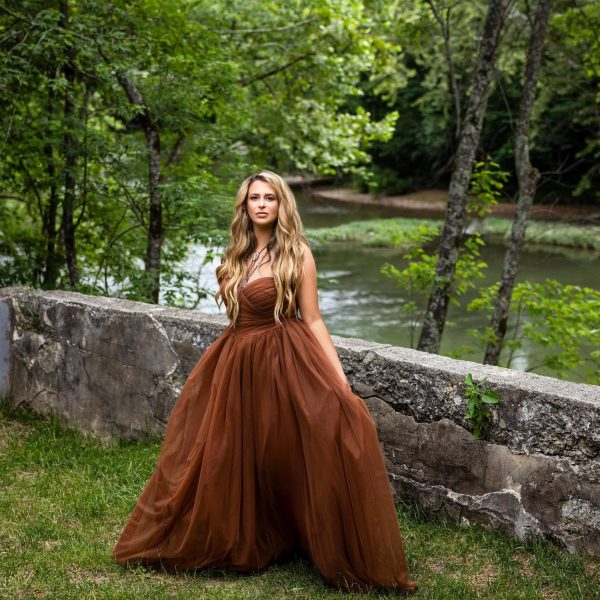
Ana Cristina Cash Shares Reflections on Loretta Lynn with Haunting Tribute “The Harpeth River”
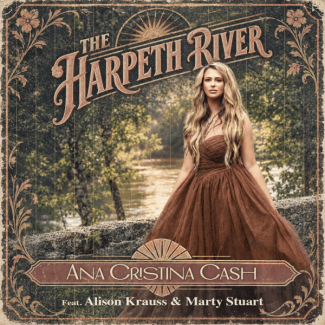

Country and Latin vocalist and singer/songwriter Ana Cristina Cash released a new song, “The Harpeth River,” on November 6th, 2026, which features Alison Krauss and Marty Stuart. A video also accompanied the track. Written by Ana and her husband, John Carter Cash, who also produced it, “The Harpeth River” was prompted by a special reflection on the life and personality of their close friend Loretta Lynn. Through the use of such universal imagery, blended with memories and affection, the song takes on a haunting quality and a universal feeling of processing grief and finding joy in the connections we have shared.
Ana Cristina Cash was raised in Miami, where she started performing in childhood on Sábado Gigante and began a career with Sony Music Latin as a young teenager. She records and performs in multiple languages, has made 17 Grand Ole Opry appearances, and has made Nashville her home for over ten years. Her latest solo album is Shine from Avondale Recordings. She has several events coming up where she’ll perform her new song, including the Grand Ole Opry this week, where it will make its live debut. I spoke with Ana Cristina Cash about the way water often works its way into songs about our human lives, her personal memories of Loretta Lynn, and how she and John Carter Cash set about recording “The Harpeth River.”
Americana Highways: My first reaction to hearing about “Harpeth River” was thinking of all the poetry and songs that have to do with rivers and oceans that we have had over so many centuries, in so many cultures. That’s such a universal, special thing.
Ana Cristina Cash: Yes, I’ve always been attached to water my entire life, even just growing up near a body of water in South Florida. I feel like water is powerful, water is mystical. I’ve always been kind of enchanted by rivers. There’s so much to unpack there.
AH: That’s so true. And people gather near water, for community events, and for livelihood. It’s where life happens, so the human story is just as important as the elemental story.
ACC: I agree. For thousands of years, people have been settling near bodies of water, so it’s an important part of life.
AH: I heard that this song really started with the music for you, on your guitar. How did that come about?
ACC: Yes, I was playing my guitar. Actually, this was before Loretta’s passing, I started working on the melody, and then it got converted into something else. I was really outside in nature. While I wasn’t by the water, I do live in Bellevue, Tennessee, and the Harpeth River is very close to where I live. I had that imagery, and I was with my guitar, staring out at the trees, and I started on what became the verse chords. At the beginning, I had several words, and you hear at them at the beginning of the song, “The river learns, The river writes, It writes the song that tells your life.” I wanted to open and close the song with that. I felt that was all-encompassing, and the circle of life. I remembered that water has memory.
It’s funny, but what inspired that idea of water having memory is that I thought about skipping rocks as a child, and the way the ripples get bigger and smaller, and also in the movie Frozen 2, Olaf says something that stuck with me, and the whole movie revolves around it. He says, “Water has memory.” As silly as that is, my daughter was much younger at the time, and my son was a baby, and I was watching that a lot. I thought, “Wow, that sticks.” That’s kind of what inspired such a profound thing.
AH: These things come at us from life, all around us, and we pick up on what has personal meaning for us, particularly in creative work.
ACC: Yes! Well, with the song, time passed, and I was holding onto it. Then, I played the melody for John, with some of the lyrics, and Loretta had passed as well. We had the idea of converting it into something that would honor her life as well. A lot of what I had originally done lended itself to that. The title of the song had always been “The Harpeth River,” but we did not know that the river also connected through her property in Hurricane Mills, so it was very much meant to be. Loretta Lynn had known my husband, John Carter Cash, since he was a baby. Of course, his parents are Johnny Cash, and June Carter Cash, and she’d babysit him when he was a kid. And then he worked on so many of her later records over the years. By default, I had the chance to work with her, and coach her through her vocals in her later life, and work with her in the studio. She became my friend, and we were profoundly sad when she passed away.
It was a few months before she passed that we had visited her at Hurricane Mills. We visited her, we sat with her by her bed. We saw Tim Cobb for the last time, her dressmaker who I do talk about in the lyrics of the song, at the end. I do reference Tim, not by name, but by his actions. He passed away shortly after Loretta, so we were all dumbfounded by that. They were extremely close, spiritually close, you could tell. They were close to the point that he left us, not long after. When writing the song, that really struck me as well, how odd that was. There’s that part, “Perhaps he’ll sew you a twinkling gown, from every star in the Milky Way.” She had these famously glittering, beautiful, long dresses.
AH: Oh, yes, she did. I think a lot of people think of those fabulous gowns when they think of Loretta.
ACC: Tim made a lot of those, and he did her makeup. He got her ready for a lot of shows. And I think he lived on the Hurricane Mills property, as well. That was all special to me. When John and I were tweaking this song together, I always had that vision of her, walking through that orchard, with a glittering gown, very much like a Muse, surrounded by nature. There was the water, as well.
And from the beginning of strumming the chords, I thought of Alison Krauss immediately. And she’s a friend of ours. I said, “John, I really hear Alison on the song.” He said, “You should reach out to her, we are friends!” [Laughs] But I was still intimidated, even though we are friends, because she’s an over 27 time Grammy award winner. But we worked on a show together in 2018 where we sang Johnny Cash songs. We really bonded on that show, so I did eventually feel comfortable asking her. She was so cool, and said, “Yes.” And she came in to record, so she does all the responses in the verses, and not just the chorus harmony. So it’s important to pay attention to the second verse, as well. She also sings on the beginning a cappella portions. It’s very close to my vocal, too, sometimes, so it’s hard to tell that’s her.
Then there’s Marty [Stuart], who’s been a family friend of ours for a long time, and I thought of him before we tracked mandolin. Marty is one of the best mandolin players ever, and then we also asked him to sing on the chorus. He sounded so great on that as well. I feel so blessed to have him on this track, to have him join me. This is probably one of my favorite singles I’ve released in a long time. It’s definitely one of the most meaningful songs I’ve ever released.
AH: It’s just so personal as well. I think it’s an amazing blend of the personal and the accessible. There’s the added aspect that this wasn’t just a personal friend of yours who is relatively unknown, but it’s about someone that a lot of people know about, but didn’t have that personal experience of her like you have had. You share that.
ACC: That’s correct. I don’t come from the point of the view of a fan. I’ve heard a lot of people write songs about Dolly, or about Loretta, more from the perspective of a fan. I really feel like the voice and the narrative in this song is more personal because it’s a direct friendship, and that is very special.
AH: It’s an insider experience of her as a person that allows everyone to celebrate her in a different way. It made me think of the friends and family who have impacted my life. She seems almost like a family member to you in the song.
ACC: One hundred percent. She was so real, she was so funny. Her lyrics were always clever. One of the wise things she passed on to me, and she championed several female artists, so she may have said this to others, was: “Honey, you’ve got to have a gimmick or a trick when you’re writing songs.” She did things like that. She had a song called “White Christmas Blue,” which was a twist. She was extremely intelligent and clever.
AH: The glittering gown in the song made me think of her inner beauty, but also her professionalism. That’s her chosen appearance and presentation, in these amazing dresses. Then I realized that this is a song by a woman about another woman. It has those little aspects of music tradition for women, too.
ACC: I hadn’t thought about that! For sure. In the production and as a co-writer, too, John was so in tune with the vision for this. When we heard it back, it took on a very haunting quality. Later, I did shoot a music video, and being in the water, being in nature, and experiencing the playback of the song, felt like a very haunting experience. At one point, I was in the water, in the dark, and it was very art-house.
AH: Wow! That’s intense.
ACC: It just felt like communing with nature. I don’t know how else to explain it. It was a very profound thing to make that video.
AH: Like you said, it’s almost a mystical thing that the river can convey. About half-way through the song, it occurred to me that sometimes I got a little bit of a Gospel feel from the song also. I don’t think that’s over-stated, but it put me in mind of the rivers that feature in Gospel music. People go for baptisms and gatherings, and they bring their needs to the river.
ACC: Yes! That is very intuitive because when creating the chorus, “Cleanse my soul in the Harpeth River, All my sorrows are gone,” that could easily go into any Gospel song. But it’s also about being purified, it’s about rebirth, it’s about starting over again, and all those things go hand-in-hand with the passing of somebody as well. It’s as if she’s reborn in many ways.
The other line that really gets me, though it doesn’t make me sad, is “On a jukebox from a bygone time, Saddest song you’ll ever hear.” That’s alluding to her early life, growing up, with her career starting in the 1960s, and the fact that she’s gone. I envisioned her voice on a jukebox and her early recordings.
AH: That’s definitely haunting, and sometimes we feel that when we listen to old recordings, the haunting of a previous time. When you were recording in the studio, what did you start with? What was the first thing you laid down?
ACC: The verses. I approach different songs in different ways, but to warm up for the choruses, which are usually a little bit more vocal heavy, a little bit more powerful, I try to track verses first. I can’t remember in this case if I did entire passes of the whole song straight through, which I sometimes do. I tend to start with the softer passages, since there’s a part of the register that gets tired if you start with choruses.
AH: There’s an interesting feeling of restraint in this song, I think. It’s gentle, even though there are more powerful bits to it. You don’t go full-on into solo power-vocal, which you easily could do. But I think that’s in keeping with the feeling of the song, which is quieter and more reflective.
ACC: That’s one hundred percent true. With the subject matter, it didn’t feel like a song that needed to be screamed, or needed to be showy. I felt like it needed to be a tasteful amount of chest-voice in the choruses, but not a bunch of runs that were distracting, that might distract from the story. I always envisioned the verses as being a little bit sweet, a bit more melodic, a bit more muted.
AH: What were the final elements that were added and tweaked on the song?
ACC: That was pedal steel with Paul Franklin, and I believe Marty was the very last touch. He came in and did that chorus vocal and the mandolin.
AH: There’s something about that mandolin that makes me think of the sound of water on rocks.
ACC: Yes! Paul also played dobro, as well, which I forgot to mention, as well as pedal steel. I love the dobro so much. I actually tracked autoharp. I played autoharp on this as well. I didn’t play it during the original session, I overdubbed it. I’m not a master autoharp player, though I’ve performed it live. I felt I did have the right to track it, and had the set up for that, so I did track autoharp.
AH: That’s wonderful and a personal touch. Do you have plans for performing this song live?
ACC: Yes, I’m performing it live on November 12th on The Grand Ole Opry. It’s making its debut there. I’m also performing for Backstage Access during CMA Week on November 16th in Cannery Row. So I’m going to be performing it quite a bit, and I know there will be other opportunities as well.
Thanks very much for chatting with us, Ana Cristina Cash. Find more information here on her website: https://anacristinacash.com/
Link to the song: https://ffm.to/theharpethriver