


Bill Kirchen On Connecting, Collaborating, and Cat Out of the Bag
Guitarist, songwriter, and touring musician Bill Kirchen is releasing his new album, Cat Out of the Bag, on May 22nd, and has plenty of tour dates lined up which will feature the new album. If you’re lucky enough to be in the region of Novato, California around that time, you can even take in a double-header concert where the second set consists of Bob Dylan music from 1964 and 1965 themed on the Newport Folk Festival. Kirchen, who plays a six string Telecaster, spent several years working on the new album via collaborations with several close friends, and he cast the net wide in terms of sound, allowing himself to experiment.
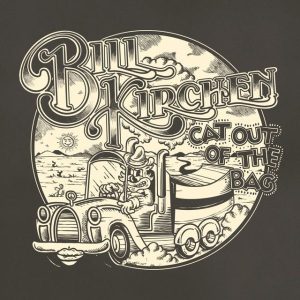

Kirchen, who was a co-founder of Commander Cody and His Lost Planet Airmen, also lost several friends over the intervening period, including very close friend and co-writer on half these tracks, Austin de Lone (Elvis Costello, Bonnie Raitt, Nick Lowe), and the album serves as a dedication to him and their work together. I spoke with Bill Kirchen about his experiences over the past few years, including building musical communities, valuing collaborators, and finally figuring out how to take a compliment.
Americana Highways: You have some shows related to the album release, don’t you, a double header on May 23rd in Novato, California, including some Dylan music?
Bill Kirchen: Yes, but really every show in May, once the album is available, will be an album release show, really. The story behind the release show is that I’d gone to Newport in 1964 and 1965 as a teenager, and I saw incredible stuff both years, including Bob Dylan at a really crucial time in his career. He debuted “Mr. Tambourine Man” in 1964, and went electric in 1965. I found myself “at the scene” of No Direction Home, which was really focused on the festival. So I got it in my head that I’d go and do a bunch of songs that I heard him do at Newport Festival in my memory of those years. It was a big turning point for me, so it’s easy to dig in.
AH: When you got ready to do that, do you decided to use your normal instruments, or did you change them based on what he used?
Bill: We did it with bass, drums, and guitar. I didn’t attempt to do the stuff acoustically. Given that he’d gone electric there, I felt that I had permission to play those songs. I was playing the same kind of guitar that Mike Bloomfield played at Newport, a Telecaster, so that was a fun connection there. I’m also relearning my new songs, because sometimes you know them in the studio, but you don’t really know them when you get out.
AH: I haven’t spoken with you in five years, actually, Bill, which was during the pandemic, and you were doing a tremendous amount online for fans, streaming and playing. You’re very active in keeping in touch with fans, whether online or in real life.
Bill: I consider them closer to being friends than fans in a lot of situations, since I’ve been doing this for so many years. That was the great thing about the livestream, is that it allowed me to connect with people all at once, all over. I eventually got to where, just looking at my iPhone, I felt I was really connecting with those people. My wife would write down all the names of people and where they were. Another thing about doing the livestream, it is allowed audiences to talk among themselves, and not just to me, about songs. I played a song by Blackie Farrell, and he was on the stream and they could talk with him. I miss livestreaming to the point that I may do it, just for the simultaneous contact.
AH: Well, what you were facilitating was people building up a music community together, sharing information and connections. I think you do that in other ways, with your in-person shows, and obviously that is incredibly important to you, or you wouldn’t continue to be so active out there.
Bill: It is important to me, and the pandemic shined a light on that. It turned out that I could live without people looking up and shouting how great I was every few minutes! Who knew! I just thought that I had a horrible personality disorder that required that. [Laughs] But we lost the sense of community during that time, and it really made me look at some things in my life.
AH: I think you’re naturally a great communicator about music, and I’m so glad that you’ve been able to keep going. There’s so much that people can learn about rock ‘n roll and appreciate, but they need the tools to do that. The more they can hear about music, the more tools they have.
Bill: That’s a good point, and that’s what I felt happened to me in 1964 and 1965. First, there was the music community in Ann Arbor, and then to go to Newport, I learned a lifetime’s worth about music that I otherwise wouldn’t have been exposed to, like the Staples Sisters, all kinds of Gospel, the Cambridge Folk singers, meeting all those people. Then there’d be a mountain band from the hills, and Mississippi John Hurt, a Piedmont player, and another one of my heroes. I kind of went there to see Dylan and Mississippi John Hurt, and saw the rest of the world at that time.
AH: How did you get geared up to make this album? Are you always writing, or do you write towards an album?
Bill: I write under duress, when I need to, and once I do it, I like it. I like the process of it, but I don’t like deciding what to write. It brings out the horrible imposter syndrome and critic in me, and I’m a big fan of some great songwriters like Merle Haggard, John Prine, so many. I have to remember, when I say, “This isn’t as good as a Merle Haggard song,” that nobody’s are! I did know I needed to make an album, and I did know that I needed to start writing, so that’s what happened there.
AH: For some of these tracks, you worked with some friends.
Bill: Yes, a lot of them.
AH: Is that typical? Do you have phone calls together, or meet in person to do some songwriting?
Bill: Yep! With specific people. I’ve always done Blackie Farrell songs, and I’ve always interacted with him some. We’ve co-written together in the past. Austin de Lone, the same thing. But I don’t do it unless I have an album coming up. Austin de Lone was a very, very close friend of mine, and a mentor to me in some ways, as well. Tony Johnson, who wrote “City Mix” was in a band with me called The Moonlighters, and was a great songwriter. So I had role models who helped with this, including Joe New.
AH: How do the writing conversations go, generally?
Bill: Typically, I just call them, since they are all old friends. These days people don’t do that, and I have to remember the protocol, but if it’s before midnight, I’ll call those people. Typically, I go, “I need songs! Whadda ya got? You got any ideas?”
With that song “Cat Out of the Bag,” the title of the song came from the Auttie [Austin de Lone], and I think he was thinking the same thing that I was, that we were finally getting out of the house and, in my case, tour. I started that song, and then I went to Auttie, since he was the one who was also a big Dylan fan, and convinced me that it was okay for me to sing Dylan songs. We used to sing stuff together, and he was also in the band with me and Tony Johnson. So then the song became a whole thing about how great it was to be back on the road again.
Also, the subtext of that, when I go back and look at it, was not to worry about the future of music. Maybe at that time, some people were worried about it, but there were so many young people doing great stuff. I was kind of saying, “The kids are alright.” It was also about how I felt about my grandkids, who couldn’t go to school at the time, and I was thinking about how difficult it must be for them not to be in school at this crucial time, taken away from society. It had all those things in it. And Auttie was great because he elevated that song. I think I came up with, “There’s a hundred kids with a hundred guitars.” He goes, “No man! There were a thousand kids, with a thousand guitars, jumping out of windows, headed straight for the stars!” That was his line, and it was the fun of songwriting.
I needed more original songs, since I’ve been wearing out the ones I’ve written through the years. And when you’re writing your own songs, nobody can tell you that you’re doing it the wrong way.
AH: Right on. I love the energy of that song, and it’s warmth. It inspires that feeling of a good restlessness, saying, “Come on, get moving a little!” I like the vocals too.
Bill: It says, “Let’s get going!” That is the one song where I just did the vocal in the studio. There’s a long, arduous process with this, because there were various impediments along the way, some health things and whatnot. But that’s the one song where I just sang the demo in the studio, and I was able to get the vocal.
AH: Wow! I never would have thought that it was one take.
Bill: Now, I wonder why the hell I didn’t do that on all of the songs. Every record’s a learning process. And when I look back on the song now, I think, “You don’t have to be afraid to let go like that.” You’ve been given permission by being in that situation, so go for it. I’m trying to do that.
AH: It feels very alive, in the vocals. That comes across. I understand the reticence and fear, but it does make me laugh, given how long you’ve been doing this, that you worry about these things.
Bill: I know. My daughter’s been symbolically slapping me around about these things, as if saying, “Bill, get off of it! Cut out this self-deprecating crap.” Humility is a good idea, but anything I’m doing where I’m saying, “Oh no, not me!” isn’t really doing me any good at this point, I know.
I learned a long time ago that if someone says to you that you did a good job at a show, the worst thing you can do, on so many levels, is say, “Oh, no, no, I wasn’t good.” There are all kinds of levels to that, because you’re saying, “You don’t know what you’re talking about. I sucked! And I’m much better than that.” So there’s no good reason to do that, and somehow that applies to how I treat myself, too.
AH: I’ve been realizing lately, finally, that when someone compliments you, the best thing to do is just say, “Thank you!” Don’t say, “Oh no, I don’t look nice. I’m having a bad hair day.” Or whatever. You have to let other people contribute. They are making a gesture. You should accept it.
Bill: That’s a great one. I’ll have to add that to my reasons. These things seem so obvious when they are happening to other people, but when it’s happening to you, you go crazy. There’s something about a certain kind of upbringing, where we were told not to do that, but it doesn’t turn out to be useful after a certain point.
AH: I know you lost some of your friends and collaborators after working on this album, like Austin, and Joe New, and Jerry Douthet. How did that affect you, and the album?
Bill: I think the writing part was done before Austin passed. We had to finesse some of his organ and piano parts, but the writing part was done. It was a big loss. In the case of Austin, for instance, I certainly needed to mourn him, but I don’t really know how that works. I was given the opportunity to organize and perform a tribute to him at Hardly Strictly Bluegrass. So I got through that, but I noticed that I was not the same guy that I usually am. At one point, I remember meeting with a bunch of people, and in hindsight I realized that I was talking their ear off. I think that was nervousness. After the show was over, I went back to the hotel before an afterparty to take a nap. My wife would say, “Want to go out?” And I’d say, “Yes.” But my body wouldn’t budge. I couldn’t go! I was exhausted. I think part of that was part of the mourning process.
The old Commander [Commander Cody, George Frayne IV] died around that time, and that was two close friends from those days. I’m at that age. I’m going to be 78 soon and that’s what happens. If you don’t die, you outlive people.
AH: Does it make you value that you did work with Austin on those tracks?
Bill: Oh yes! And I dedicated the album to him. It was a real interesting time in both of our lives, and I got to spend a lot of time with him during that. It coincided with some other stuff that he was going through, so it’s so good that we had that opportunity. I don’t have to walk away going, “Why didn’t I call him or see him? ” We were in each other’s pocket for a couple of years prior. It was great.
Thanks so much for chatting with us, Bill Kirchen! Find tour dates and more information here on his website: https://billkirchen.com/
Enjoy our previous interview here: Key to the Highway: Bill Kirchen