

Music Reviews: An Anthology of Beatles Covers, Ward Hayden Interprets Springsteen, and a Record about Records
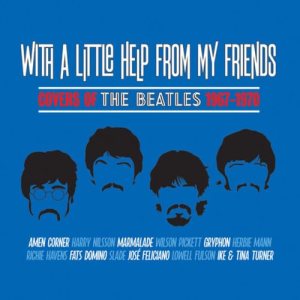

Another Box of Beatles Covers
Particularly during the years when the Fab Four dominated the charts, countless artists from a wide variety of genres couldn’t resist jumping on the band’s wagon. The new With a Little Help from My Friends: Covers of the Beatles 1967-1970 is at least the third three-CD collection of such material from subsidiaries of England’s Cherry Red label, following Looking Through a Glass Onion: The Beatles’ Psychedelic Songbook 1966-72 and We Can Work It Out: Covers of the Beatles 1962-1966. (Note that the years in the titles of all three compendiums refer to periods when the Fab Four’s versions of the songs appeared; some of these covers came out a bit later.)
Like its two predecessors and many other multi-artist collections, the new 74-track box offers a bit of a roller-coaster ride. In addition to rock and pop, you’ll find reggae, R&B, Motown, folk, easy listening, and jazz. And the quality varies almost as much as the musical styles, though much of this material is likable. It helps that the songs being covered consist almost entirely of classics. You’ll recognize some of the performances and artists, though little-known acts and recordings predominate.
The least interesting numbers in this anthology, which comes with an informative 40-page booklet, include ones that, while competently performed, mostly just ape the originals. Among these are “Martha My Dear,” by Ambrose Slade, a group that garnered UK success after dropping the first part of its moniker; “For You Blue,” which an Australian band called Bulldog released using the pseudonym Drummond; and “Hello, Goodbye,” from the lone album by a group called Supersession Workshop, about which little is known.

Other songs take Beatles classics in unfortunate directions, such as a cartoonish “Get Back,” the final single from a British outfit called Amen Corner, and actress Claudine Longet’s lightweight “When I’m 64.” There are also several Muzak-styled numbers that travel a long and winding road from the spirit of the originals, including “Baby, You’re a Rich Man,” by Hollyridge Strings, a Capitol Records studio orchestra; “Sun King” and “The Ballad of John and Yoko” by Canadian bandleader Percy Faith and His Orchestra; and “Across the Universe,” by trumpeter and pianist Tony Osborne and His Orchestra. (However, easy-listening versions of “Piggies” and “Savoy Truffle” by English singer, songwriter, musician, and producer Mike Batt are better than you might expect.) The box’s nadir arrives with a horrendous take on “Lucy in the Sky with Diamonds,” by Star Trek’s William Shatner, who should have stuck to acting.

The many winners include soulful renditions of “Let It Be” by Aretha Franklin and “Hey, Jude” by Wilson Pickett, the latter with guitar by Duane Allman; George Benson’s jazzified “You Never Give Me Your Money”; Harry Nilsson’s brass-accented “She’s Leaving Home”; Herbie’s Mann’s dreamy “Flying”; and Richie Havens’s reimagined “Strawberry Fields Forever.” Also notable are a vaudevillian “Something,” by the short-lived Templeton Twins, an act that has been described as sounding “like the Beatles if the Beatles had done nothing but ‘Honey Pie’”; a big band reading of “Birthday” by jazz trumpeter Lee Castle and the Jimmy Dorsey Orchestra; and a quirky “I Am the Walrus” by Lord Sitar, a pseudonym for British session guitarist Big Jim Sullivan, who contributed to George Harrison’s Wonderwall and learned to play sitar alongside him.


Ward Hayden Interprets the Boss
Ward Hayden and the Outliers, a Boston-based alt-country band, have recorded their share of original compositions, such as on 2021’s excellent Free Country. However, they’ve also delivered fine versions of songs written by artists ranging from Bob Seger to Johnny Cash and Elvis Costello.
More recently, Hayden and his band have applied their interpretive skills to Bruce Springsteen material on a pair of eight-song LPs called Little by Little and Piece by Piece. (The titles of both albums appear in a line in Bruce’s “Racing in the Street,” which, as it happens, is not featured on either disc.) Little by Little, which came out last spring, includes numbers like “Two Faces,” “Youngstown,” and “Used Cars.” The new Piece by Piece offers songs such as “Brilliant Disguise,” “Walk Like a Man,” and a cover of a cover, a version of Tom Waits’s “Jersey Girl,” which is best known in its Springsteen version.

“You can’t out-Boss the Boss,” Hayden is quoted as saying in a press release. “We had always felt a little intimidated about trying to tackle his songs because some of them are so iconic. We knew that if we were gonna do them, we had to play them the way we play our music, and that was the first challenge.”
Hayden and his bandmates prove up to that challenge with these performances, which, like all noteworthy covers, don’t just ape the originals; they add something fresh. Hayden slows “Glory Days” down a bit and adds an appropriate note of melancholy, while most of “Thunder Road” is delivered almost a cappella, with just a bit of acoustic guitar, putting more emphasis on the superb lyrics. Hayden sings beautifully on a countrified “If I Should Fall Behind,” meanwhile, and eschews the rock flavorings of “Dancing in the Dark” in favor of moody, languid instrumentation and a prominently mixed, effusive vocal.
Springsteen fans will likely love these albums (whose contents, incidentally, could have fit on a single CD). One suspects that Springsteen himself would appreciate them, too.


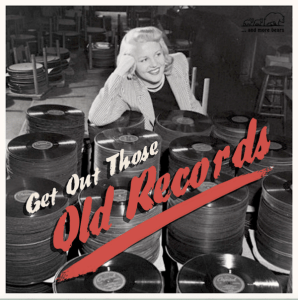
A Record Collects Records About Records
Released in late 2024 but only recently brought to the attention of this reviewer, Get Out Those Old Records was compiled by Richard Weize, founder of Germany’s esteemed Bear Family label. The multi-artist compendium contains 28 songs about records, including material dating from the early 1930s through the late 1970s.
Country music predominates, but the program also embraces some rock, rockabilly, pop, and novelty numbers. The lyrics will take you back to a time when 78s and, later, 45s reigned supreme and songs reached us mostly via radio DJs, jukeboxes, and discs rather than Spotify and downloads.
A few big names from the country field are here, among them Merle Haggard (“Please Mr. DJ”), Floyd Tillman (“The Record Goes ’Round”), and Willie Nelson (“Mr. Record Man”). However, the set largely eschews well-known artists and songs in favor of relatively obscure, albeit amiable material.
Joyce Moore’s “Don’t Play Number Ten (On the Juke-Box Tonight)” is a memorable heartbreak ballad, as is the almost identically titled but different “Don’t Play That Song (On the Juke Box Tonight),” by Wilma Lee and Stoney Cooper. Other standouts include Carol Jarvis’s “Dee Jay with a Broken Heart,” “It’s Only a Phonograph Record,” by Bill Monroe’s brother Charlie, and “One More Record Please,” a 1959 pop-rocker from a singer named Kenny Loran.

______________________
Jeff Burger’s website, byjeffburger.com, contains more than four decades’ worth of music reviews and commentary. His books include Dylan on Dylan: Interviews and Encounters, Lennon on Lennon: Conversations with John Lennon, Leonard Cohen on Leonard Cohen: Interviews and Encounters, and Springsteen on Springsteen: Interviews, Speeches, and Encounters.