


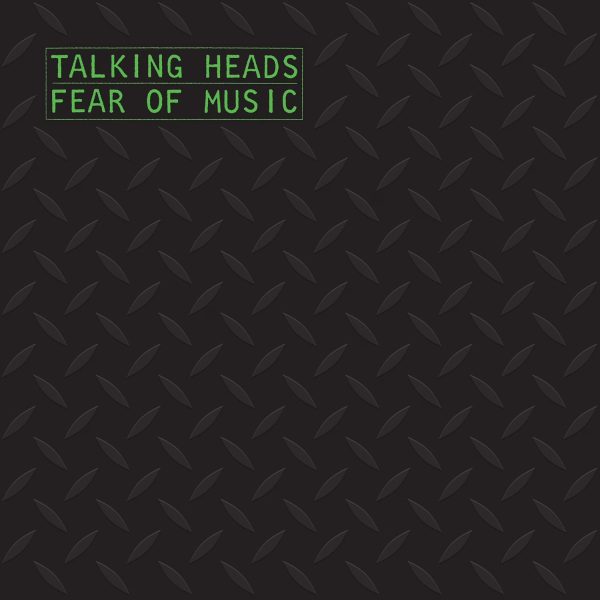
Talking Heads broke up 35 years ago, but they’re currently issuing albums at a faster pace than they did in their heyday. In just the past two years, they’ve released Tentative Decisions: Demos & Live, a three-CD collection of early recordings, and “super deluxe” editions of Stop Making Sense, the soundtrack for their great concert film of the same name; Talking Heads:77, their debut album; More Song About Buildings and Food, their sophomore LP; and now, Fear of Music, their 1979 third album and first gold record.
Co-produced, like its predecessor, by the band and Brian Eno, Fear of Music might have been more appropriately titled Fear of Just About Everything. It limns a world in which singer David Byrne, sounding more anxious, alienated, and paranoid than ever, plays a character who says he’s “a little freaked out” by cities, “air can hurt you too,” “heaven is a place…where nothing ever happens,” and animals are “never there when you need them.” Another song, called “Electric Guitar,” heavily features that instrument alongside a refrain that advises, “Never listen to electric guitar.”
The lines are frequently funny, consistently clever, often abstruse, and at times completely impenetrable, such as in “I Zimbra,” whose lyrics, adapted from German Dadaist poet Hugo Ball, consist of nonsensical syllables. What does it all mean? Perhaps we should take a hint from Byrne, when in a song called “Mind,” he sings, “I haven’t got the faintest idea / Everything seems to be up in the air at this point.”

Musically, Fear of Music covers more ground than its predecessors. “Air” and “Heaven” flirt with balladry, for example, while “I Zimbra,” which employs congas, synthesizer, and phased guitar, sounds like what might result if you put Byrne and Eno’s brains in a blender and spiced the mix with African sounds. Throughout, Fear of Music is so rhythmic and party-ready, it makes you wonder whether the group should change its name from Talking Heads to Dancing Feet. (That’s despite Byrne’s memorable proclamation, in the album’s classic “Life During Wartime,” that “This ain’t no party, this ain’t no disco, this ain’t no fooling around / No time for dancing or lovey-dovey, I ain’t got time for that now.”)
The record’s new “super deluxe” edition includes three CDs and a Blu-ray. The first disc features a remaster of the original LP from the two-track analog master tape plus alternate versions of five of its numbers and a forgettable outtake called “Dancing for Money.” The two other CDs contain slightly more than hour-long 1979 concerts at Boston’s Berklee Performance Center and New Jersey’s Capitol Theatre.
These excellent shows feature some songs from Fear of Music, plus standouts from the group’s two previous albums, such as “Artists Only,” “Psycho Killer,” “The Book I Read,” “Stay Hungry,” “Found a Job,” and a cover of Al Green’s “Take Me to the River.” Both concerts were previously unreleased except for a few tracks that made it onto 1982’s The Name of This Band Is Talking Heads.

The Blu-ray adds Dolby Atmos, surround-sound, and hi-res stereo mixes of the original album plus video of two songs performed on England’s The Old Grey Whistle Test. Also included in the package is a 60-page hardcover book with photos and liner notes by Will Hermes, author of Love Goes to Buildings on Fire: Five Years in New York That Changed Music Forever.


Left Arm Tan’s Dry Spell Ends
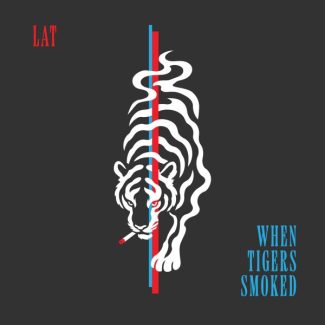
Left Arm Tan’s sixth studio album, 2022’s Undefeated, might well have been its last. The Texas-based Americana group reportedly hit a creative dry spell after that. Then, in 2025, guitarist, keyboardist, and songwriter Daniel Hines underwent five surgeries that left him temporarily unable to play his instruments.
He could still write, however, and that he did, coming up with more than 50 songs. He subsequently polished 13 of them in collaboration with lead vocalist, guitarist, and pianist Brian Lee to create the understated material on the atmospheric new When Tigers Smoked.
Like several of the group’s previous albums, this vinyl and digital release was winningly produced by Dallas-based singer/songwriter Salim Nourallah. Recorded live in the studio over just six days with few overdubs, the record features nuanced lead vocals by Lee and excellent harmony work by the band’s other members who, besides Hines, include Mark Belding (horns, guitars), Jeff Scroggins (bass), Shawn Light (guitars, mandolin, keyboards), and Tim Manders (drums).
The lyrics address life’s ups and downs, and you don’t have to look beyond the song titles to conclude that the writer has encountered his share of the latter. Numbers such as “What’s Left of Me,” “Heartbreak Again,” and “Drunk, High and Empty Inside” limn often difficult struggles with aging, mortality, and relationships. “I stitched my heart to a Sunday, it came unwound by noon,” Lee sings at one point, “All my promises are runaways sleeping off their guilt in my room.”
While those lines typify the album’s introspective, often melancholic lyrics, listening to When Tigers Smoked is far from a depressing experience. For starters, evidence of resilience mingles with lyrics about heartbreak throughout the record, with the group singing, for example, about “chasing sunshine through the rain.” Moreover, Left Arm Tan couples even its saddest lines with lilting melodies and exquisite vocals. “What’s Left of Me” and “Rolling Under the Stars” even begin with what seems like happy-go-lucky whistling, and the latter incorporates bright, mariachi-style brass. You’ll smile, you’ll sigh…and then you’ll probably play the album again.

Garage Rock from the Overlooked High Spirits
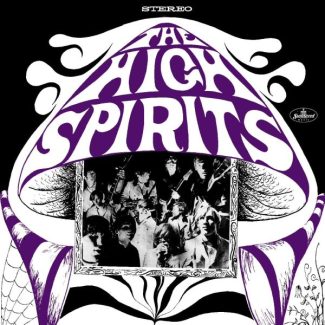
The High Spirits, a garage rock outfit from Minneapolis, garnered regional attention in 1965 with a cover of Bobby “Blue” Bland’s “(Turn on Your) Love Light.” The band never broke through nationally, however, perhaps at least partly because it didn’t write the lion’s share of its material.
It did, however, possess talent, as well as a musical approach that underscored its moniker. The band’s energetic Bland cover could be mistaken for a performance by the Blues Project, whose “I Can’t Keep from Crying” is among the highlights on I Believe, a new band retrospective.
The 16-track set includes all the group’s singles plus 10 vault recordings, some of which were previously unreleased. In addition to a handful of originals, the program features covers of such songs as Jimmy Reed’s “Bright Lights, Big City,” the Beau Brummels’ “In Good Time,” Freddy Cannon’s “Palisades Park,” Sam Cooke’s “Shake,” the Zombies’ “It’s Alright with Me,” and “Substitute” by the Who, whose “Anywhere Anyhow” is one of two CD bonus tracks.
If you’re a fan of 1960s bands such as the Blues Magoos (whose “Pipe Dream” also shows up here), the Music Machine, the Standells, the Knickerbockers, and the Kingsmen, the High Spirits should be right up your alley.

______________________
Jeff Burger’s website, byjeffburger.com, contains more than four decades’ worth of music reviews and commentary. His books include Dylan on Dylan: Interviews and Encounters, Lennon on Lennon: Conversations with John Lennon, Leonard Cohen on Leonard Cohen: Interviews and Encounters, and Springsteen on Springsteen: Interviews, Speeches, and Encounters.