


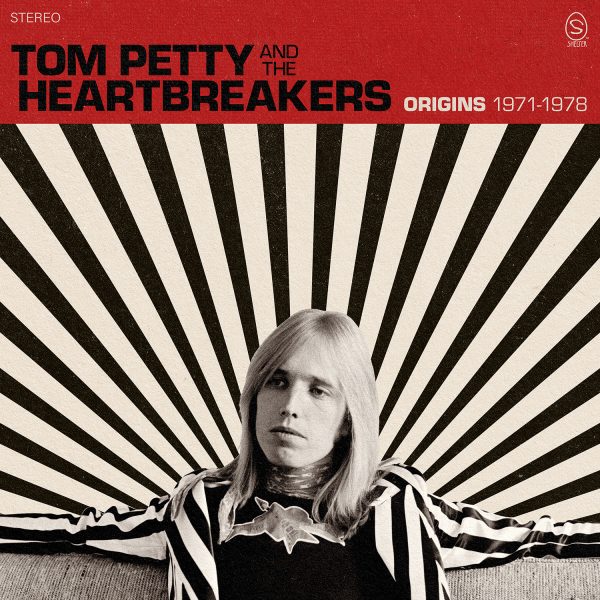
Tom Petty and the Heartbreakers Origins 1971-1978
A couple of weeks ago, some tech bro (or an equally useless bot) tweeted about his love for AI music, stating that it was not just better than human-made music, but desirable for its customizability. I thought about that while listening to the new box set from Tom Petty and the Heartbreakers, Origins 1971-1978. Is it sufficiently pleasurable to ingest audio slop strictly detailed to your individual tastes, or is it more rewarding to listen to now-established artists painstakingly finding their way to what we know they’d eventually become? If you’re here, on this site, reading this piece, the answer seems pretty easy. But diving into the history of five North Central Florida boys who would (eventually) make good is a joyride that a farm of data centers could not possibly accomplish.
That path that Tom Petty and the Heartbreakers (Mike Campbell, Benmont Tench, Stan Lynch and Ron Blair) took to stardom, artistic freedom and the Rock and Roll Hall of Fame was anything but a straight line. From Gainesville to California, then back to Tulsa, Oklahoma, from Mudcrutch to Tom Petty surrounded by session players to the band we’ve come to know as the Heartbreakers, that journey is documented on No Sleep Til LA, the keystone of the box set (and also available as a standalone LP). The record, mixed and remastered (as is the entire set) by longtime producer/engineer Ryan Ulyate, kicks off with “Parade of Loons,” the first single from the collection and a Heartbreakers song that Petty wrote in 1977 about the downside of his band’s burgeoning fame. But that’s not where the story truly begins. For that, we circle all the way back to 1971 and the twangy Southern rock of “Up in Mississippi Tonight.” Cut by Mudcrutch in Miami for the then-handsome sum of $800, the song features solos from both Mudcrutch’s Tom Leadon and Campbell, and it would soon become the first time the band heard themselves on the radio. Minor successes continued – the 1975 two-sided single “Depot Street”/”Wild Eyes” was released by Leon Russell’s Shelter Records. The latter song, in particular, both captured Petty’s burgeoning skill as a writer – “You’re hard to recognize without those wild, wild eyes/Now you just look empty inside” – and tested his patience with the process. Sure enough, the lack of traction gained by the single would eventually lead to the demise of Mudcrutch.
That post-Mudcrutch, pre-Heartbreakers period is known as a bit of a wasteland, with producer Danny Cordell gamely calling in session players and attempting to mold Petty into a solo artist, with limited success – “Since You Said You Love Me” is a decent-enough late-night torch song, featuring Al Kooper on piano and organ, plus a typically excellent Campbell solo. Around this same time, though, Perry entered singer-songwriter territory on his own terms by recording an older Mudcutch song, “Unheard of Kind of Hero,” alone with an acoustic guitar. With the kind of gut-punch storytelling that we’d come to know and love later on, Petty’s tale of a tragically doomed criminal – apparently written when he was a mere teenager – jumps into position as Petty’s first truly great song. “Sin City,” the only other Heartbreakers track on No Sleep Til LA, is another look at the young band’s early fits and starts. The song emerged from off-the-clock studio sessions between Petty and drummer Lynch, with the latter on rhythm guitar, and is named after a notorious Gainesville apartment complex which at one time housed Blair (even dropping the bassist’s nickname, The Snake). This slinky jam puts Petty’s devious (and occasionally horny) sense of humor on display, showing where eventual classics like “Honey Bee” would come from.
No Sleep Til LA also features a number of castoffs, filed under The Cut Out Bin. It’s another example of growth (not possible in a modern-day musical facsimile) by laying out what did and did not work. “Making Some Noise” is a fun Mudcrutch party track, featuring some early standout Tench piano work, that reflected a part of life that the band had already moved past. “The Ballad of Harry, Neil & Tillie” is another early Petty character(s) study. Recorded in 1974 and portraying a trio of diverging friends, the song perhaps reflects the uncertainty of the soon-to-decay Mudcrutch. And “Lost in Your Eyes” is a pretty, pre-Heartbreakers ballad with some trademark wistful lines – “Just because it could’ve been/Doesn’t mean it has to/Ever mean a thing” – that hint at eventual heart wreckers like “Room at the Top.” Indispensable? On their own, maybe not, but they’re dots on a road map to legendary status.
Also included in the box set are the first two Heartbreakers albums, Tom Petty and the Heartbreakers and You’re Gonna Get It! Both include a few extended cuts, but the fun, especially on the debut, comes from hearing the hits we’ve known for a half-century while also listening again to the lesser known tracks, feeling the growth in every song. TPatH alternates between youthful exuberance (“Rockin’ Around (With You)” and “Hometown Blues”), beloved favorites (“Breakdown”) and preternatural songwriting gems (“The Wild One, Forever”), all in the first four tracks. The album wraps with an extended version of “American Girl,” the song about which Campbell, at the band’s recent AmericanaFest reunion, said, “Sounds like no one else but us. Still does.”
Origins 1971-1978 also includes a bridge live show of sorts. Recorded for San Francisco’s KSAN-FM between the release of the band’s first two albums, Live from the Record Plant 1977 includes gems like “Surrender” (a song not officially released until 2000’s Anthology: Through the Years), the public debut of “Listen to Her Heart,” and Al Kooper guesting on electric piano on a ferocious “Fooled Again (I Don’t Like It).” Even You’re Gonna Get It!, not usually regarded as a fan favorite, has some great archaeological moments, from initial hints of jam band-ery on “Hurt,” the solid Southern grunge of “Too Much Ain’t Enough,” and the underappreciated classic “Magnolia.” These are songs that most lesser bands would be fortunate to have in their catalog. Historically, this second record found the band unaware that their true breakthrough, Damn the Torpedoes, was just a year away. Until we perhaps meet back here in 2029 for a 50th anniversary re-release of that record, cue up these lost tracks, dive into the collected ephemera included in the box set, featuring liner notes from David Fricke and Bud Scoppa, and celebrate the fact that we still have human beings, flawed as they may be, making music that, somehow, occasionally manages to be perfect.
Go here to order/steam Origins 1971-1978 (out November 6): https://store.tompetty.com/
https://tompetty.lnk.to/Origins1971-1978PR
Enjoy some of our previous coverage here: Tom Petty: My Top Five Within The Top Five