


“One for the Losers”: Colby T. Helms Sings for the Overlooked
We interviewed Colby T Helms about his new album and more. Enjoy our quality music reviews and coverage on Americana H
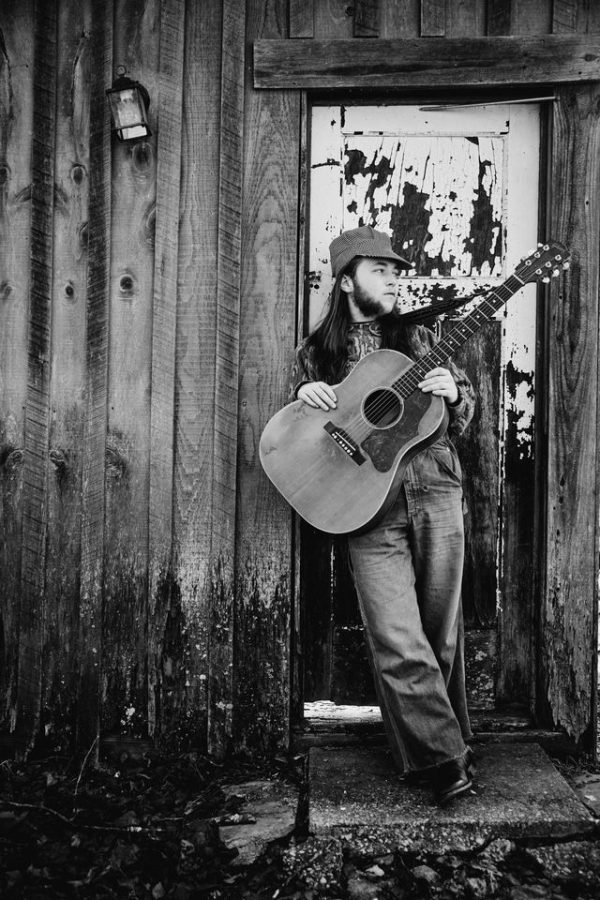
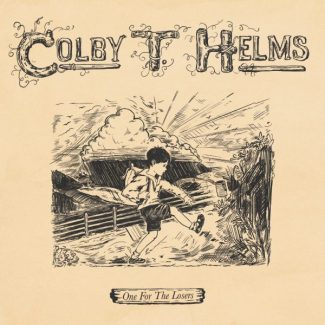
There is a stretch of Franklin County, Virginia, in the foothills of the Blue Ridge, where Colby T. Helms still lives on land his family has held since the 1750s. He is in his early twenties, fronts a band called the Virginia Creepers, and writes songs for the people the wider world tends to drive past: troubled friends, fallen mentors, moonshiners, working folks. His second album, One For The Losers, arrived October 23 on Photo Finish Records, and he calls it an album about empathy. Where his debut, Tales of Misfortune, told his own story, this one tells theirs.

The full circle
At sixteen, Helms watched Tyler Childers blow up behind Purgatory. The man who co-produced Purgatory is David “Ferg” Ferguson, the Nashville engineer who went on to engineer Johnny Cash’s American Recordings. Ferg produced One For The Losers.
Ask him about Ferg and he does not describe a legend, just a man who handed over creative control and stepped back.
“He didn’t put any pressure on me. He’s like, the point of recording with me is that you have a session with me and you use what out of it you want. I’m going to do my creative control over it, and if you don’t like it, OK.”
A comparison to Childers has followed him since high school. He has made his peace with it: “I have my own thing, and I’ve been doing it in Virginia since I was 16 or so.”

The song that would not die
The record’s lead single, “Clouds,” sat in his pocket for years while fans begged for it. The label sent him back three times, and by his count there were four versions before one made the album. He has called it an anthem for the people who feel like nothing ever goes right. His word for the fight is plain: “It was a struggle, man. I wrote the song with a certain vision in mind.”
The first version, cut with Ferg, came out strange.
“The version of ‘Clouds’ was very produced. We had keyboards on it, drums, electric bass. It was straight up funky. But it wasn’t necessarily my vision for the song.”
A second try came out grunge, so he took his own band in.
“I go back with my band, the Virginia Creepers. We cut it perfect. It was exactly how I wanted it. The record label said, we don’t like it now.”
What the label wanted was the version the internet already loved.
“They said, we want you to go back and cut it just how you did it on your TikTok video that blew up. Just me and the guitar.”
His own arrangement borrowed its groove from John Hartford’s “Back in the Good Old Days.” The label wanted it raw, and he is fine with where it landed: “I’m happy with the song, and the fans loved it. So what more can I ask for?”
For Ronny
Ronny Bowman was not from Franklin County. He was a North Carolina man who moved there in the 80s, drawn by the Lonesome River Band, a progressive bluegrass band the young people were into.
“It made old people mad, and people didn’t like it. But the young people loved it. It was like the punk version of bluegrass.”
A generation later, Bowman’s faithful were the old guard, and some did not care for the kid from Boones Mill.
“When I finally got the chance to meet Ronny Bowman, I told him about this, and he said, look, I love your music, when Ferg showed it to me. It’s old and traditional, but it’s got a fresh new flavor to it.”
That was Bowman’s point, as Helms tells it: both of them took something from their roots and made it their own thing. Bowman died in a motorcycle accident this year.
“I had no idea at that time he was going to pass away. I think back on that all the time, and it kind of tears me up. How did I get to literally live a part of music history right there? I got to record with one of my heroes.”
The title track went to Bowman.
“We dedicated ‘One for the Losers,’ the title track, to him on this record.”
“If I went back and told 13, 14 year old Colby that I got to do that, I wouldn’t believe it.”

Truer live
People who know his music keep telling him the same thing: the records are fine, but live is the real thing. He does not argue. He has talked about a live record as the truer document of what he does. He gets his chance to prove it on December 6, when he makes his Mountain Stage debut in Charleston, West Virginia. That stage has a way of sorting out who is real.
“You got to come see the live show, because you get to really feel my culture.”
The Creepers split the difference between the traditional bands he grew up on and the jam bands.
“I want you to feel like you’re having this traditional experience, like you’re hearing something from the hollers of Virginia. But then you also have this immersive experience like jam bands, where every set we play is different. No song is played exactly note for note the same.”
He is blunt about the gap.
“I don’t think that any of my recordings are bad so far. But do I think they’re the same as me playing them live? They’re absolutely not the same.”
The guitar
His first real guitar came through a Roanoke music teacher who had taken in a 1957 Gibson J-50.
“About five old retired men want to buy it, but you told me you wanted an old guitar. You can have this ’57 J-50 for $2,000, if you can scrape up the money. So I asked my mom. She could pay a thousand, and I could pay a thousand.”
He played it from fifteen into his twenties, at fiddlers’ conventions and shows, until the years showed.
“I played the hell out of it, and the old finish on it completely just started melting off. The fretboard’s completely worn out from me picking so much.”
A custom build from Mount Airy, North Carolina carried him until its neck warped. These days the road guitar is a Martin he got earlier this year.
“This is what I play at my shows now. It’s a Martin HD-28 Vintage Series. It’s a 2012, and it’s been played quite a bit. But it’s got just an exquisite sound.”
Tour plug
Colby T Helms is playing on Sun Dec 6 in Charleston, WV on Mountain Stage (NPR)
Find more information here on his website: https://www.colbyhelms.com
photo by Dave McClister
_______________
Edgar Kelley writes Six-String Travels (http://www.six-stringtravels.com), a newsletter on Americana, folk, and roots music, guitars, and the road. Based in Brandon, Florida, and originally from Chautauqua County, New York, he covers festivals and interviews the artists keeping the tradition moving, from a guitar player’s seat in the crowd.