


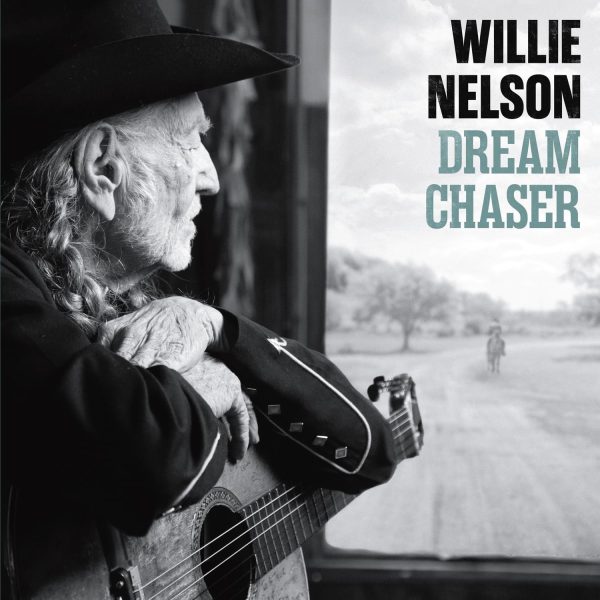
Willie Nelson Is Still Going Strong
It’s remarkable that Willie Nelson is still making records nearly three decades after the age when the average American retires. But it’s even more remarkable that those LPs contain some of the best work of his long career. Dream Chaser, which arrived shortly after Nelson’s 93rd birthday, is his 79th solo studio album and the latest evidence that he is still at the top of his game. His intimate, gravelly vocals remain effective, and the 10 songs here, six of which Nelson co-wrote, are all deftly crafted.
It’s easy to see why “Dream Chaser” became the CD’s title cut, opening track, and first single. The poignant, clearly autobiographical number, which Nelson penned with his producer, Buddy Cannon, and Bobby Tomberlin, finds the man who wrote “Funny How Time Slips Away” ruminating on how much of his own time has gone by.
“Today, I looked in the mirror, and I caught me by surprise,” he sings. “The man I saw lookin’ back at me, I almost didn’t recognize / Wasn’t I just a kid, movin’ to Tennessee, with an old guitar and eyes full of stars, chasin’ a crazy dream?”
While not as obviously based on Nelson’s own life, the other songs—most of which are about romantic love—prove just as compelling. Some concern relationships that worked, such as the sweet “We’d Make a Good Movie” and “Love Overdue,” while others detail breakups or communication breakdowns, such as “I Don’t Think I’ve Cried Today” and “I Can’t Read Your Mind.” The latter number, incidentally, marks Nelson’s first co-write with Bob Dylan since 1993’s Across the Borderline, for which they collaborated on a song called “Heartland.”
Grab this album before any more time slips away.


A Box Set from Ex-Byrd Gene Parsons
Gram Parsons wasn’t the only musician with that surname to play a role in the Byrds and the popularization of country rock. Gene Parsons (no relation), though less celebrated than his namesake, spent four years with the Byrds, from 1968 to 1972. He mostly played drums but also lent a hand with guitar, banjo, and other instruments and contributed songs. He later joined the Flying Burrito Brothers, which Gram co-founded. And he launched a career on his own, the results of which you’ll find on a new anthology called Kindling and Beyond: The Solo Recordings 1973-1986.
It’s a frequently satisfying collection, but there are some stumbles. A plodding cover of Phil Ochs’s “My Kingdom for a Car” is forgettable, for example, and Parsons’s own “No Fire Here Tonight” and “Little Jewels (For Lilybet)” sound like the sort of characterless country-pop that issued from groups like Firefall.
While no match as a vocalist for the great Gram Parsons, however, Gene is a more than adequate singer; he impresses on ballads like “Hot Burrito #1,” which Gram and Chris Ethridge co-authored during their Burrito Brothers years. And there’s lots of instrumental talent on display in this box, starting with Gene himself but also including such A-list guests as bluegrass giant Ralph Stanley, the Byrds’ Clarence White, and fiddle master Vassar Clements.

The clamshell-boxed five-CD Kindling and Beyond, which comes with a 24-page booklet, features 71 tracks, 15 of which were previously unreleased. The compendium begins with Parsons’s debut solo album, Kindling, which originally appeared in 1973. Its 11 tracks include seven self-penned songs, two of which the singer wrote in collaboration with his pre-Byrds musical partner, fiddler and guitarist Gib Guilbeau. Among the covers are Lowell George’s “Willin’” and Carter Stanley’s “Drunkard’s Dream.”
Next up is Melodies, Parsons’s second and final solo studio set, which dates from 1979. It includes several songs written or co-written by Parsons (three with his wife, Camille), plus covers of tunes such as Mickey Newbury’s “Why You Been Gone So Long” and Bob Nolan’s “Way Out There.”
Also in the box are I Hope They Let Us In, a live set from 2001, eight studio demos, and a generous sampling of concert material from the Gene Parsons Band, a trio that featured bassist Peter Oliva and drummer Richie Rosenbaum. These tracks, most of which date from 1981 through 1983, include readings of Bob Dylan’s “You Ain’t Going Nowhere” and the Gram Parsons co-authored “Hickory Wind,” both of which appeared on the Byrds’ landmark Sweetheart of the Rodeo album. Here, too, are versions of such other familiar numbers as William Bell’s “You Don’t Miss Your Water” and Jimmy Cliff’s “Many Rivers to Cross.”

Also Noteworthy


Chris Stamey, Modernism. Modernism, the latest CD from dB’s co-founder Chris Stamey, features three self-penned tracks along with an eclectic batch of well-executed covers. The North Carolina–based singer, songwriter, guitarist, and producer plays bass, guitar, and keyboards on the album and garners backup from guests such as the dB’s and Big Star drummer Jody Stephens.
The selections, which mostly come from the rock world of the 1960s and early 1970s, include well-known tunes such as Sly Stone’s “Thank You (Falettinme Be Mice Elf Agin),” the Beatles’ “Hey, Bulldog,” and the Kinks’ “Waterloo Sunset.” Also on the program are “Shadows Breaking Over My Head,” a deep cut from the baroque rock band Left Banke, and “Neon Rainbow,” which provided a minor hit for the late Alex Chilton and his group, the Box Tops. Speaking of Chilton, with whom Stamey played in the 1970s, the set also makes room for a version of the Rolling Stones’ “Ruby Tuesday” that’s built on a recently discovered 1977 track with Chilton on drums and guitar.
The program additionally fits in reflective covers of two classics from the Great American Songbook: Jimmy McHugh and Frank Loesser’s “Let’s Get Lost,” which is most associated with jazz trumpeter Chet Baker, and Mack Gordon and Harry Warren’s “At Last,” which Etta James memorably recorded.

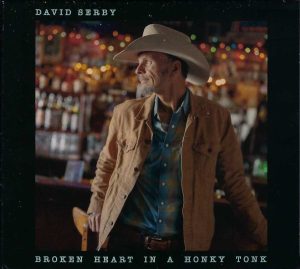

David Serby, Broken Heart in a Honky Tonk. Los Angeles–based singer, songwriter, and guitarist David Serby shines on his aptly titled newest release, whose title track isn’t the only number on the record to blend honkytonk barroom music with lyrics about failed romances. The album’s 11 mostly uptempo songs, all written by Serby, feature a crack backup band whose instruments include pedal steel and accordion.
The tunes come loaded with catchy hooks, vivid vignettes, and clever wordplay. They should appeal to fans of Dwight Yoakam, Buck Owens, and other purveyors of the Bakersfield Sound. But there’s also enough rock and roll spirit here to occasionally remind you of acts ranging from James McMurtry and Warren Zevon to Richard Shindell and Dave Alvin.

March to August, Highway 75. Highway 75 is the fourth studio CD from March to August, an Ozark Mountains–based husband-and-wife duo consisting of Derrick and Jodi Mears. It’s a concept album about a troubled truck driver “who searches for answers and forgiveness” as he heads north on the interstate that extends from South Florida to Canada. The story is fiction, but the couple, who spend long hours on the road traveling to their performances, note that “there is a little bit of real life in all of these songs.”
There’s also lots of great music in them. The Mears’s tunes are solidly constructed with richly detailed, evocative lyrics, and their instrumental work—Derrick on banjo, guitar, and harmonica; Jodi on bass, stompbox, and lap steel—is consistently impressive. Derrick’s commanding, prominently mixed vocals are the icing on the cake. Highway 75 seems likely to be remembered as one of the best folk/Americana releases of 2026.
