


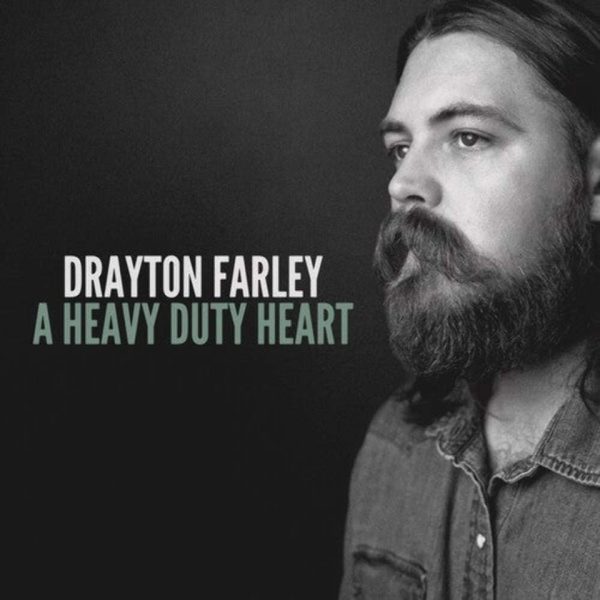
Drayton Farley A Heavy Duty Heart
Drayton Farley’s A Heavy Duty Heart captures the moment when a promising songwriter stops sounding like “one to watch” and starts sounding like an artist with a clear, confident point of view. The Alabama songwriter has always written with emotional plainspokenness and blue-collar detail, but this record broadens the frame without sanding down the rough edges that made him compelling in the first place.
What’s changed most is Farley’s confidence. On earlier records, especially A Hard Up Life and parts of Twenty on High, he often sounded like a man trying to survive the emotional weather. On A Heavy Duty Heart, he sounds more willing to stand still inside it. These songs aren’t about dramatic transformation so much as endurance — learning how to carry love, doubt, responsibility, and exhaustion all at once.

That tension runs through “It’s Called Doubt,” one of the album’s strongest tracks. Farley sings, “Some days faith feels thinner than the smoke inside my lungs,” capturing the heart of the record: not hopelessness, but uncertainty carried day after day. The song never reaches for a grand revelation. Instead, it settles into the harder truth that persistence itself is a form of grace.
“Turn Around” may be the album’s emotional center, with Farley singing, “I keep looking for a road that don’t run back through me.” It’s a classic Farley line — plainspoken, but quietly devastating. The arrangement builds with heartland-rock momentum, but the song resists neat resolutions.
It’s striking how much warmer this album feels than its predecessors. Tracks like “I’ll Hold You” and “I Need Your Love” could easily slip into sentimentality, but Farley’s writing remains grounded enough to keep them from floating away. On “I’ll Hold You,” he promises, “When your hands shake, mine will too,” avoiding grand declarations in favor of something smaller and more believable.
Musically, A Heavy Duty Heart is very much a band record. Recorded live to tape with his touring band and produced by Sadler Vaden, the album has more muscle than Farley’s earlier work, but more patience as well. Vaden’s production gives the songs width and momentum without sanding away their humanity. The guitars swell and recede around the songs, while the rhythm section drives the album’s controlled composure.
The record leans into full-band Americana rock without losing the intimacy that made Farley’s early acoustic material resonate. You can hear echoes of Jason Isbell, John Moreland, and Lucero, but Farley’s voice — weary, stubborn, direct, and inviting — is what makes A Heavy Duty Heart compelling.
If there’s a criticism, it’s that the album occasionally settles into a mid-tempo emotional sameness. Farley consistently resists melodrama, but there are moments when you wish he would either lean harder into the ache of these songs or let the band truly explode. The emotional palette is rich, but intentionally narrow.
A Heavy Duty Heart succeeds because it understands something many Americana records merely gesture toward: adulthood is not revelation, but accumulation. Responsibilities, doubts, love, and damage all build over time, and Farley writes from inside that reality with unusual clarity and compassion. What makes the album linger is Farley’s remarkable ability to capture emotions people struggle to articulate for themselves. His best lines arrive without fanfare, conversational but precise, allowing small details and passing observations to carry enormous emotional weight. The result is Drayton Farley’s strongest and most fully realized record to date.
Find more information here: https://draytonfarley.com/about
Enjoy our previous coverage here: REVIEW: Drayton Farley “Twenty On High”